46km Arcadian Thames



A ride along the Arcadian Thames
‘Arcadia’ was an ancient Greek term signifying an idealised landscape. There would have been a lake or river, a temple, some hills, woods and pasture. Shepherds and nymphs. In the 18th century English aristocrats sought to re-create this dream along the banks of the Thames. They built their country houses fronting the river, constructed pavilions, stands of trees, pasture grazed by deer and cattle. It was a less formal landscape, a break from the Renaissance garden of tightly clipped hedges, statuary and formality. It was here on these banks of the River Thames, that the concept of Arcadia entered the ‘English Landscape.’ Developed into an art by designers such as Lancelot ‘Capability’ Brown, William Kent and Humphrey Repton, the concept has been replicated from Hyde Park to New York’s Central Park, from Blenheim to Stowe.
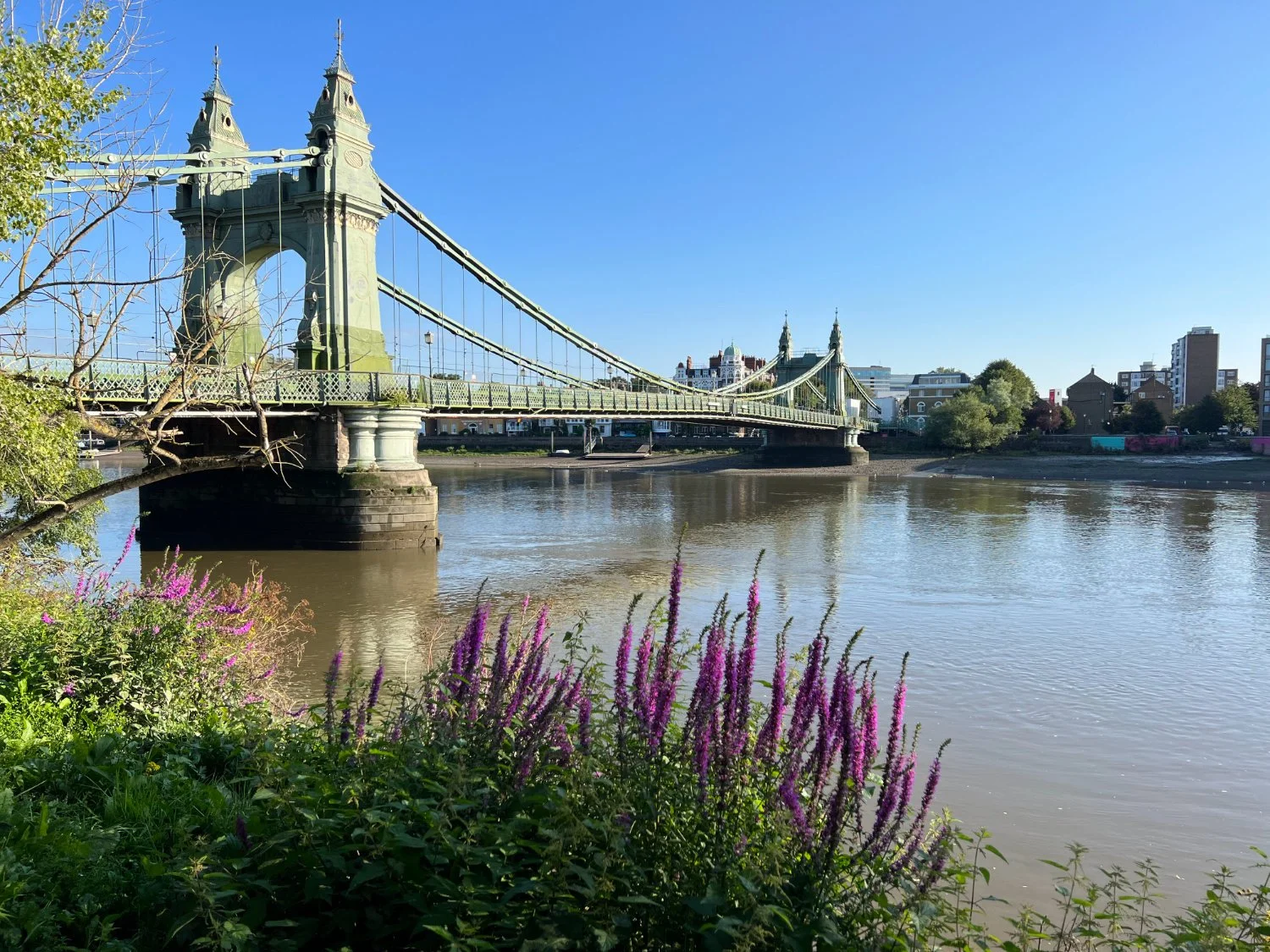
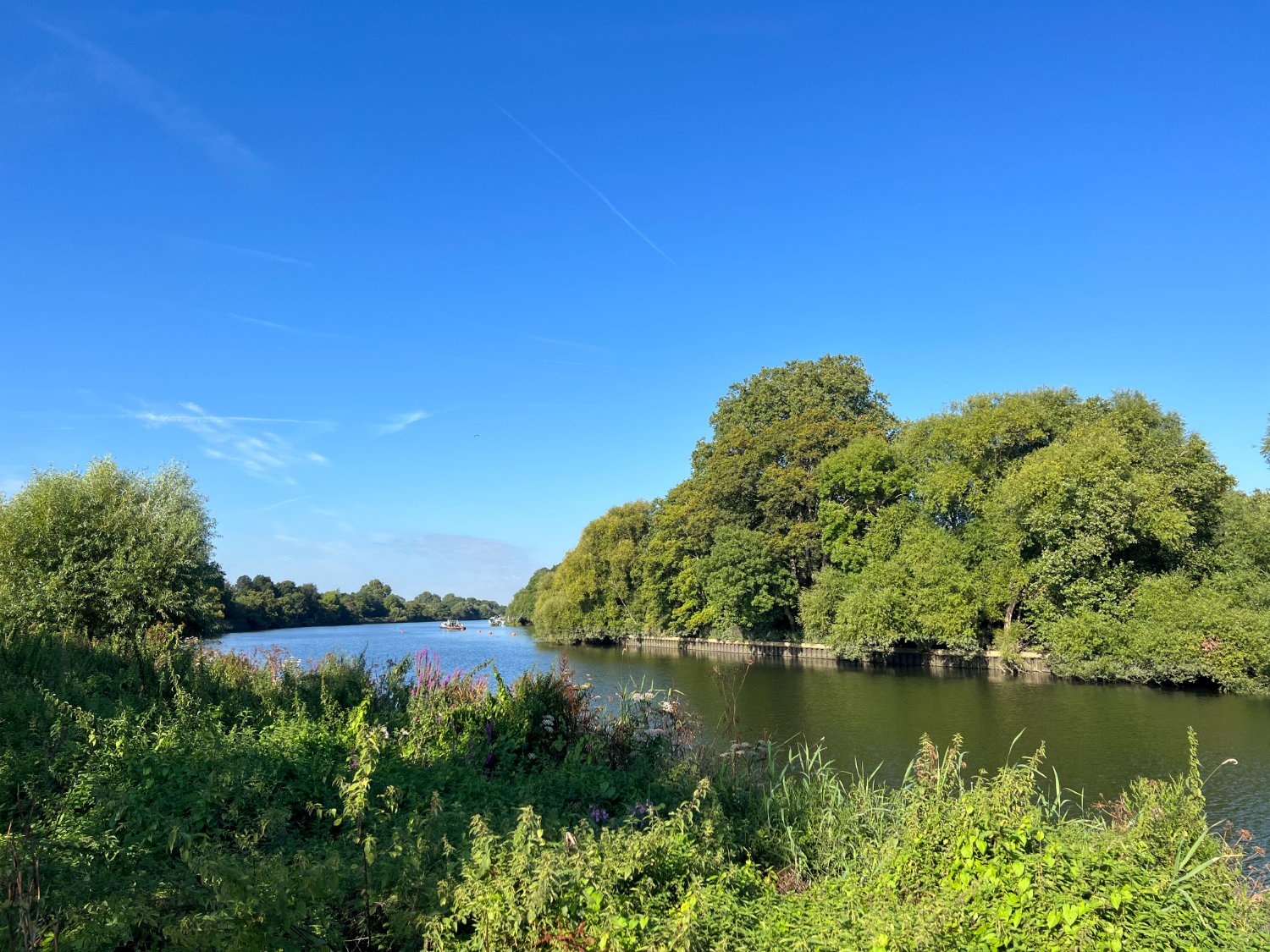
Much of this 18th century Arcadia still exists along these river banks; Hampton Court’s ‘Home Farm’, Bushy Park, Ham House, Chiswick House, Kew Palace, Marble Hill. In between the grand set pieces is the beautiful riding along the Thames path, wide and firm. There are woods and pubs, ‘villages’ and innumerable places to stop at. As an exemplar of ‘slow cycling’, of drifting along a river path immersed in a landscape, pausing to visit, eat and drink, of enjoying every effortless pedal stroke, the route is a dream ride.
The route forms part of the London Thames Cycle Collection, a mix of linear routes and loops which stretch from Hampton Court to the far reaches of the Thames Estuary.
Ride reviewed; November 2022 and again August 2023, March 2026
Ride practicalities
The ride can be ridden at any time of year in either direction. However, note that the river paths can be busy with families and their dogs on fine weekend afternoons.
There are two ways to ride this route; to stop at some - or all - of the many famous places along this route, some so special that they Grade I listed or are UNESCO World Heritage Sites. The other way is to ride an easy riverside path and enjoy the fine and ever changing views along the way.
START/FINISH: Kingston Town Hall DISTANCE: 45km. TOTAL ASCENT: 196m TERRAIN AND SURFACES: Traffic-free wide and firm cycle paths beside the river. There are a three short road sections, at Chiswick, Richmond and Isleworth. The latter stretch can be busy, although there is an unprotected bike lane on the side of the road. Other than Richmond Hill, the route is flat and the surfaces are either hard-packed gravel or tarmac. Ringing a bell warning of your approach, accompanied by a cheery ‘thank you’, is a well received gesture around here. FOOD: Recommended Cafes in Chiswick House, Kew Gardens, and Orleans House. Lunch stops include the ‘Waterman’s Arms in Barnes, The Swan in Richmond. Plentiful re-supply shops along the way.
MAINLINE TRAIN/UNDERGROUND SERVICES: Kingston, Chiswick, Richmond
LINKS TO OTHER RIDES: Wimbledon to Richmond, West London’s surprise, Greenwich to Hampton Court , The Royal Parks
Ride notes
Having arrived in Kingston-upon-Thames, make your way to the town hall and England’s Coronation Stone, ‘the royal throne of kings’. ‘What is it about thrones? You’d have thought that a monarch would be crowned on some plush chair, covered in gold perhaps. Instead, our monarchs are seated on a hard wooden chair which has been much engraved by grafitti. Before chairs there were stones. The Scots have their Stone of Scone, the English a block of sarsen stone on which were crowned at least seven English Kings. It sets the tone for this ‘kingly’ ride beside palaces, homes for Royal mistresses and much other grandeur besides.
From the Coronation stone, head across the off across the medieval clattern bridge into the market square and onto the segregated cycle path beside the river.
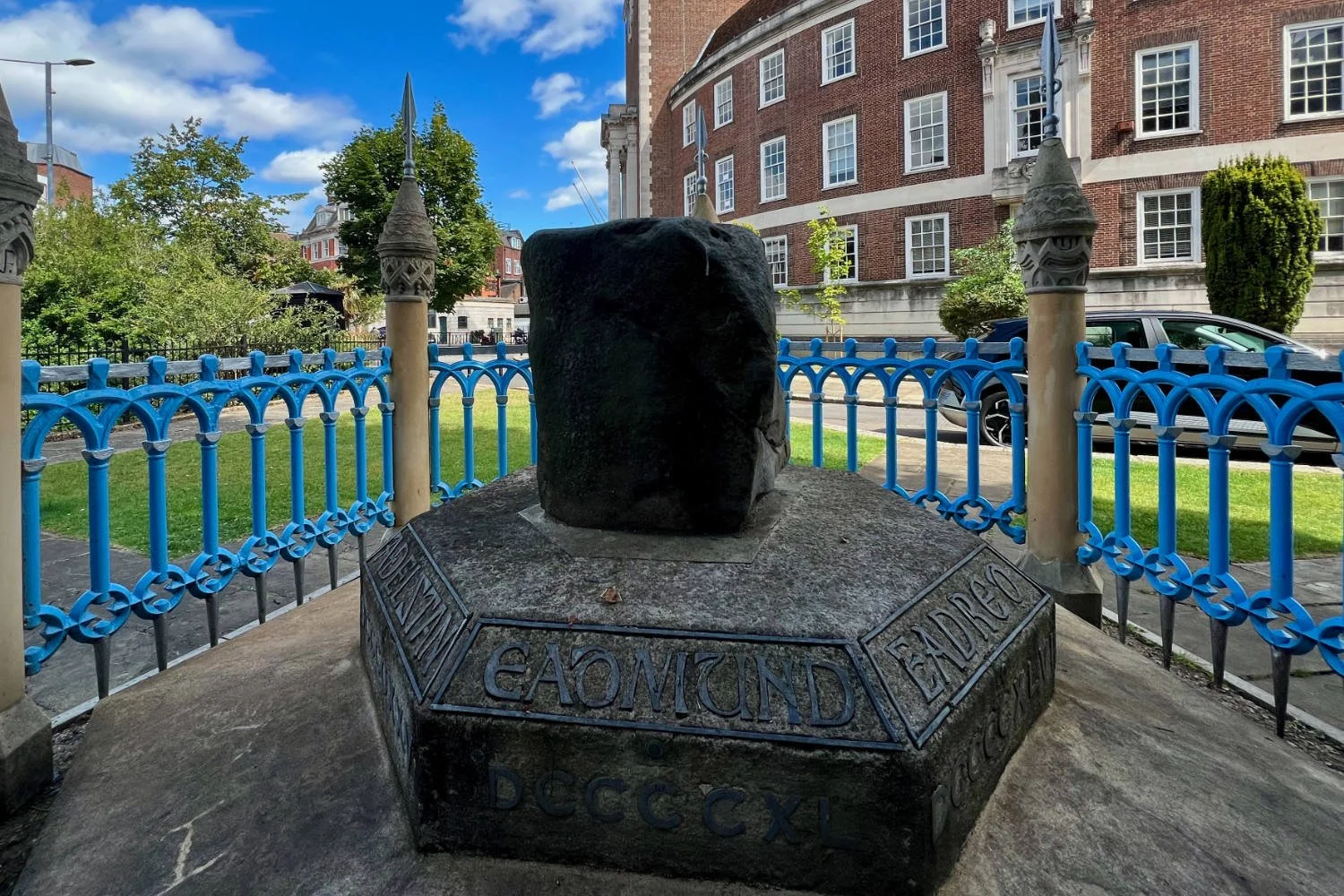
England’s ‘Coronation Stone’
After 3km, the path ends and you’ll be steered onto an unprotected lane on a road for a few hundred metres, before turning into Thames Ditton, a pretty Thames ‘village’ with weatherboarded houses and a Norman church. There’s a short section of suburban roads before you arrive at Hampton Court Palace.
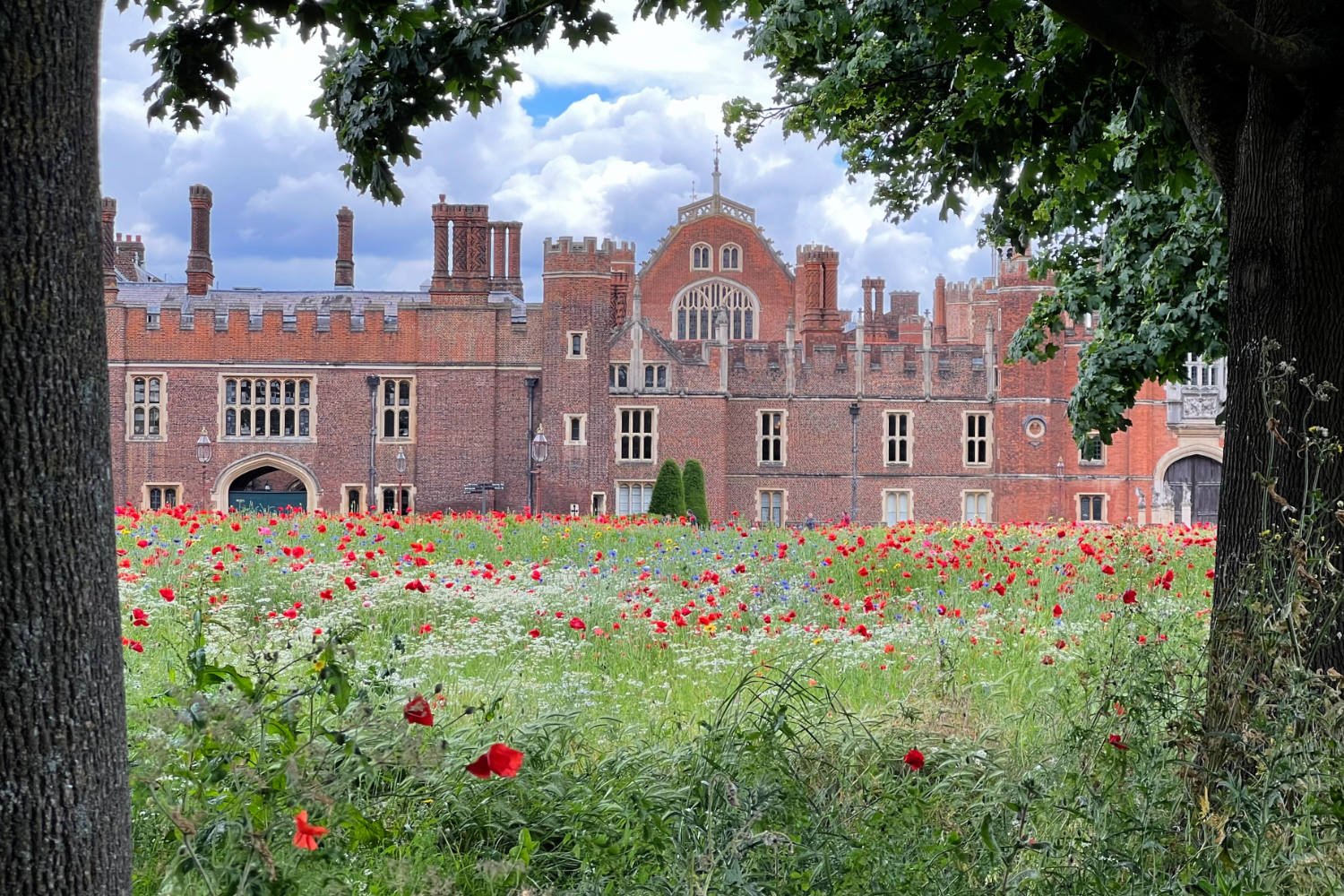
Hampton Court
If you’ve not visited Hampton Court Palace before, you’re going to have to be pretty determined to ride past it, for it is one of the great treasures of England. It is huge. (1,390 rooms, 60 acres of gardens, 18 courtyards and 241 chimneys each unique in their design). Beautiful, ostentatious, vulgar and captivating, all in equal measure.
Once ready to continue with the ride, head along Barge walk, which connects Hampton to Kingston-upon-Thame. It is one of the loveliest of city rides; willowy, stately poplars, deer and a well maintained gravel path curves around the bend of the river, from where in times past the public used to gather to watch the monarch being rowed to or from the Palace. The barge was gold, a live orchestra played as the oarsmen rowed. Today, the King prefers other forms of transport, so whilst there are no gilded barges there are river vieand it is about as far removed from the idea of London as could possibly be.
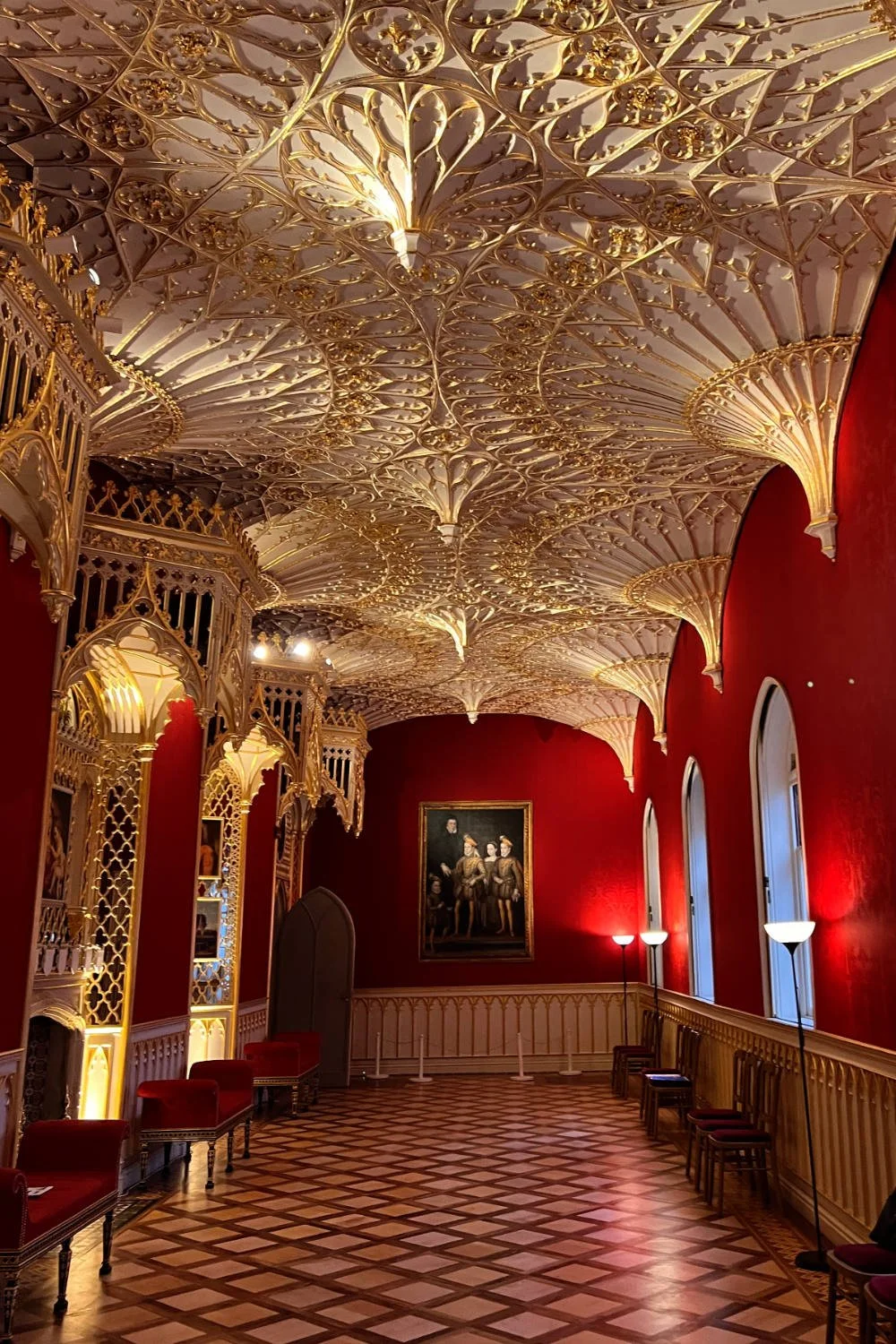
Strawberry Hill
From Kingston Bridge - one of the oldest Thames crossings - the route uses quiet suburban roads to Richmond. In the 18th century, this section was full of orchards, market gardens and grand estates, of which Horace Walpole’s Strawberry Hill House, was the most famous. His ‘little plaything house’ was a Gothic masterpiece which spawned a whole new age of architecture. To access it, turn off the route and follow the brown signs for 100m.
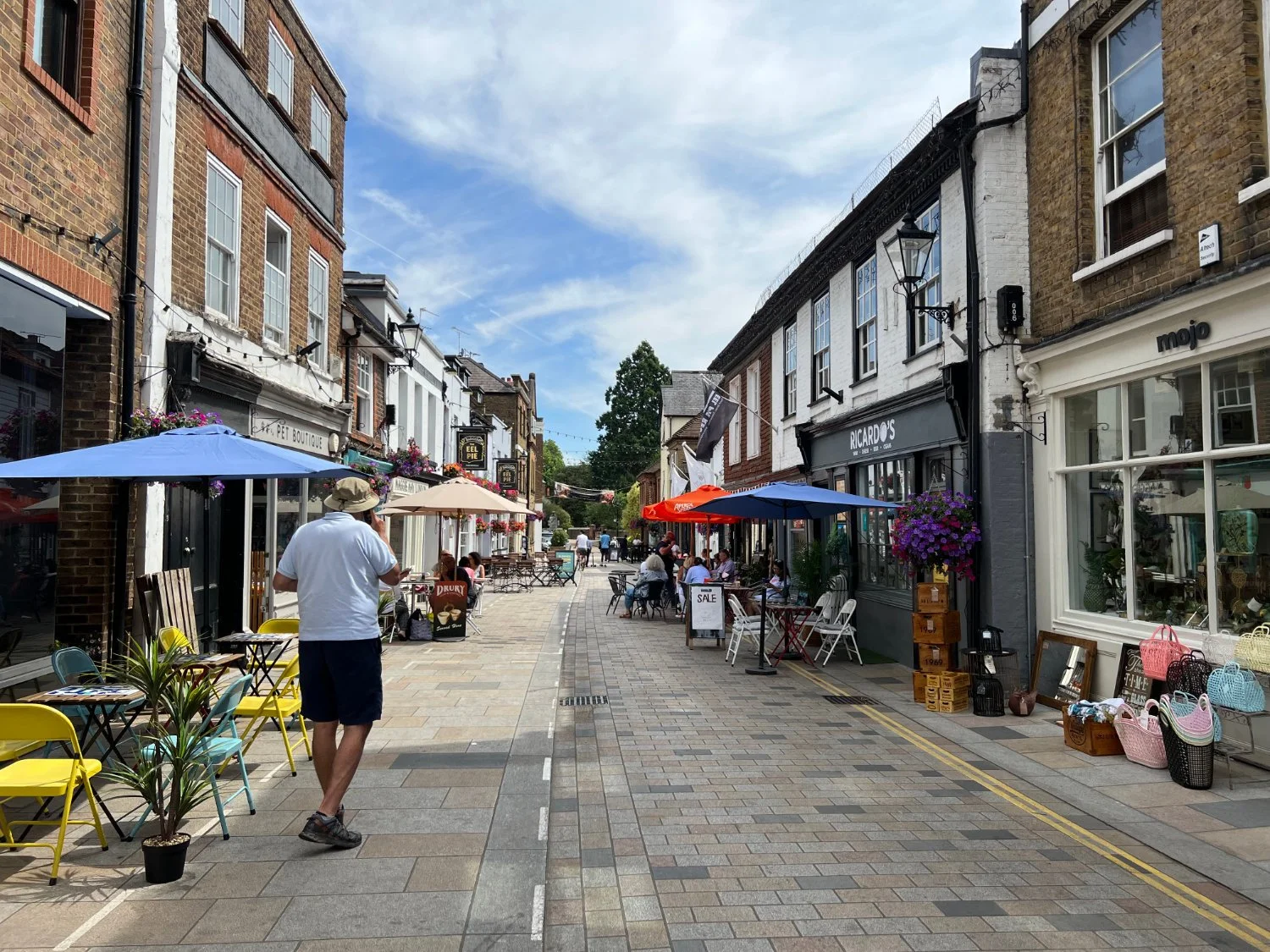
Twickenham is a pretty place, another of these so-called ‘London villages’, complete with weather-boarded high street, independent shops, a church and many pubs. You’ll ride past Eel Pie Island, where the Rolling Stones and other great bands often played.
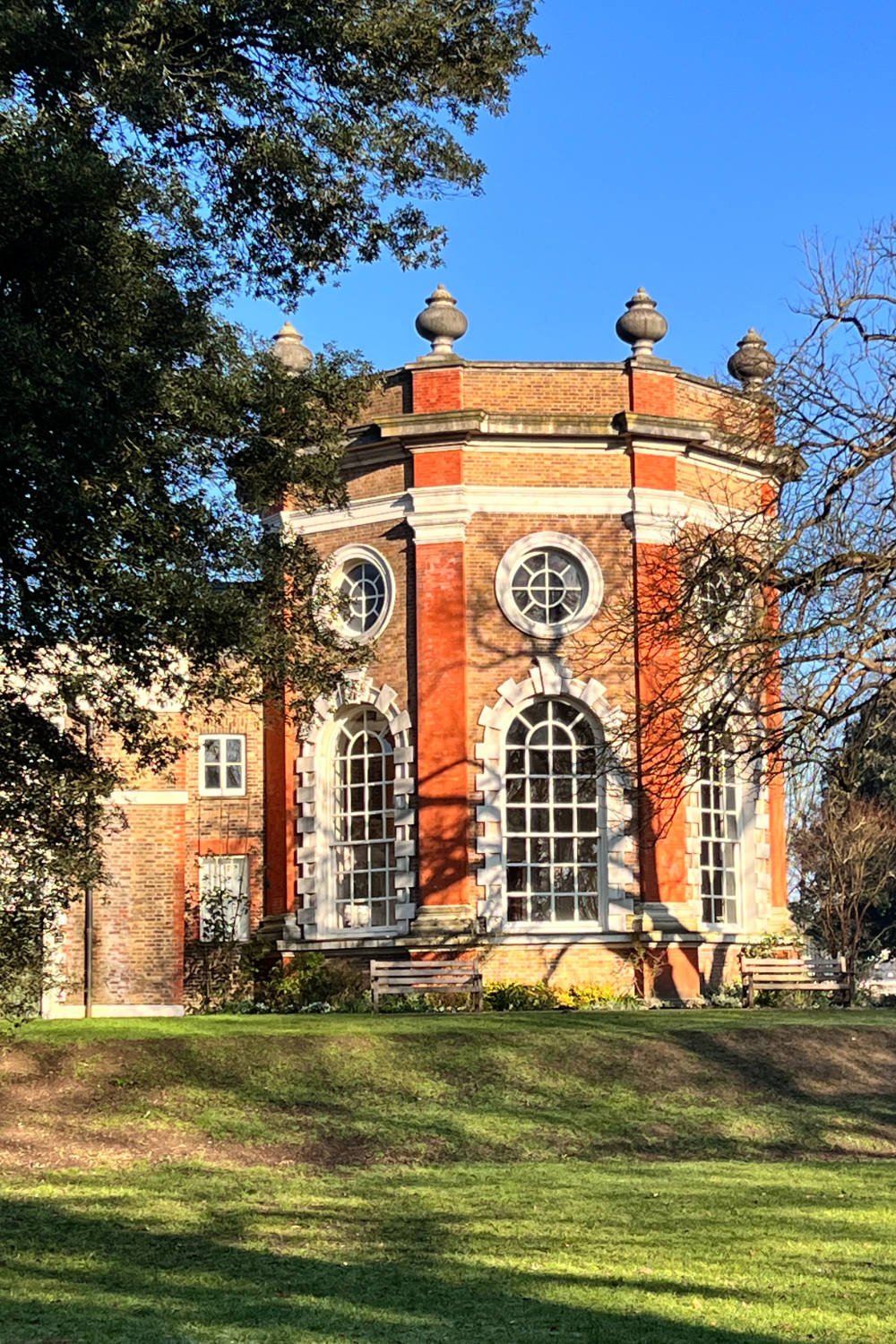
Orleans House
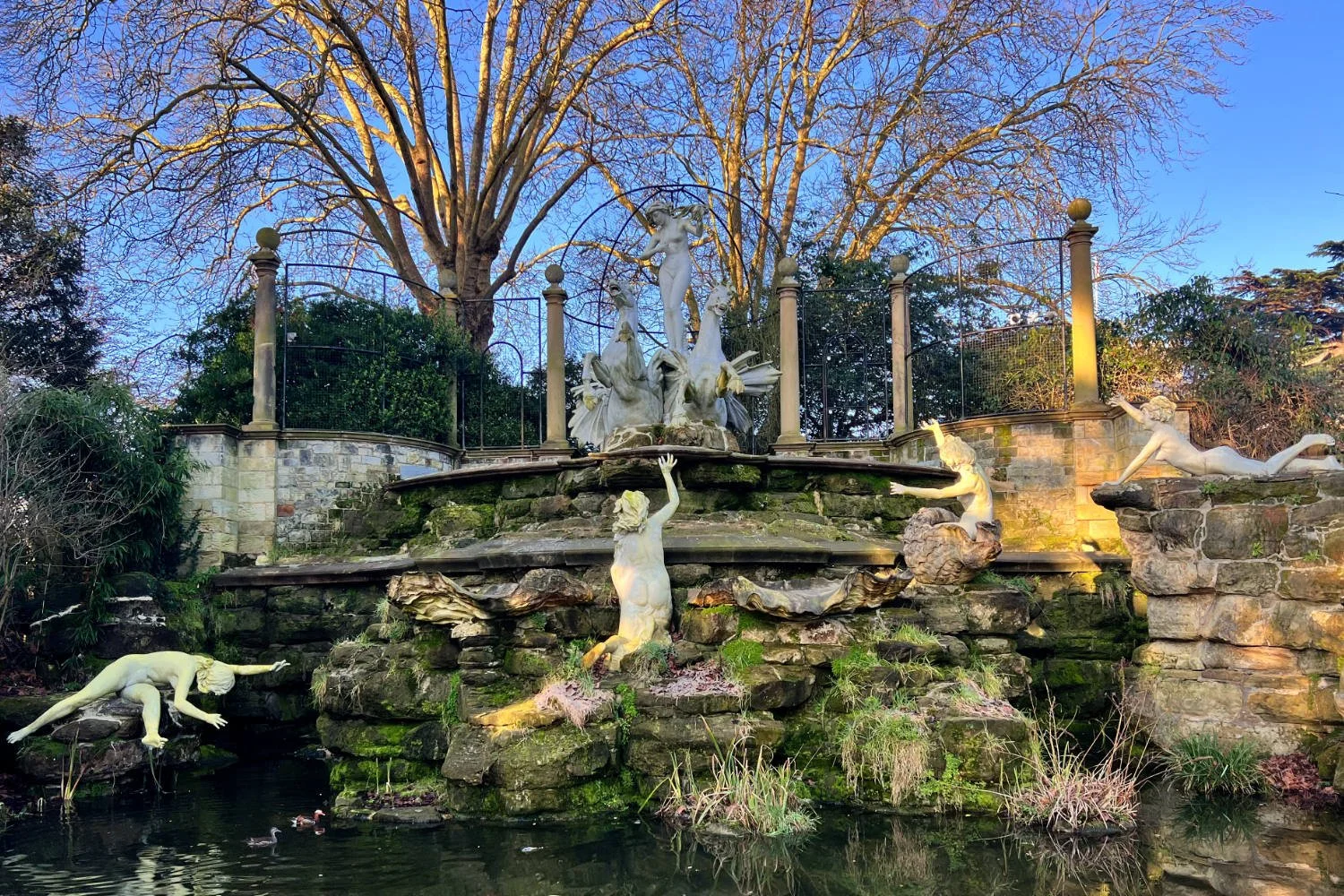
Arcadia is If you were hoping for a sighting of nymphs during your ride through Arcadia, you’ll see some cavorting in the gardens of York House. The statues are known as Oceanids, represent just eight of the three thousand mythological daughters of Oceanus and his sister Tethys.
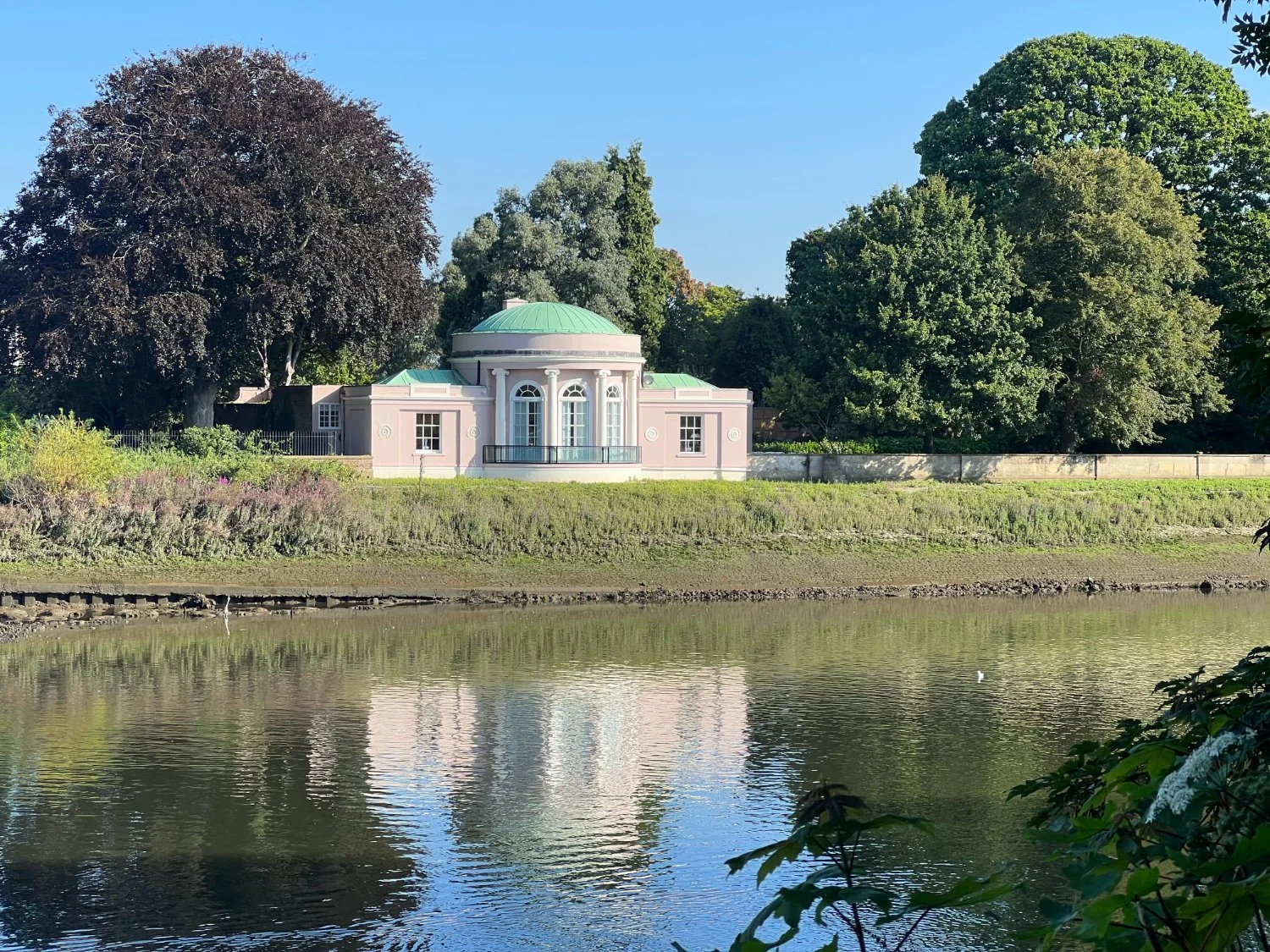
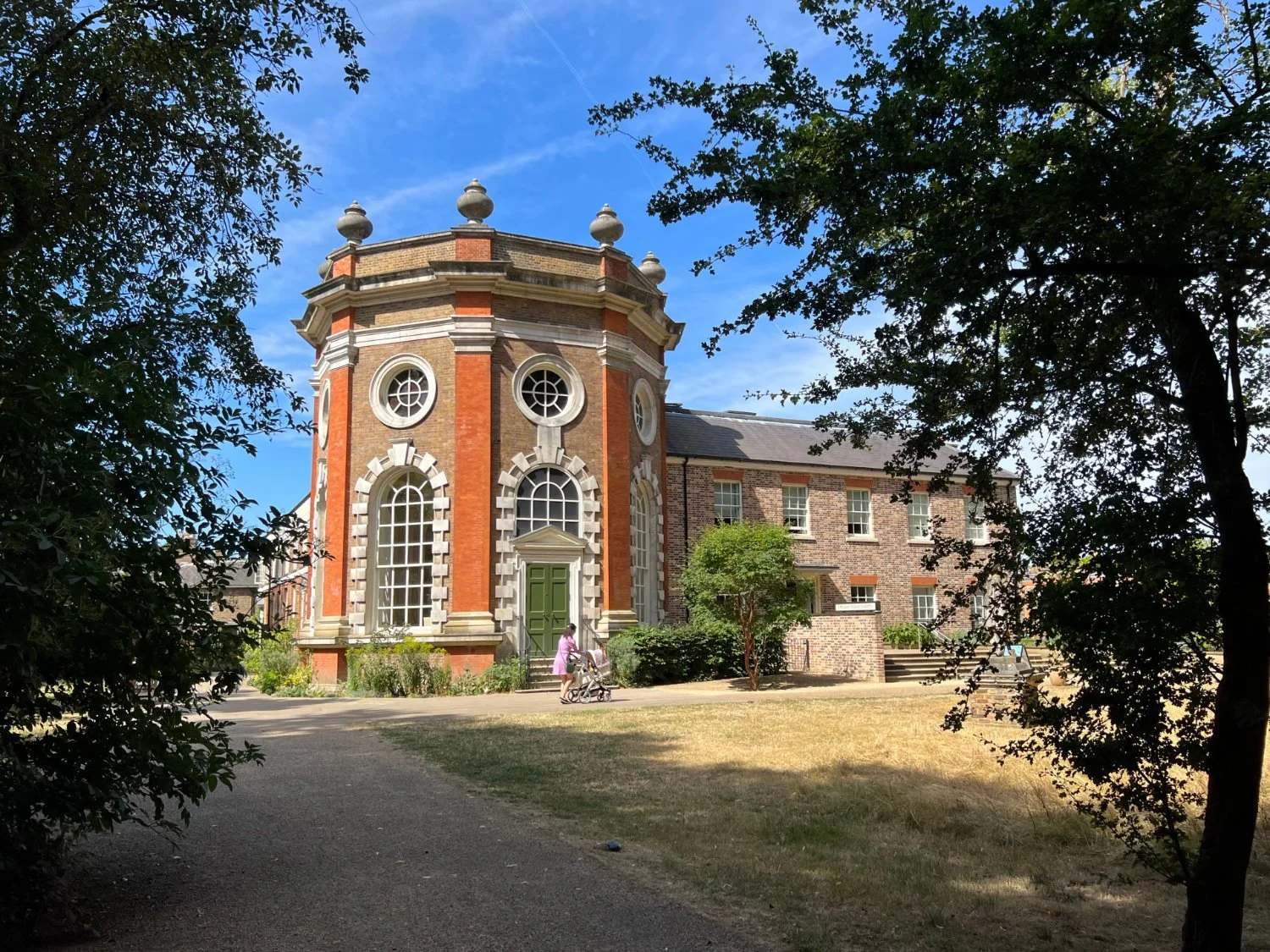
Grand homes come thick and fast now as you continue riding east. Orleans House, so called as it was home to the deposed king of France, Louis Phillipe has a good café in the former stables and the Octagon has recently been restored. Inside there’s a collection of paintings inspired by the section you’re riding along the Thames. It was once said to have ‘the best collection of fruit of all sorts’. Marble Hill House is a perfectly formed Palladian house built on the orders of George II for his mistress, Henrietta Howard Countess of Suffolk.
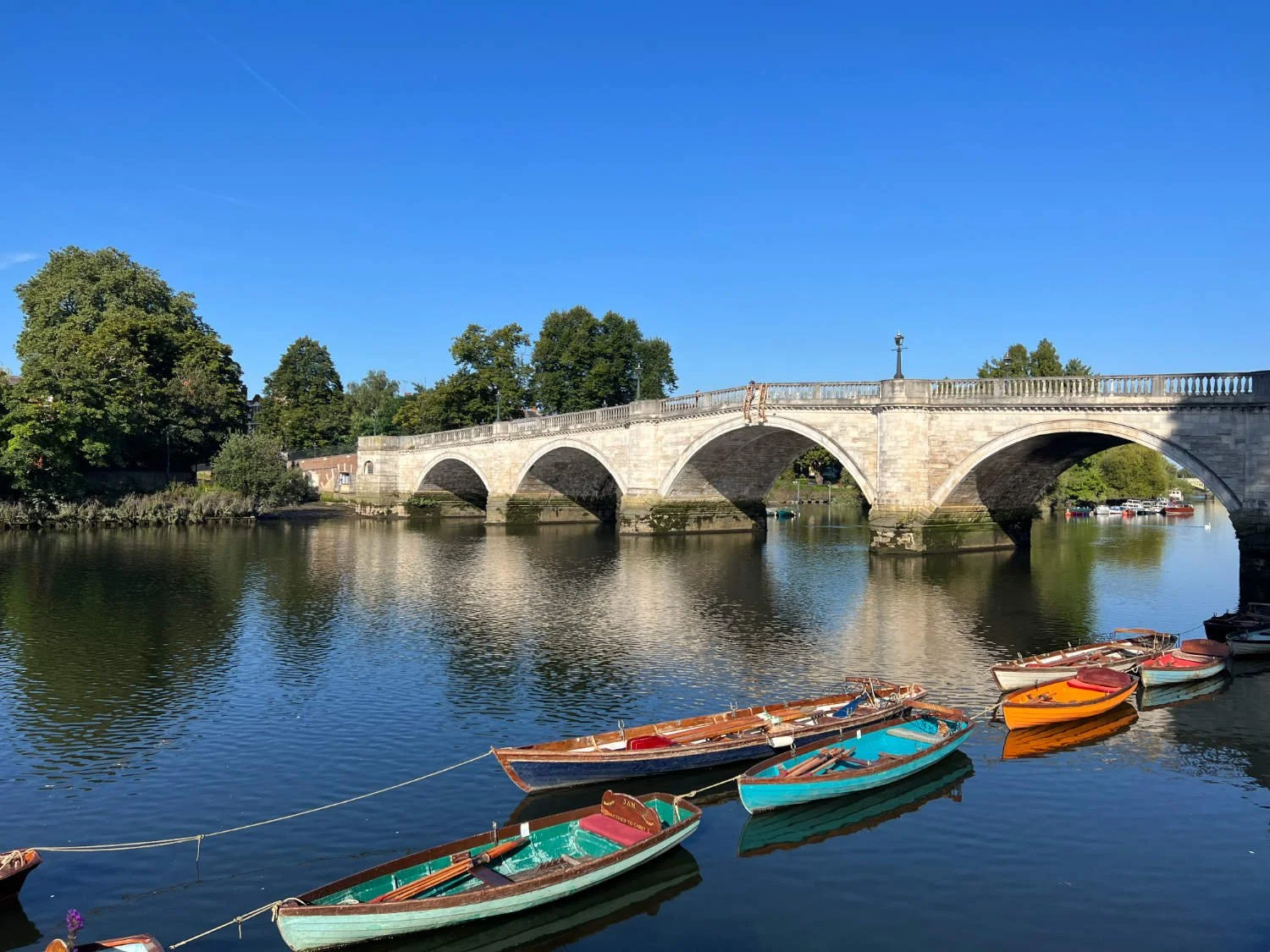
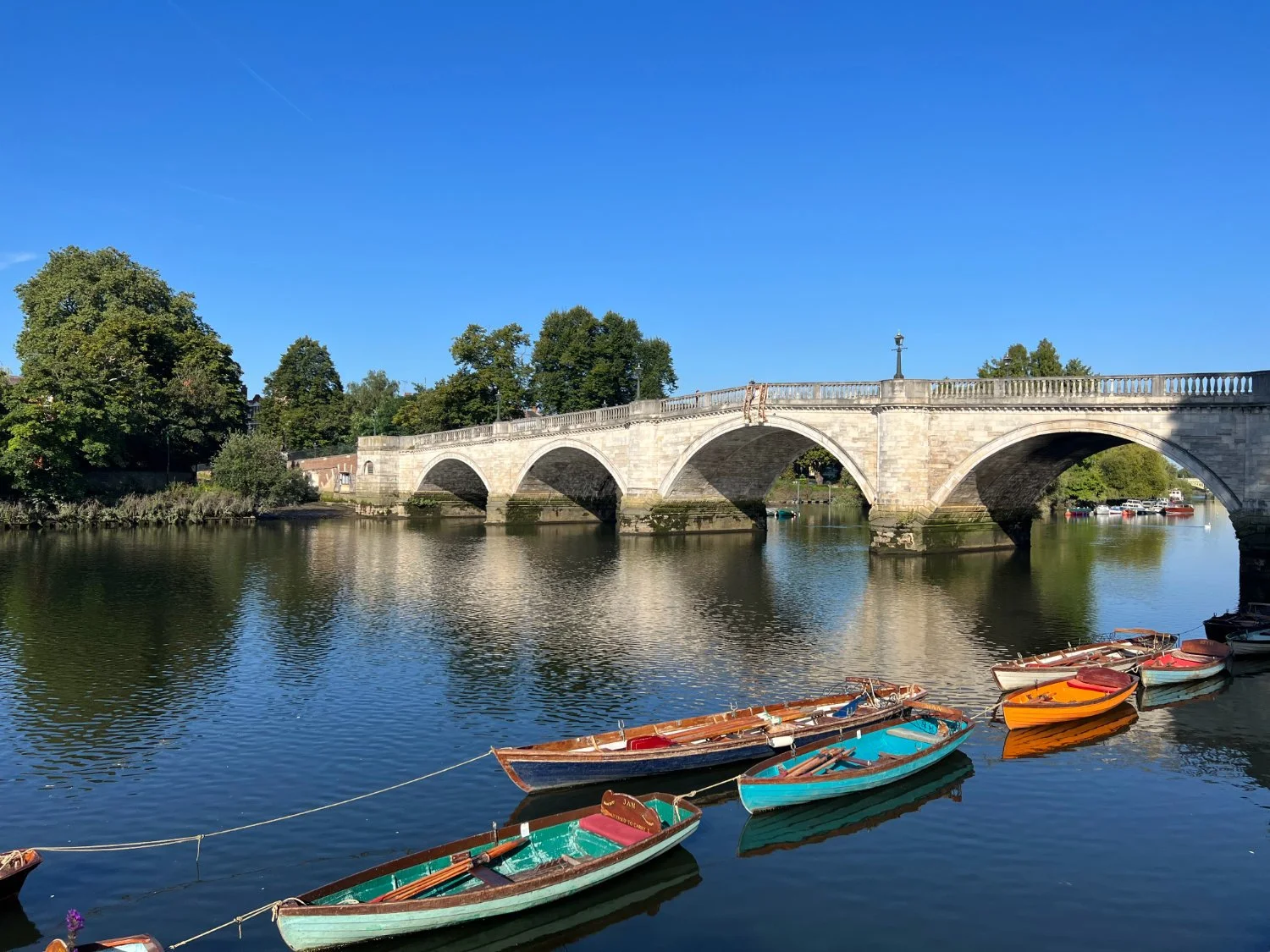
Richmond Bridge
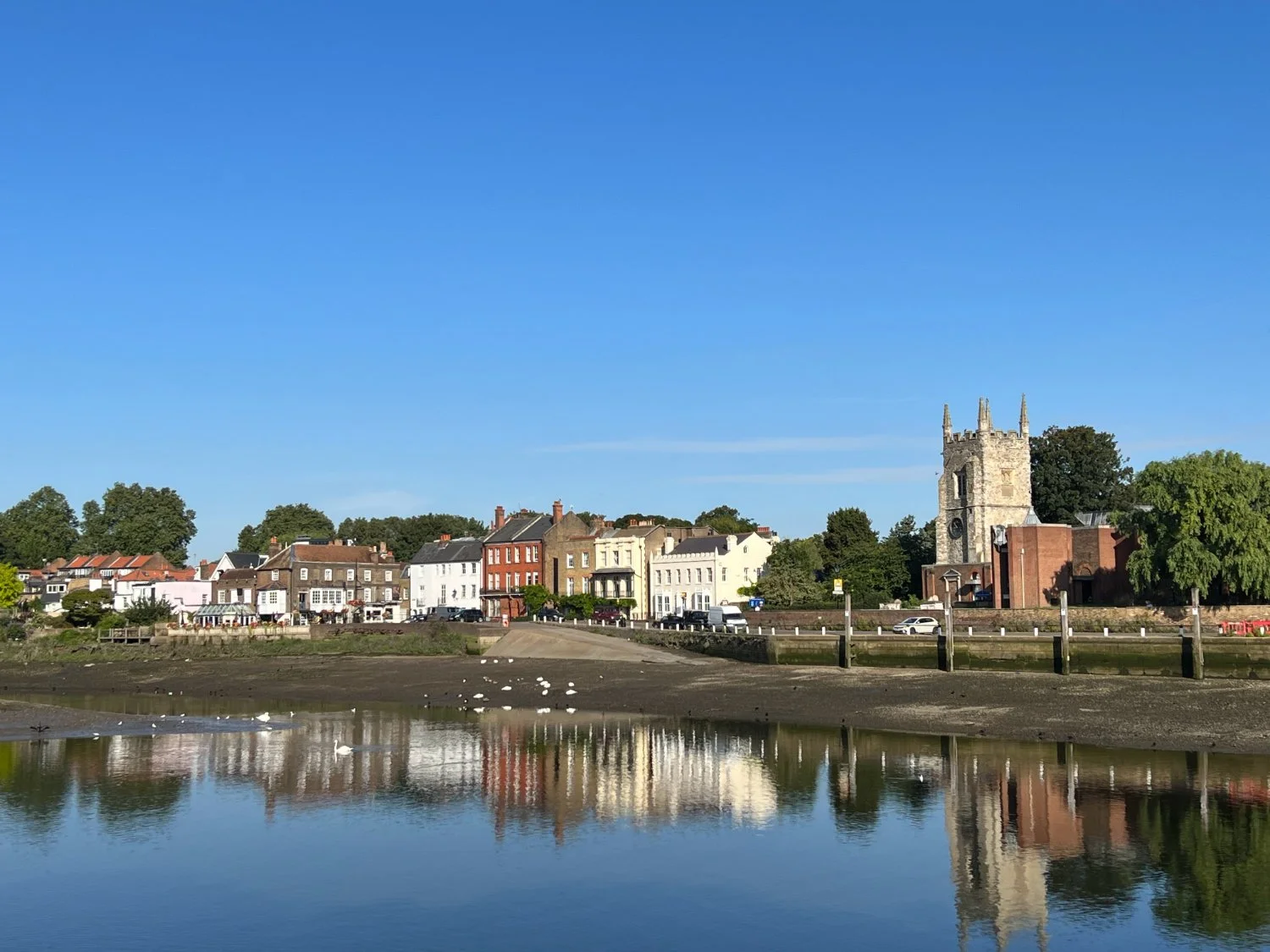
A shared river path follows the river bends with lovely views across to Richmond. You pass Teddington Lock, the furthest reach of the tidal Thames. Isleworth has a country feel, with willows waving in the wind, swans gliding upon the river, a riverside pub (The London Apprentice), a church and a terrace of Georgian cottages. It’s not difficult to imagine that you have been transported into the Cotswolds.
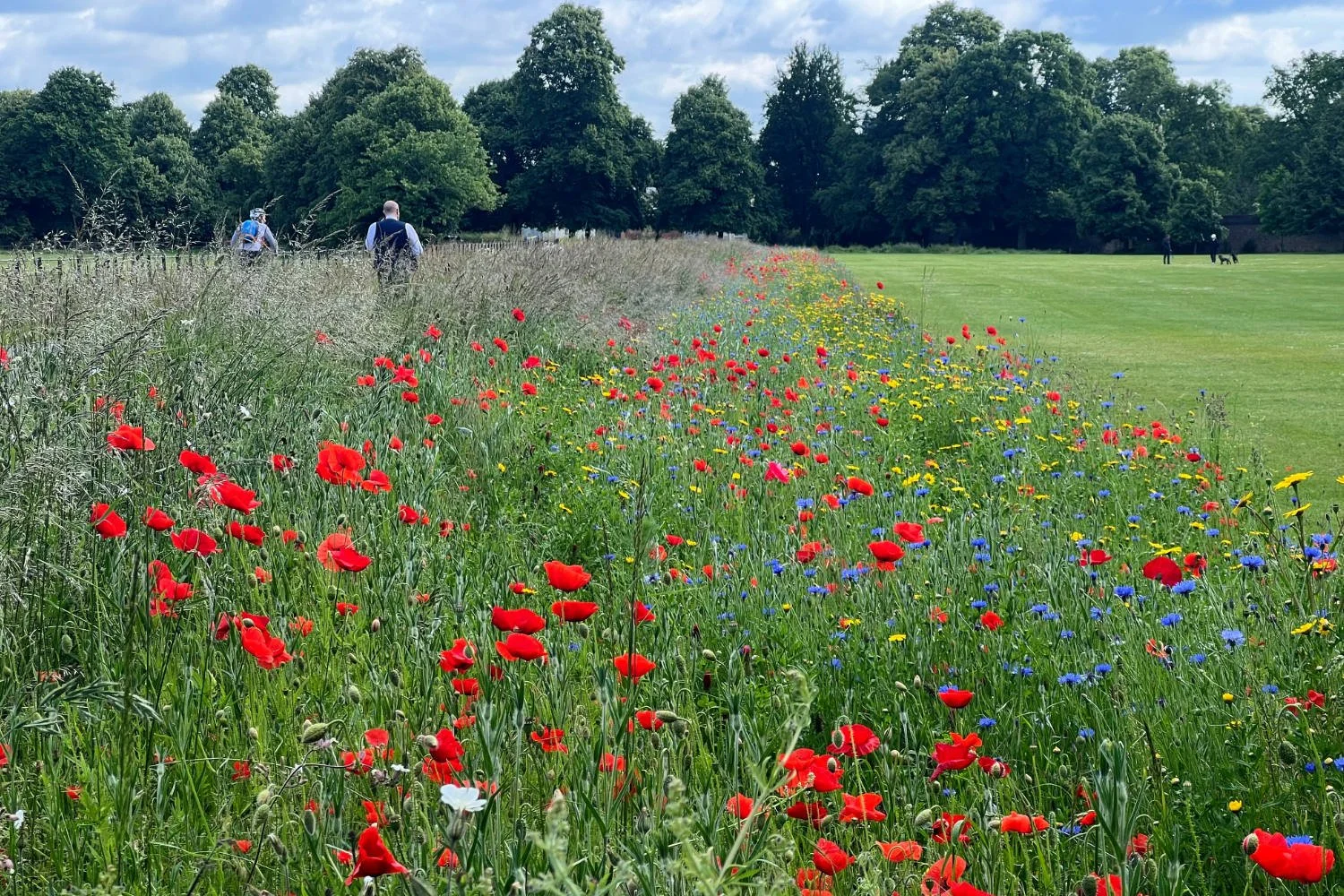
Syon House Wildflower meadow
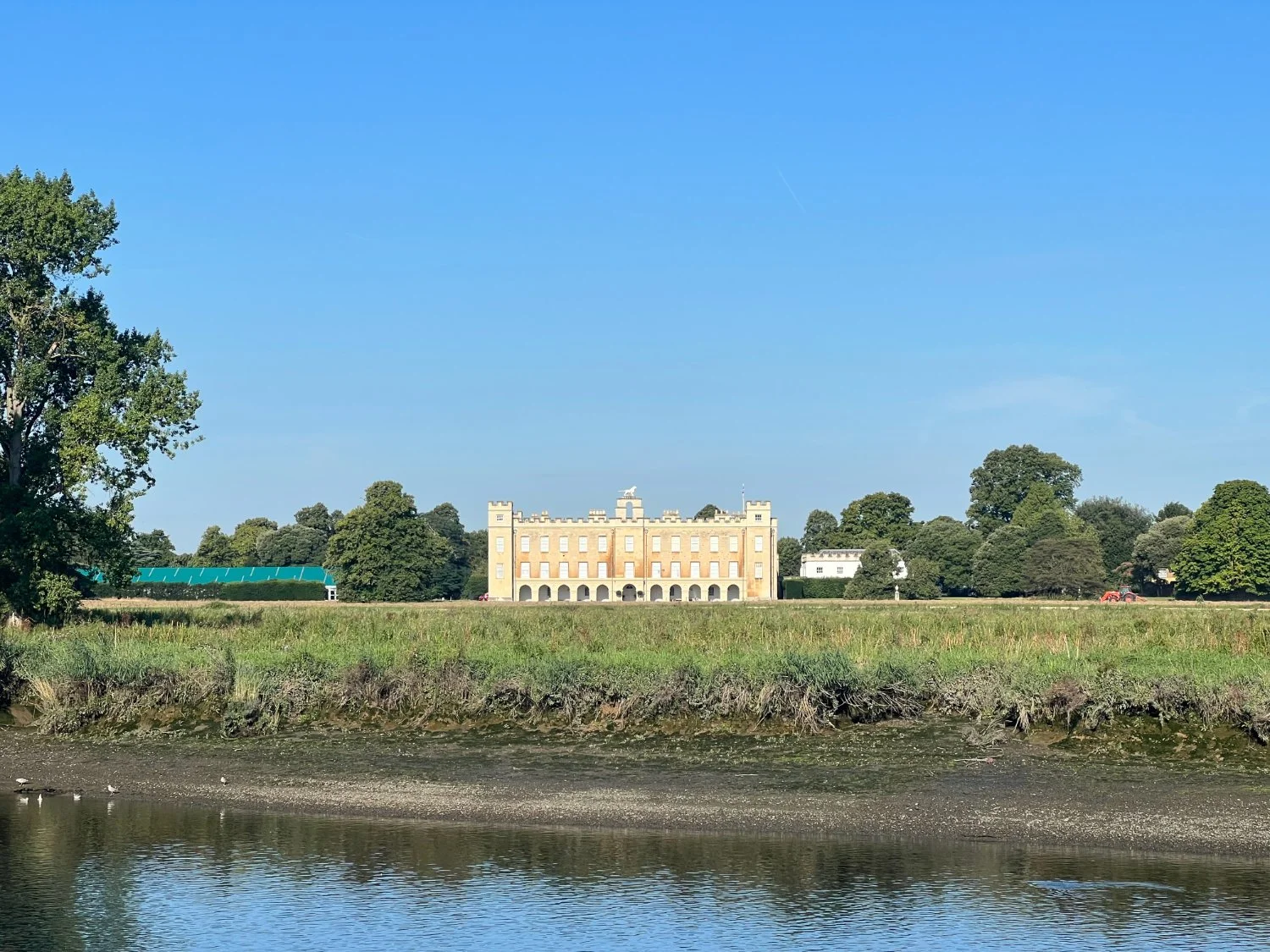
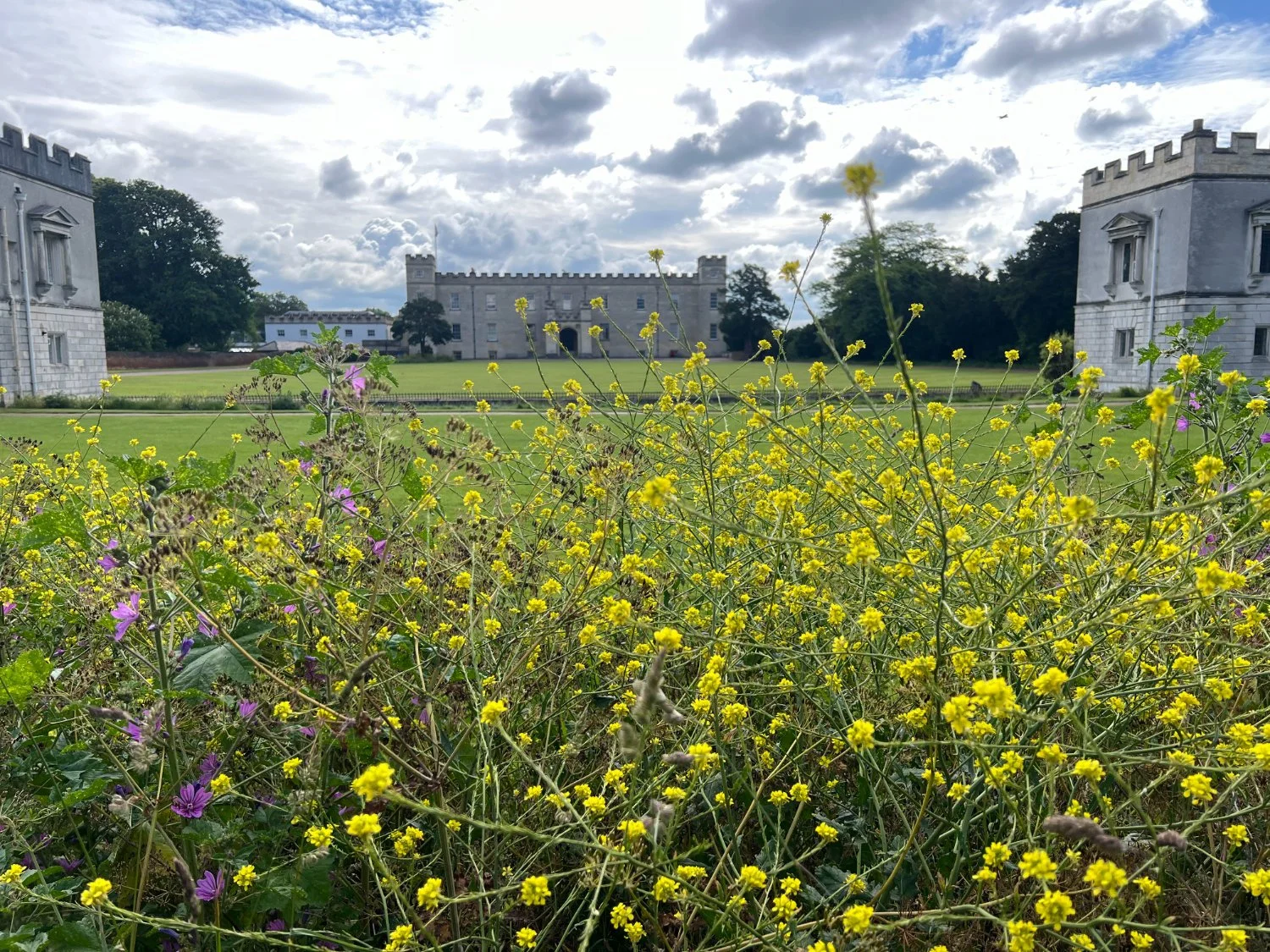
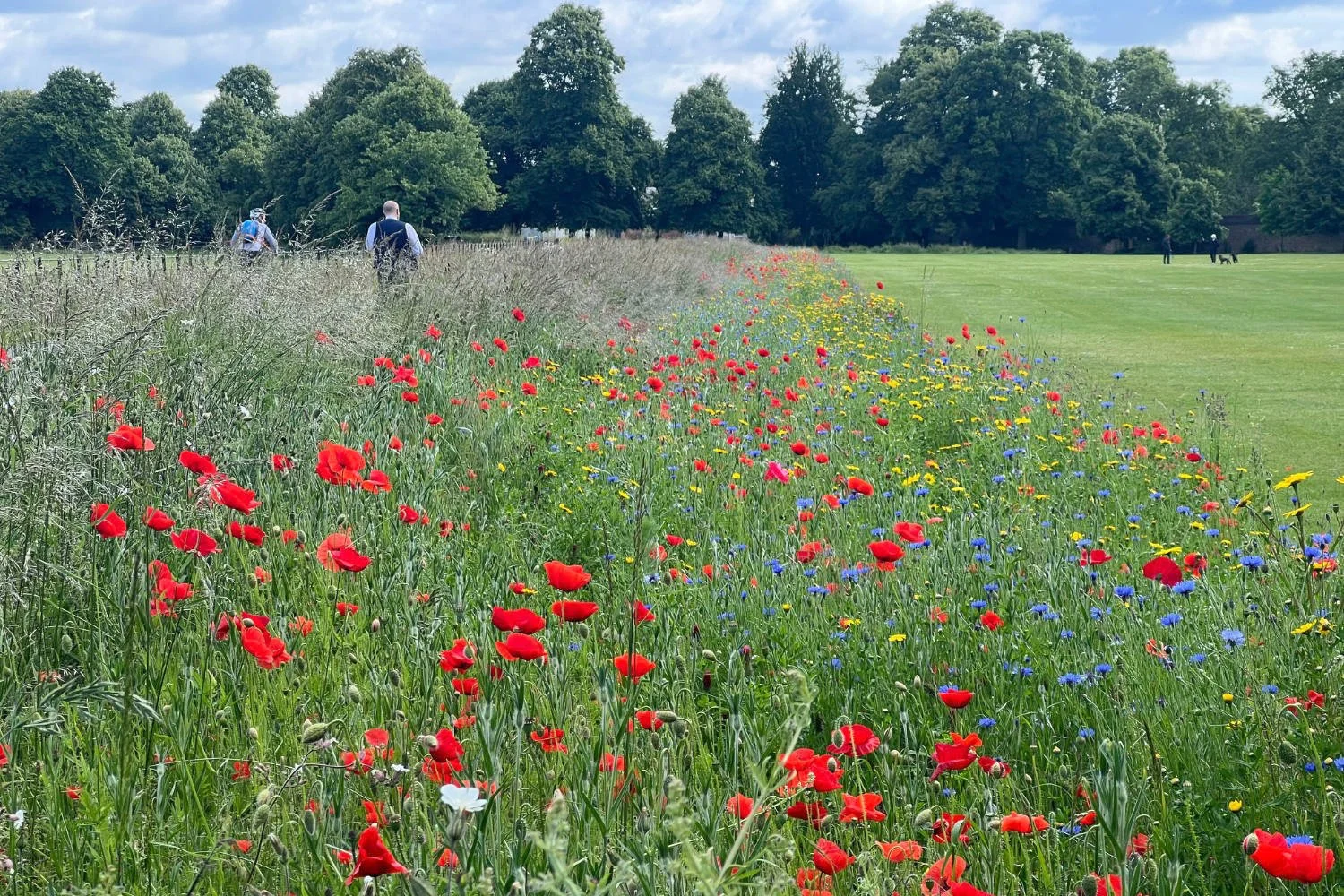
A couple of hundred metres and you’re into Syon Park, still privately owned by the Duke of Northumberland. To cycle through these grounds so near to the heart of London is to suspend any pre-conceived ideas of what a city beholds. The landscape is almost more country than the country itself - wild flower meadows, a stately home, huge fields grazed by cattle, stands of trees, gnarled oaks, winding lakes and gardens of great renown. Even a sign saying, ‘Beware of the Bull’. (worry not, it is off the path well fenced in a field). The house was once a nunnery which came into Royal ownership after the Dissolution of the monasteries. So furious were the nuns at the closure, that they cursed the king, Henry VIII, saying that he’d be eaten by dogs. After his death, his body rested here on its way to Windsor. It is said that the body burst whilst inside the coffin and the putrefying parts leaked onto the floor to be licked up by dogs. Designed by Robert Adam, the house is filled with treasures including the Dying Gaul by Luigi Valadier. The gardens and glass house, are a smaller version of what you’ll find at Kew later in the ride.

Chiswick House
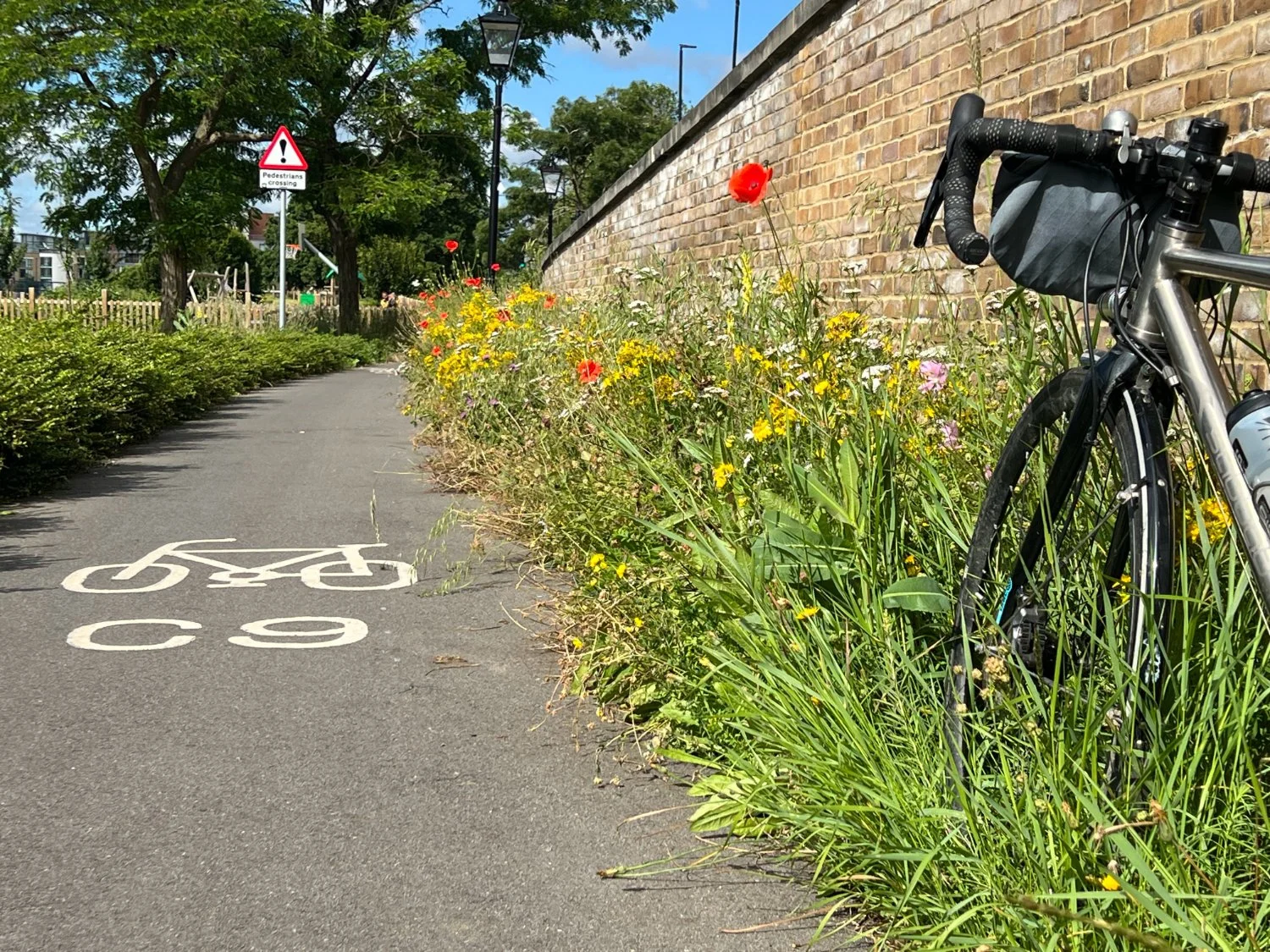
From Syon the route follows C9, another segregated cyclepath to Kew Bridge, where you turn onto a series of quiet back roads before arriving at Chiswick House, where the uniquely English 18th century Landscape Movement began. It is considered one of the country’s ‘most significant contributions to the visual arts’. The route skirts the ornamental lake, where there are framed views through trees to the house and gardens. The lake and trees and wide expanses of grass, seem so familiar as to be barely worthy of comment, but for its time, this was radical design for a garden - the first attempt to create a less formal and more natural looking landscape.
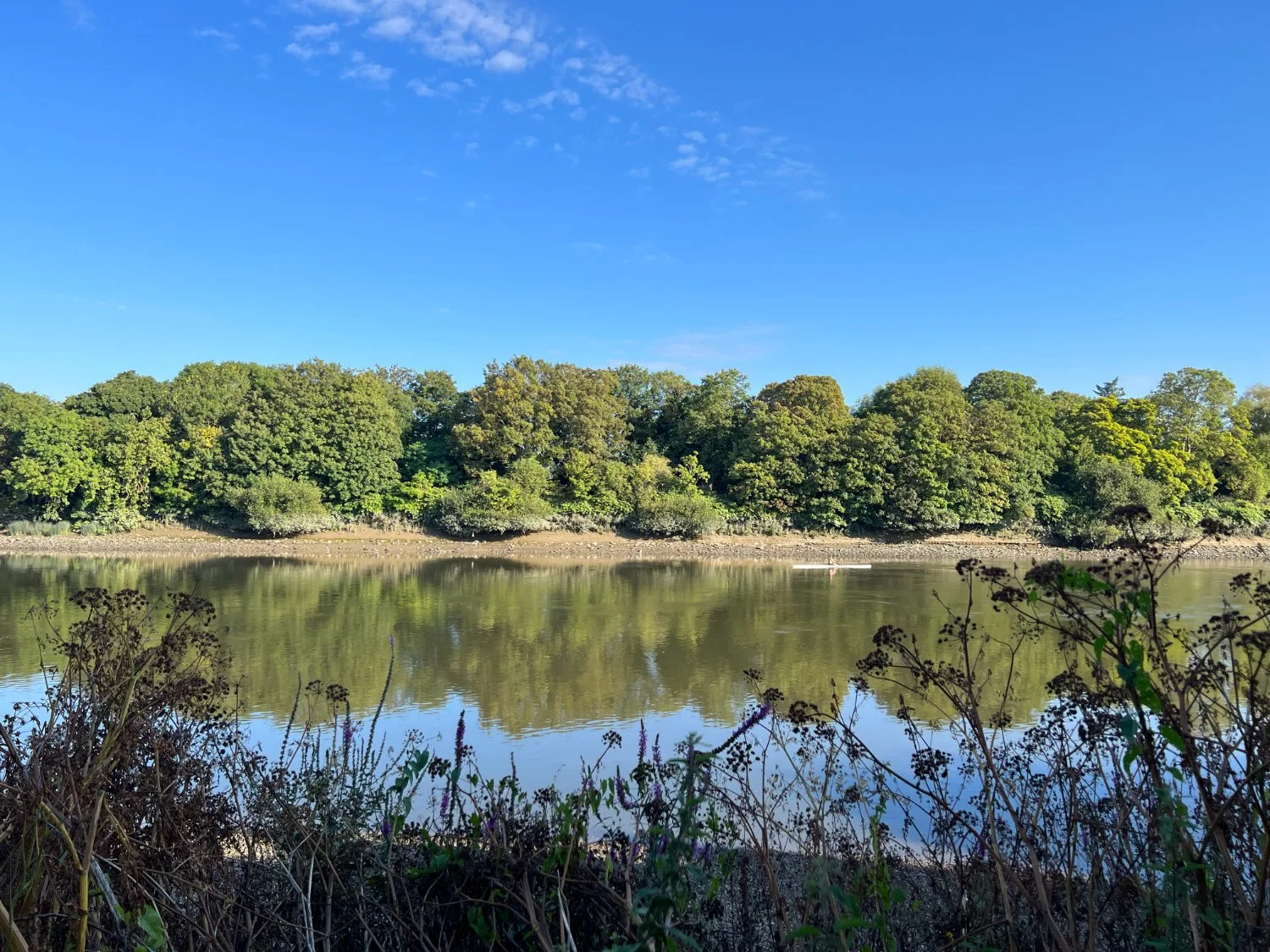
Out of the Estate’s gates, you take a traffic-free path down to the river and cross Chiswick bridge. Willows wave in the breeze, poplars whisper. Scullers oar their flimsy craft across the water, picture-perfect Georgian town houses line the river bank. Riding on the compact cycle-path, one seems to drift along with the tide of the river, rather than ride. It is very lovely.

Kew Palace
The Royal Botanic Gardens, Kew have UNESCO World Heritage status. Not only do the gardens have their own police force, but there’s a palace in the grounds where King George III was ‘treated for his madness’. Inside the palace boards tell of the pain, both mental and physical, that he had to endure. The palace still carries a weight of melancholy, the gardens uplifting and joyous.

The King's Observatory
Back on the river path, the route bends and twists its way to Richmond, passing the The King’s Observatory, where the first meridian line was created. Obelisks mark the line’s trajectory before it was shifted east to Greenwich.

The view from Richmond Hill
Richmond arrives out of trees in all its stately Georgian glory. The Royal Palace, where Henry VIII nearly died as a young prince when he fell through some rotten flooring, has long gone and pubs, cafés, a boat building yard and a rowing club line the river bank instead. It’s a bit of a haul up Richmond Hill to the only legally protected view in all England awaits. In seeking a more natural landscape away from the formalities of the Tudor and Stuart gardens, the great landscape designers of Lancelot ‘Capability’ Brown, William Kent, Humprey Repton and others, looked to this view for their inspiration. The panorama, which is largely unchanged since the 18th century, has been copied and modified across many great 18th century estates up and down the country. (You saw it in modified form at Chiswick House).
Downhill, across Petersham water meadows and back to the river, the route continues to Ham House, where there is another opportunity to stop. The House and gardens have been used in many films including; The Young Victoria, Never Let Me Go, and Sense and Sensibility.

Ham House
The dream-like riding continues back to Kingston, along the tow path. There are trees and meadows. River views, boats, scullers and swans. The path is well maintained. The riding is easy. Delectable. Arcadian even. The route passes All Saints Church, where those English Kings were crowned in pre-Westminster Abbey days. Nearby is the market place and plenty of pubs. The route ends at Kingston’s station.

Marble Hill House
Every route on this website has been carefully researched as well as ridden. However situations on the ground can change quickly. If you know of changes to this route, or cafes, pubs and the like which you think other cyclists need to know about, feel free to share your thoughts below.
If you enjoyed this guide, why not subscribe to the website so as not to miss other inspirational routes?
wheremywheelsgo.uk is a Feedspot UK Cycling top website