London's second river
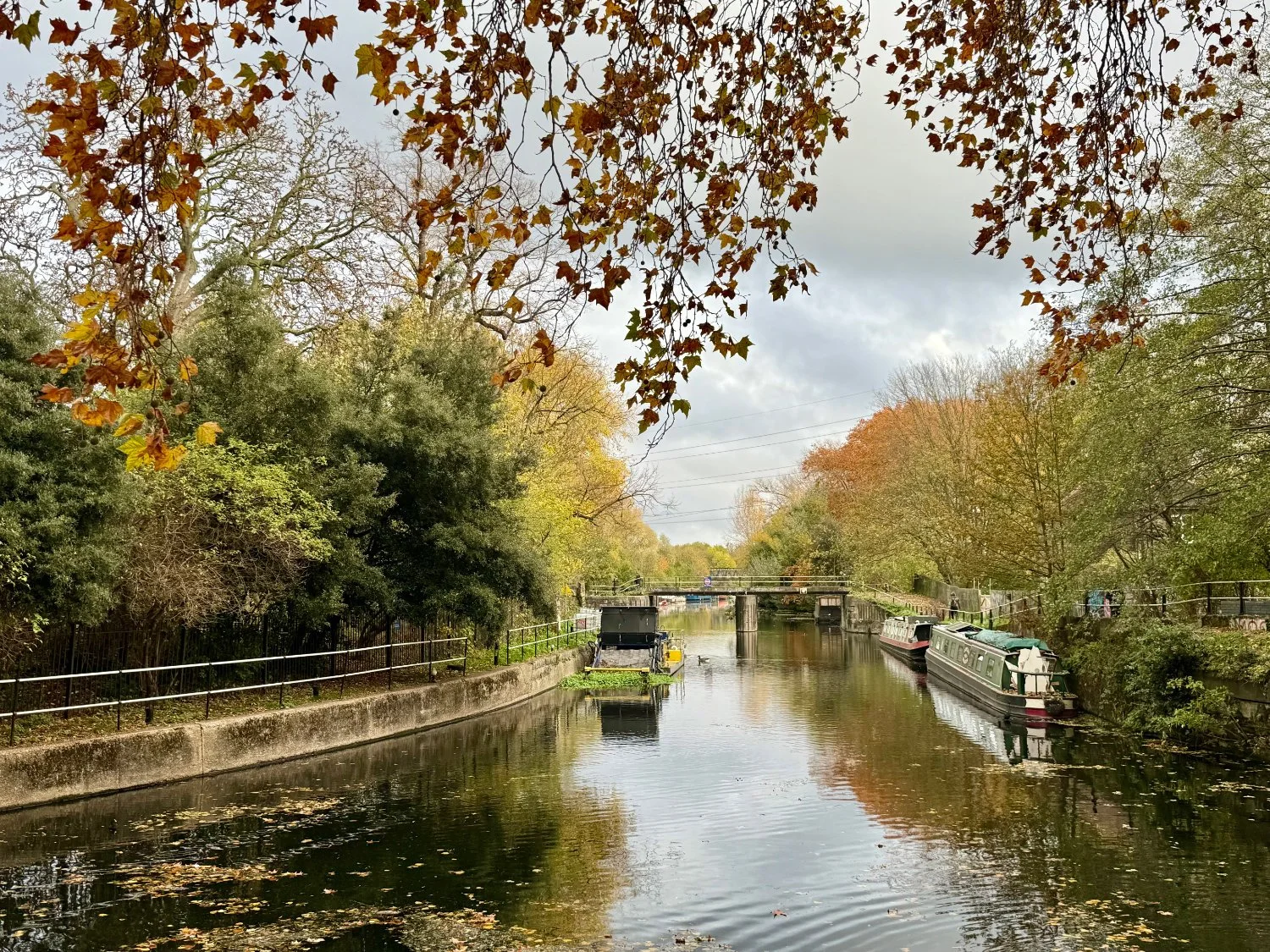
The River Lea carrying an autumn sky
Overview
Richard Mabey called it, ‘The Bastard Countryside’; the blurred boundary of land between real city and real countryside. A place where moorhens mix with graffiti, canalboats with willows, industry with dereliction, discarded car tyres with rare orchids. Such a landscape is often neglected, unloved but for all that richer in wildlife than any National Park. So it is with the Lea Valley.
The River Lea (or Lee - both spellings are historically correct, although there’s a tendency to use ‘Lea’ for the river and ‘Lee’ for the canalised sections) rises in Luton and wanders through the valleys of the Chilterns before arriving on London’s edge at Waltham Abbey. It is the longest tributary of the Thames and has served as a natural boundary between the Saxons and the Vikings, between Anglo-Saxon kingdoms and later as a boundary between Middlesex and Essex. Its marshes, once feared as impassable and malarial were also rich pastures for grazing, its wetlands for fish. Today, it is more of a vibrant green ‘lung’ for East Londoners, than a boundary marker.
Since the surface along the Lea Valley cycle route is firm, the ride from Waltham Abbey to the river’s confluence with the Thames is a good four season towpath ride, at its best in the cold months. On short hazy days when the shapes and colours have been washed by winter rain, you learn the scents and smells of the city - the smell of brick and dereliction, of wet grass and pigeons, of spices and roasting meats, of damp earth and coal smoke which twirls from the narrow boat chimneys. You sniff the weed puffed out by young men sheltering under bridges and smell the iron black waters.
The river carries the sky, wheels turn on a puddled surface, the trees sentried along its banks, the withered blooms of water plants, black squiggles of birds against the clouds.
Historically, the valley has been one of the key centres of English invention. The Domesday book records many mills along the Lea, and in the Middle Ages, it was a vital transport link to and from the city. The canalisation of the river in the 18th century, however, turned it into a commercial highway, supplying timber, grain and later gunpowder to London, and removing much of its manure. Riding the Lea is a scroll through England’s industrial firsts; from gunpowder to electrics, from the first all British car to the First all British plane.
Electrics; The Diode Valve, invented in 1904 at Ponders End - one of the most important developements in electronics history - the foundation of radio, television and later computing. The valley is still at the forefront of electrical engineering and the $1bn Google Data centre (the largest in the UK) opened in 2025 at Waltham Cross.
The Electric light-bulb manufacture and electric lighting - invented and developed by Joseph Swann and Thomas Edison. Including the devellpment of lighthouses and lightships.
The first British petrol-fuelled car - The first four-wheeled car powered by an internal combustion engine was built in the vallye byt Frederinck Bremer of Walthamstow.
Porcelain - “Bow China” - the first commercially successful British porcelain was produced along the Lea.
The first all powered British flight took off at Walthamstow marshes, under the guidance of aviator Alliot Verdon-Roe (whose firm went on to create the Lancaster and Vulcan bombers.)
Gunpowerd and munitions - Waltham Abbey, on the Greater London boundary, became a national hub for explosives, an industry which marked the landscape (as well as the workforce). the valley was ‘home’ to the Lee Enfield Rifle, one of the most significant weapons in military history. At Enfield Lock, the principles of mass manufacture were developed. Rockets, atomic devices, and a variety of guns have their roots in the valley.
Petrol, dry cleaning and Indian Pale Ale all trace their creation to the valley.
Riding on a quiet winter’s day you hear the soundscapes of the city softly filling the air around you. The irritated cluck of a coot, the sigh of train , the pounding of the jogger’s shoes on the earth. You hear the grinders sparking through metal, the whining saw through wood as a narrowboater adjusts and repairs. The thud of traffic on the bridges above you and the rocking laughter echoing out of the pub gardens. The wail of sirens, swish of tyres on the ground. Your breath.
The river was and still is, at the forefront of East End working-class leisure; with pubs such as the Anchor and Hope and the Princess of Wales. Not all the fun is strictly legal, the Lea seems to bring cover for some wilder fun; impromptu parties, even a rave or two on summer weekends and swimmers. The Hackney Marshes, the ‘home’ of football where David Beckham, Bobby Moore and countless thousands of others learnt their skills. Fishermen sit hunched like monks on the banks.
The ride unfolds, from nature rich to a post industrial landscape of new resident blocks where once whale blubber was boiled for oil. Old gas works turned into flats, stadia of the 2012 Olympic Games built on a wasteland of railway sidings and goods yards. At the end is the glitzy Thames, hauling the glamor and fame into its bends and reaches.