116km London to Oxford
Ride Overview
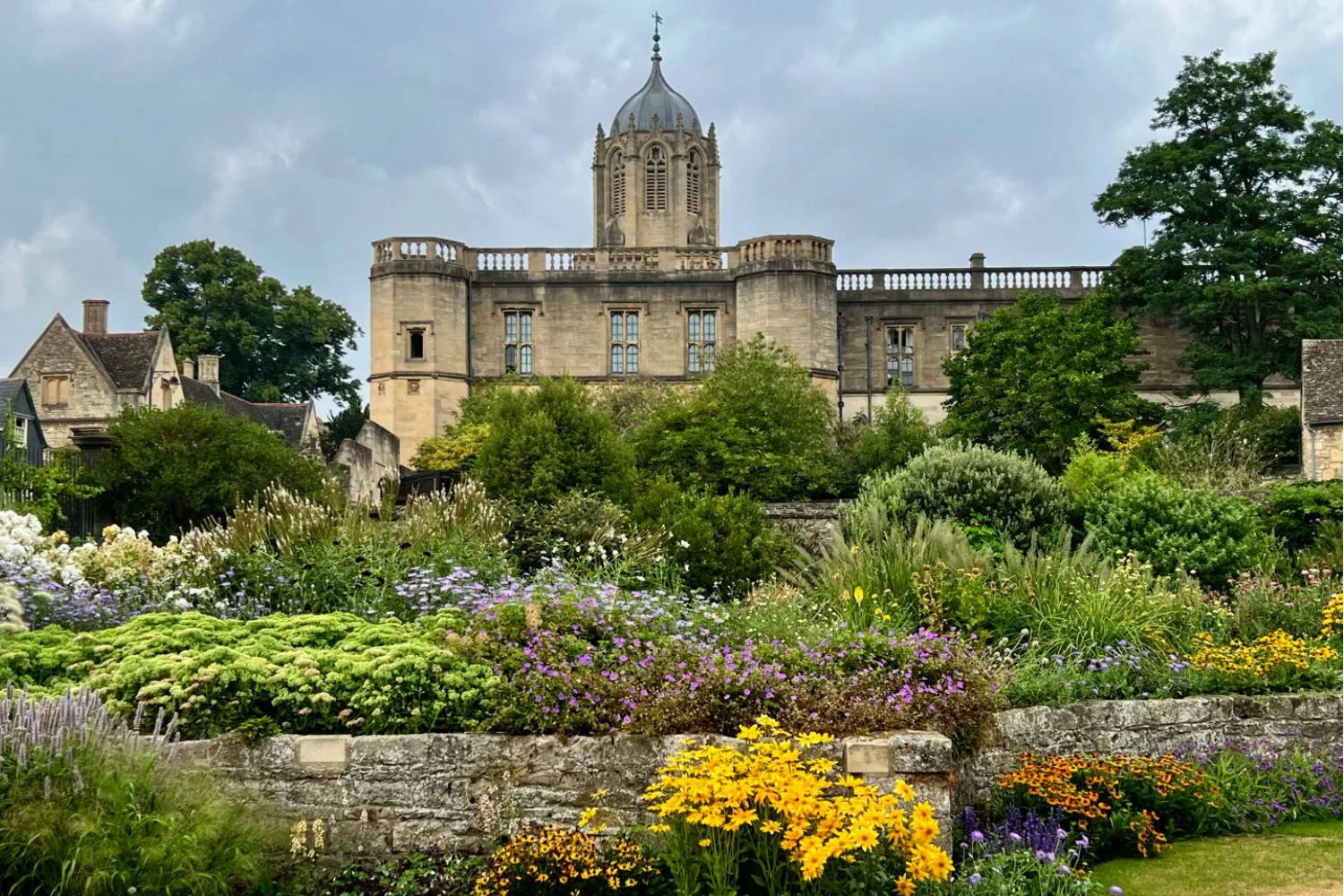
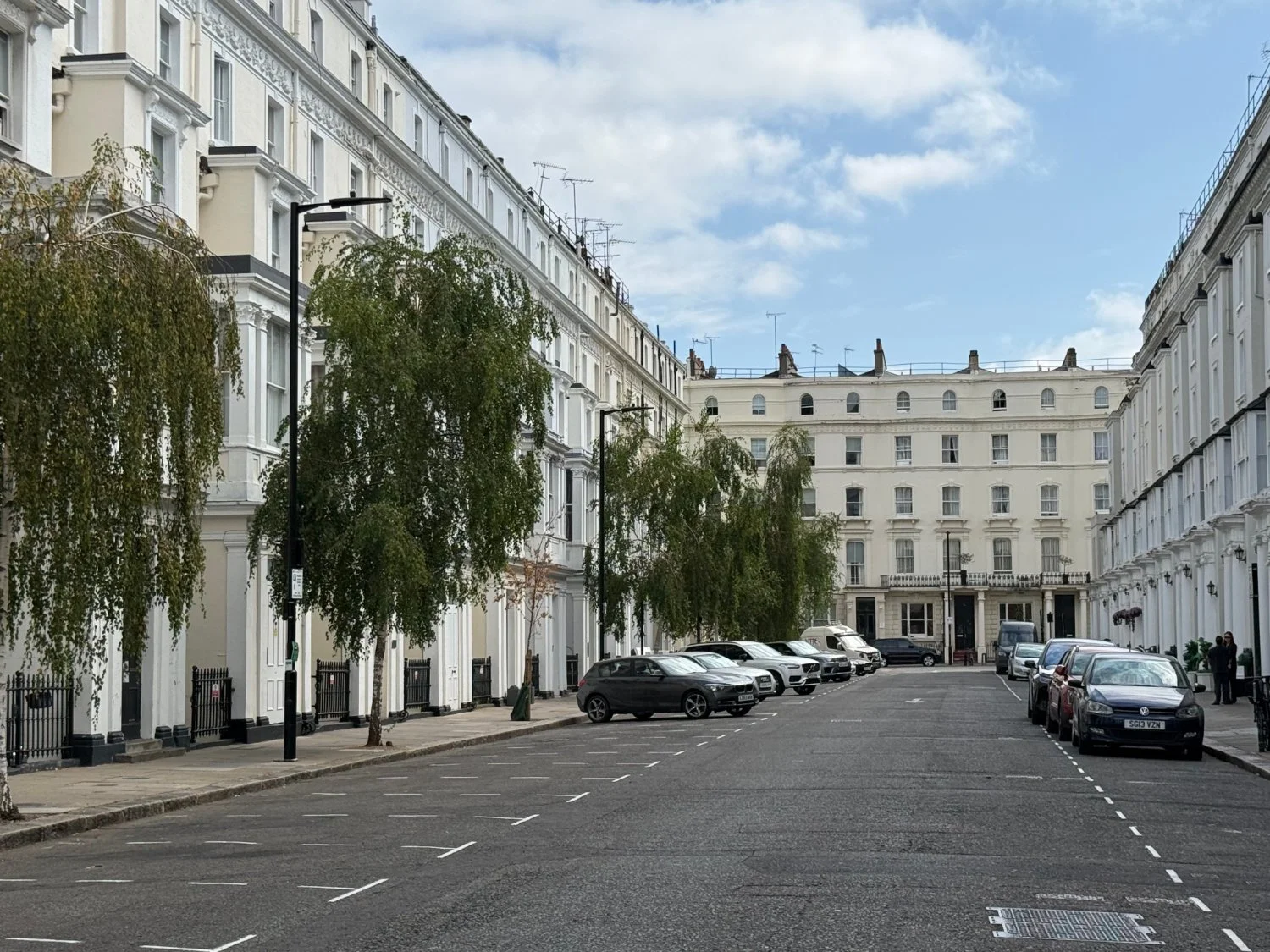
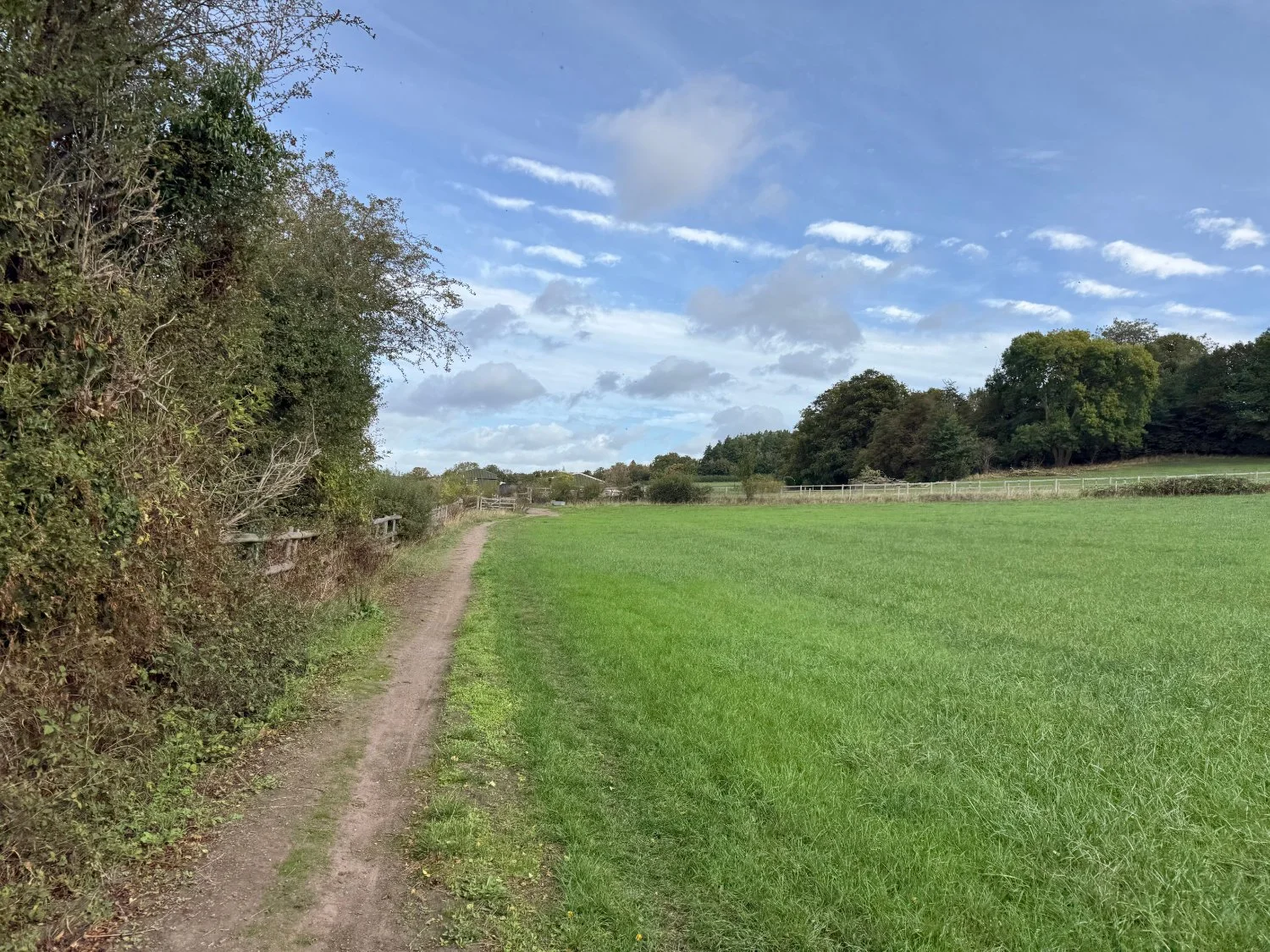
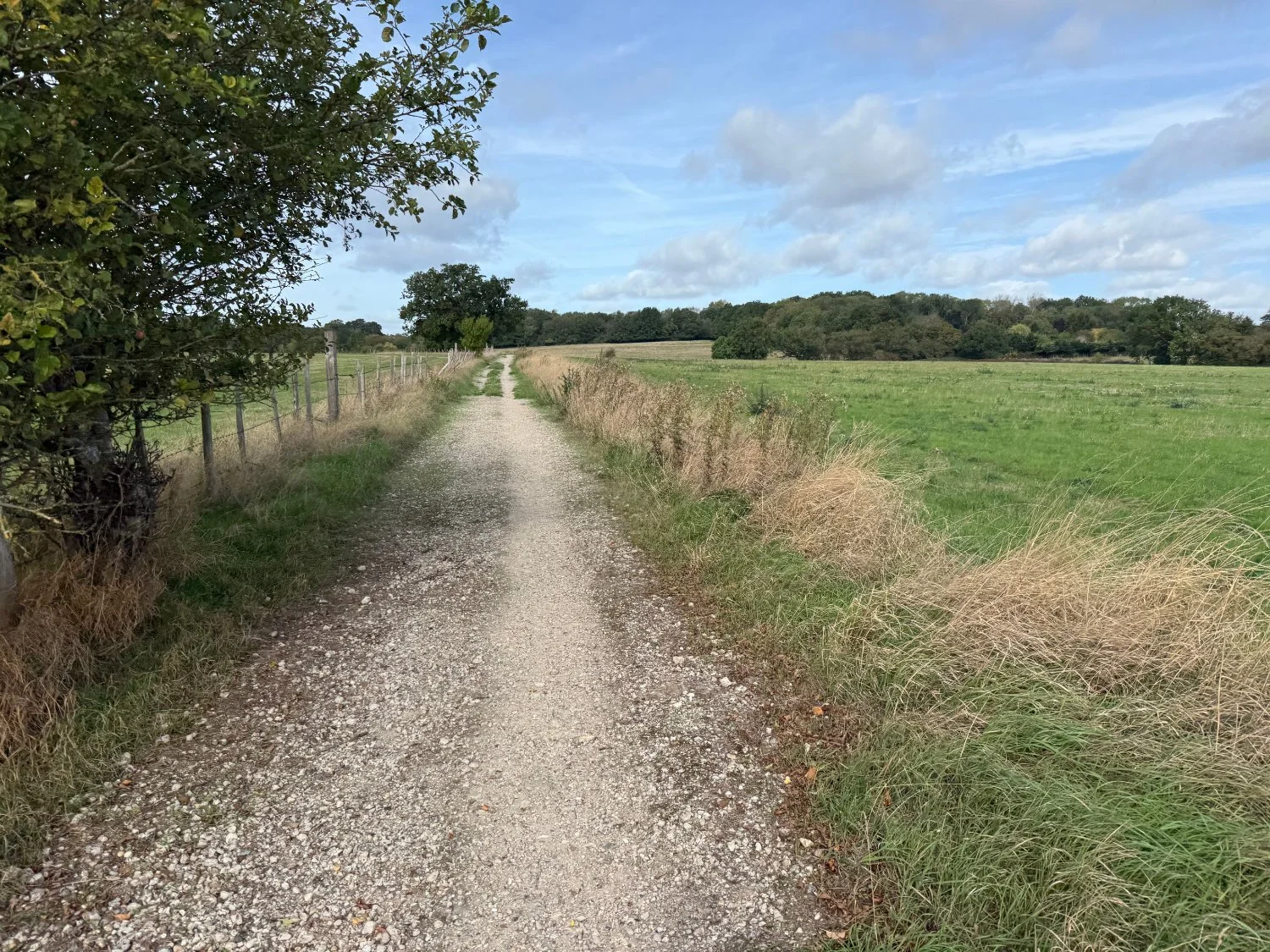
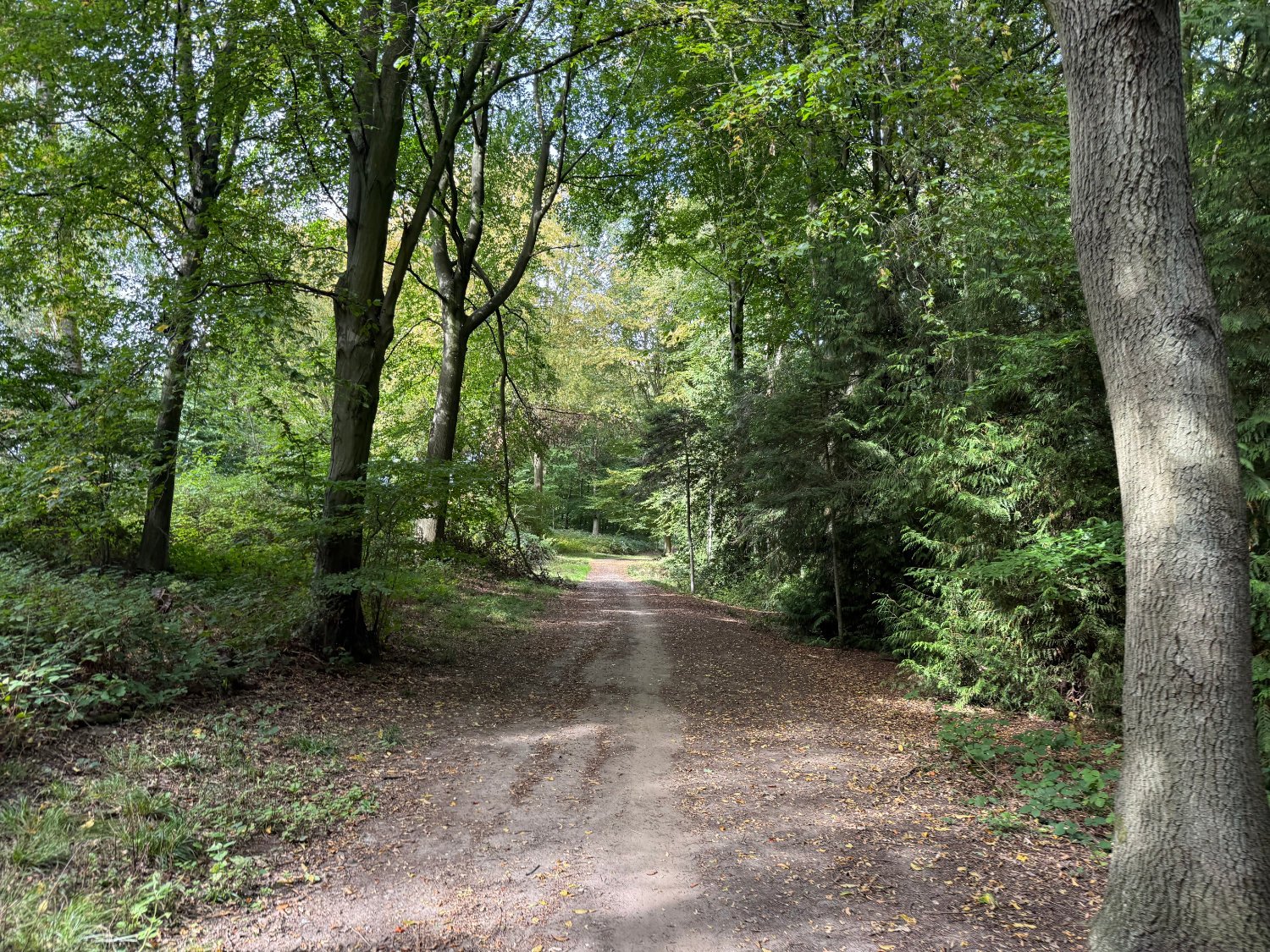
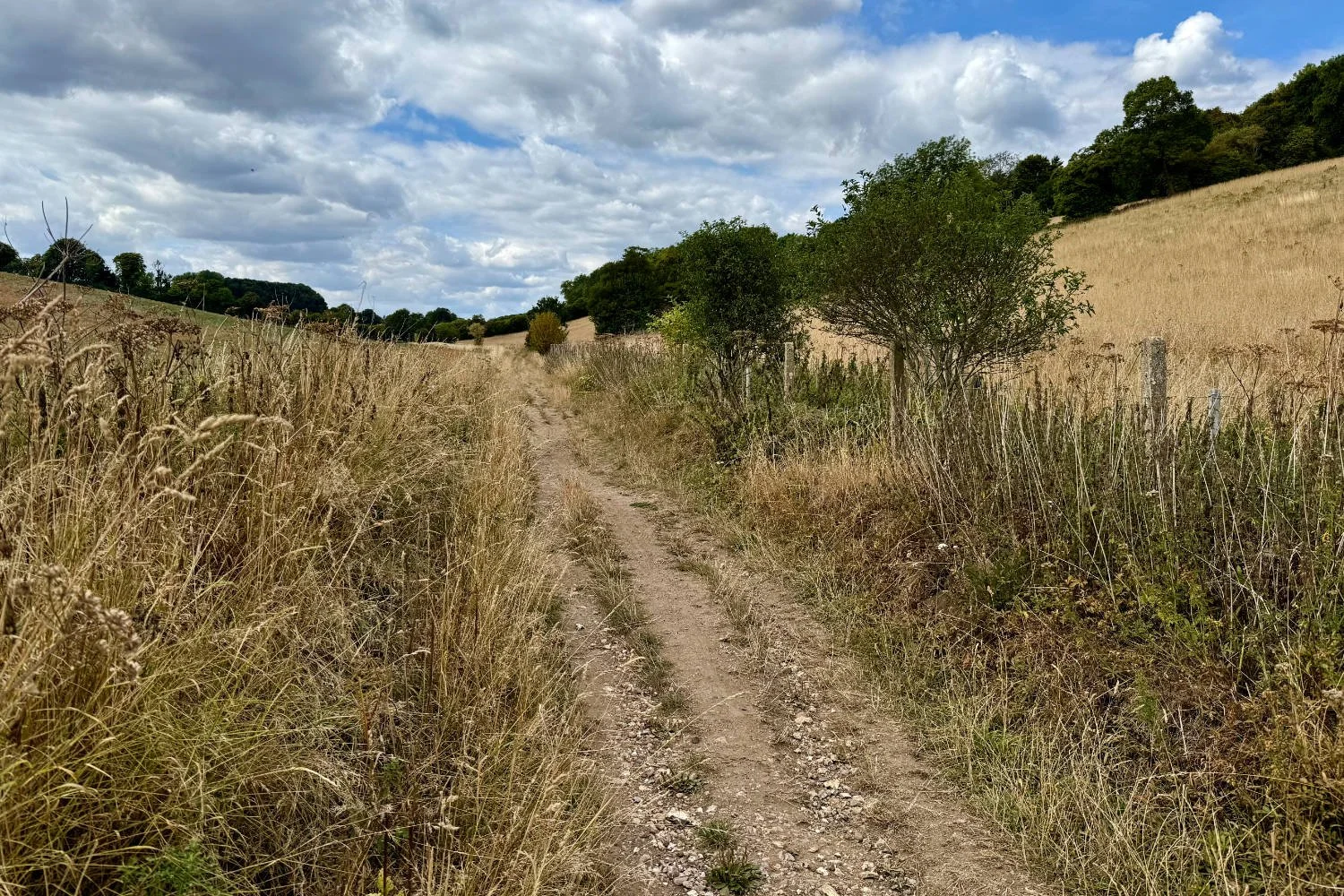
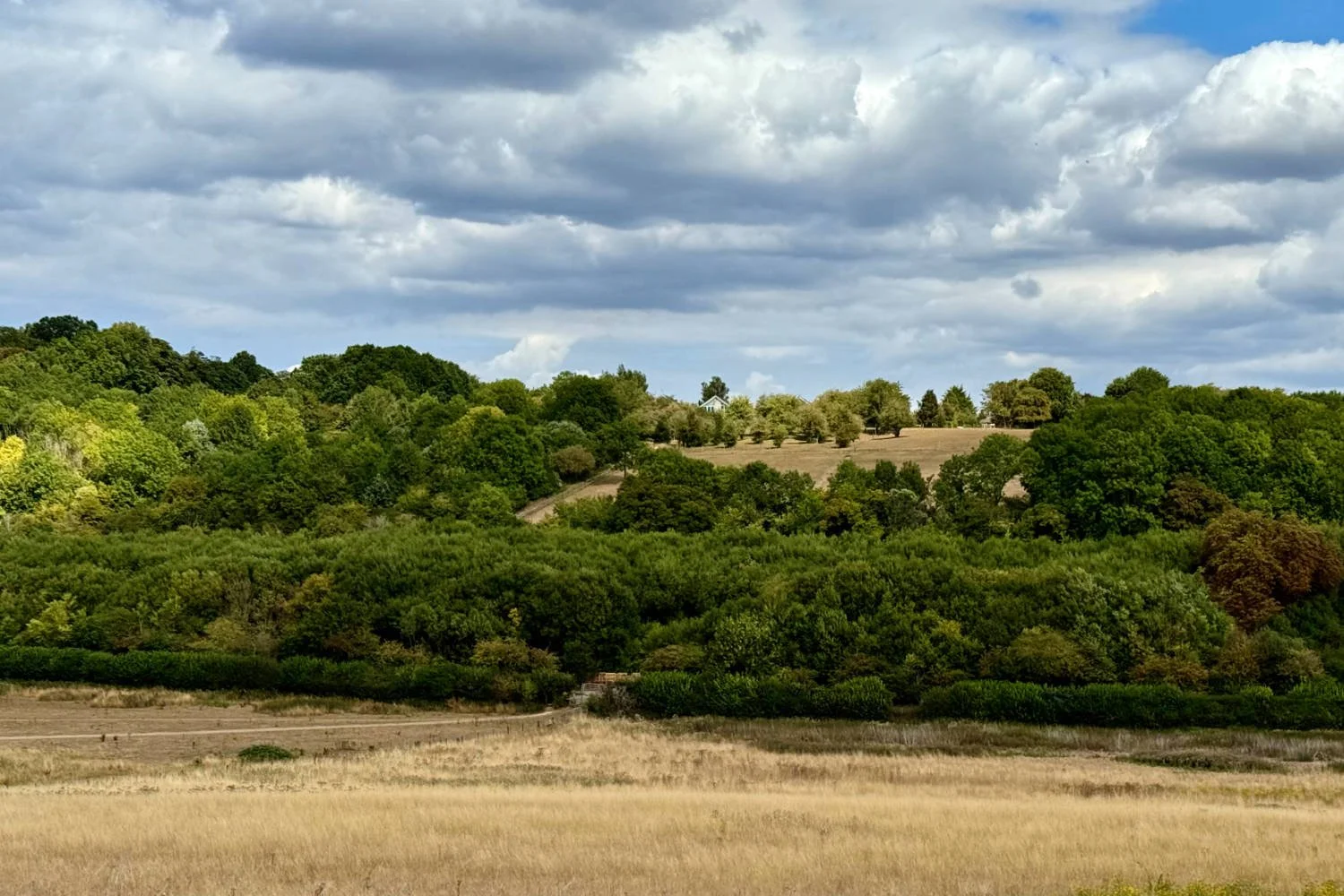
The road to Oxford from London is a mixed surface/gravel route and over 50% of the ride is on traffic-free paths. Using the London Cycle Network, the route uses quiet roads from Marble Arch, through Bayswater and Notting Hill, before following the Grand Union Canal on an excellent traffic-free cycle path. There is a noisy and not especially pleasant 5km stretch beside the A40 (on good cycle path, a good distance from the road). The compensation being that you are out of London quickly. (It is better than faffing around on the alternative, a circuitous route in the back streets of Hillingdon). Once away from the noise, you ride through serene woods on the Grand Union Canal path, before riding up into the Chiltern Hills on the many wonderful tracks to Chesham. Having had a coffee and cake at Roots, a mix of gravel trails and quiet lanes take you over the hills, down the famous Kop Hill and into the Vale of Oxford on the traffic-free Phoenix Trail, at the end of which you arrive in the city of ‘Dreaming Spires’.
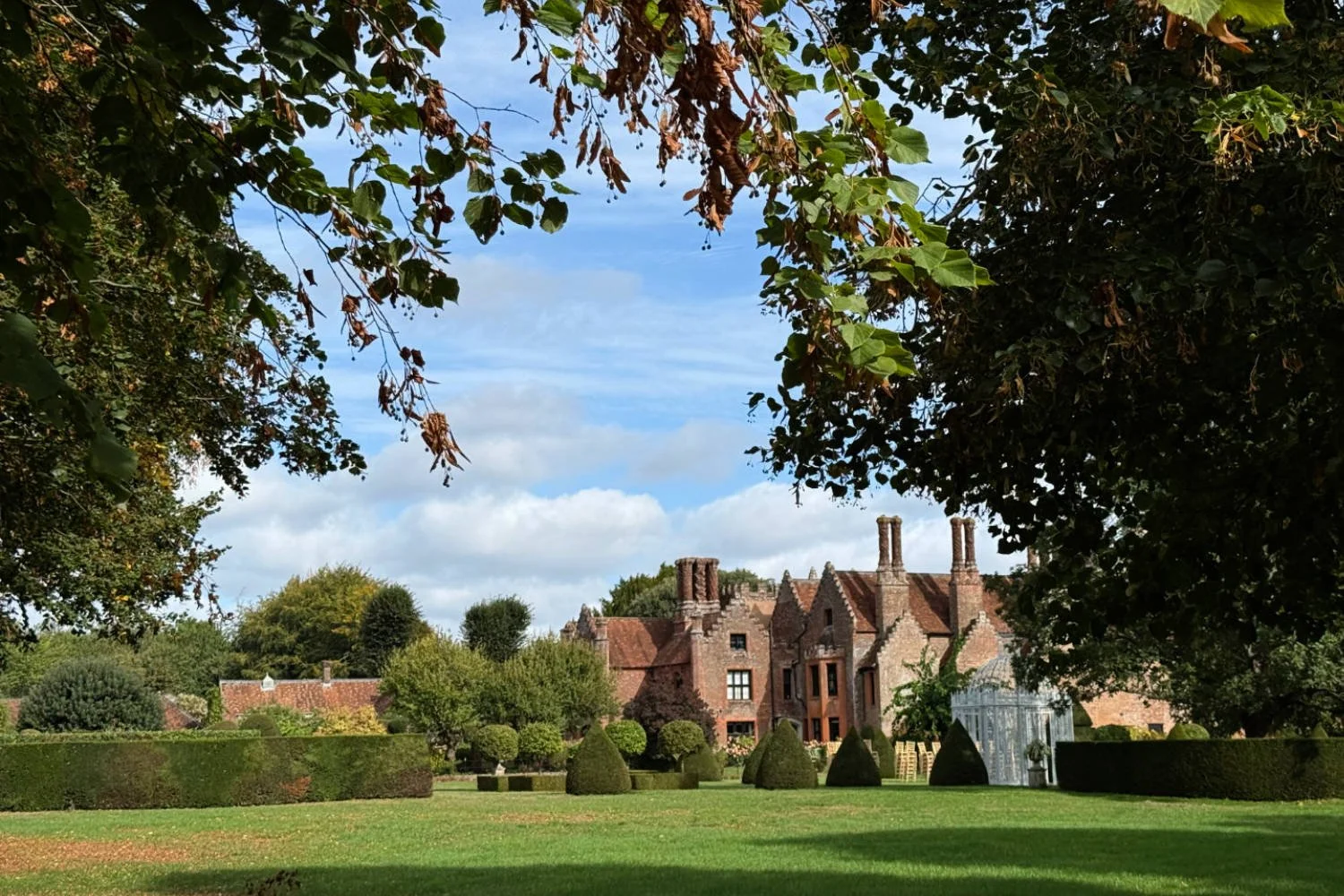
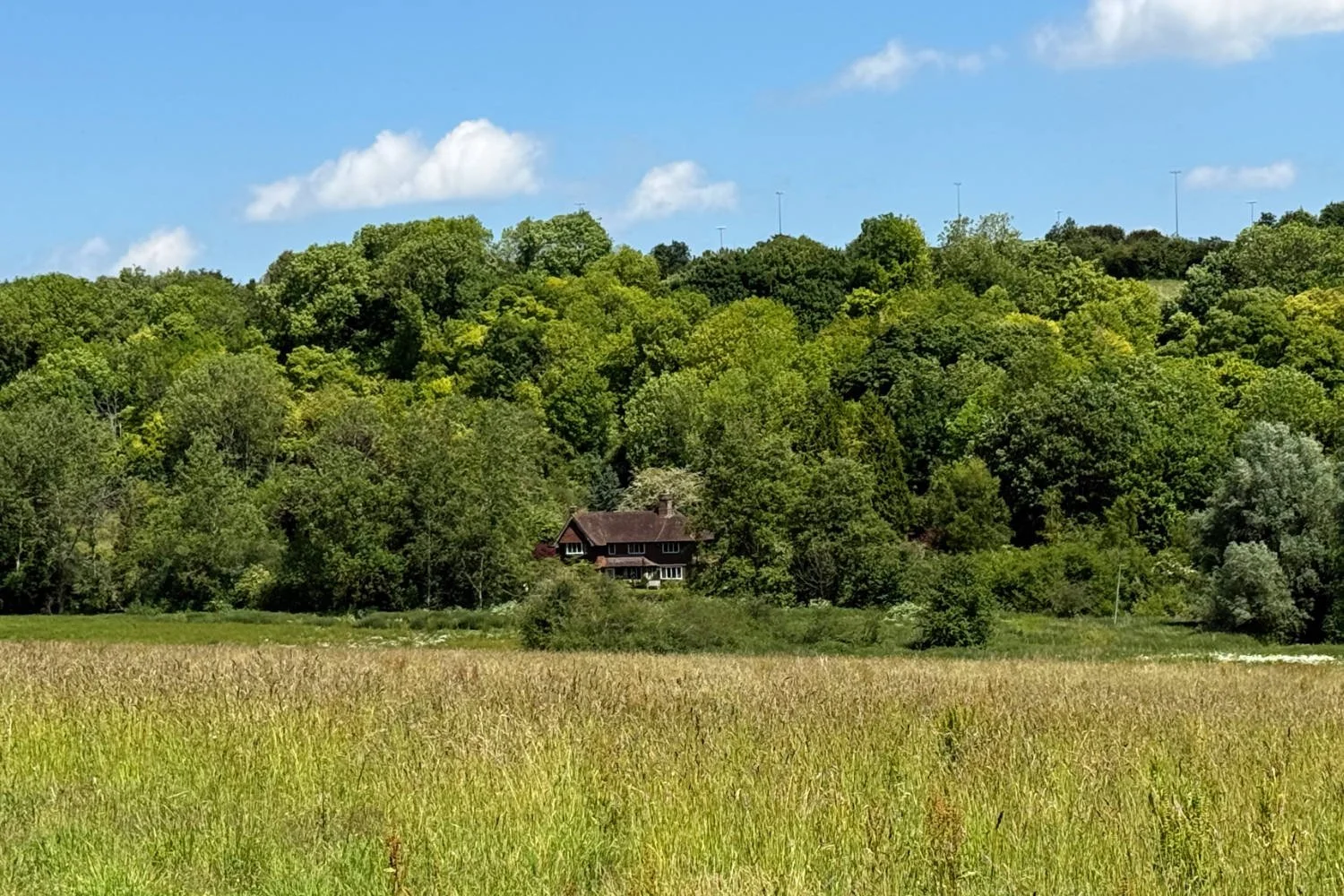
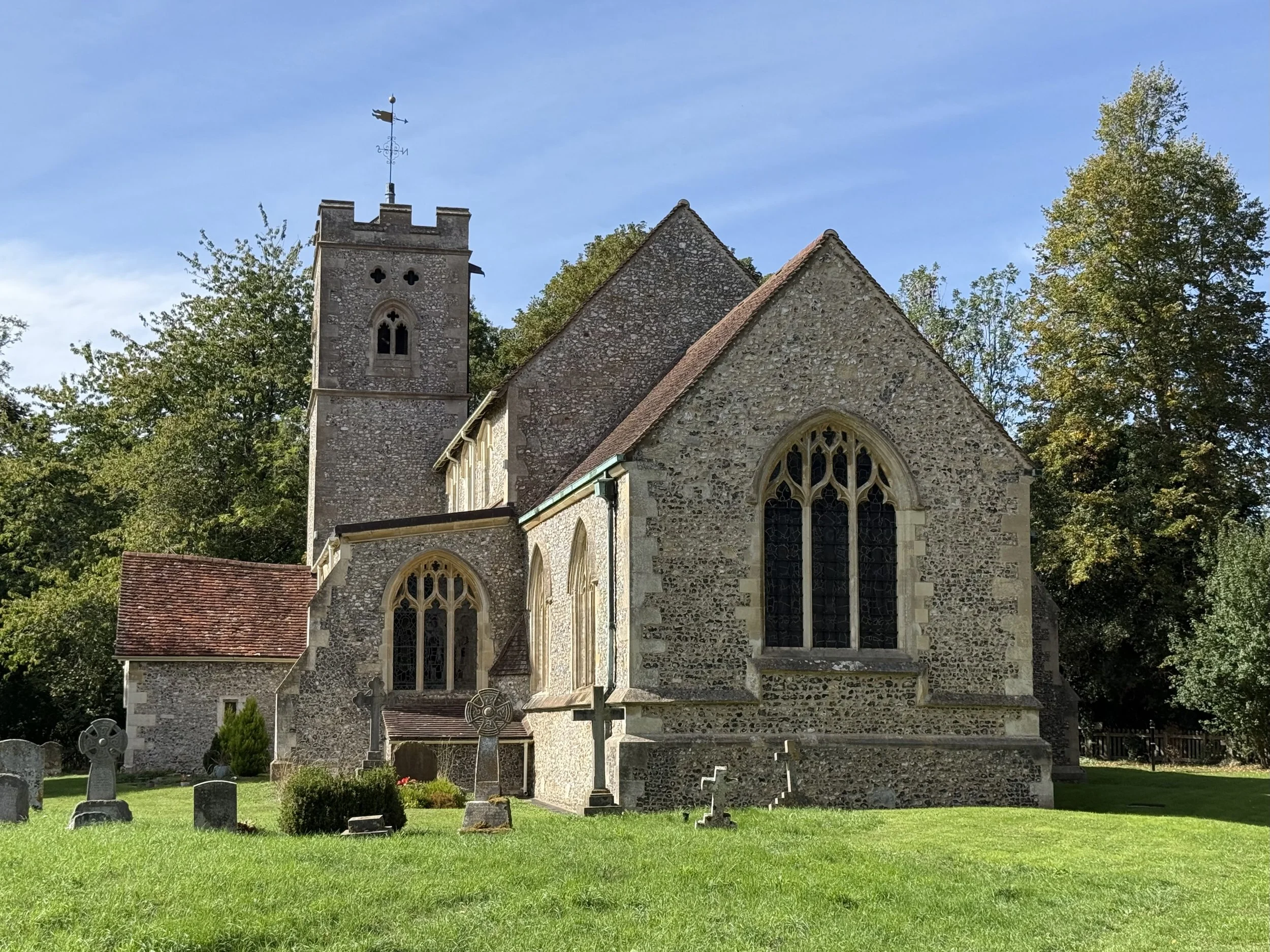
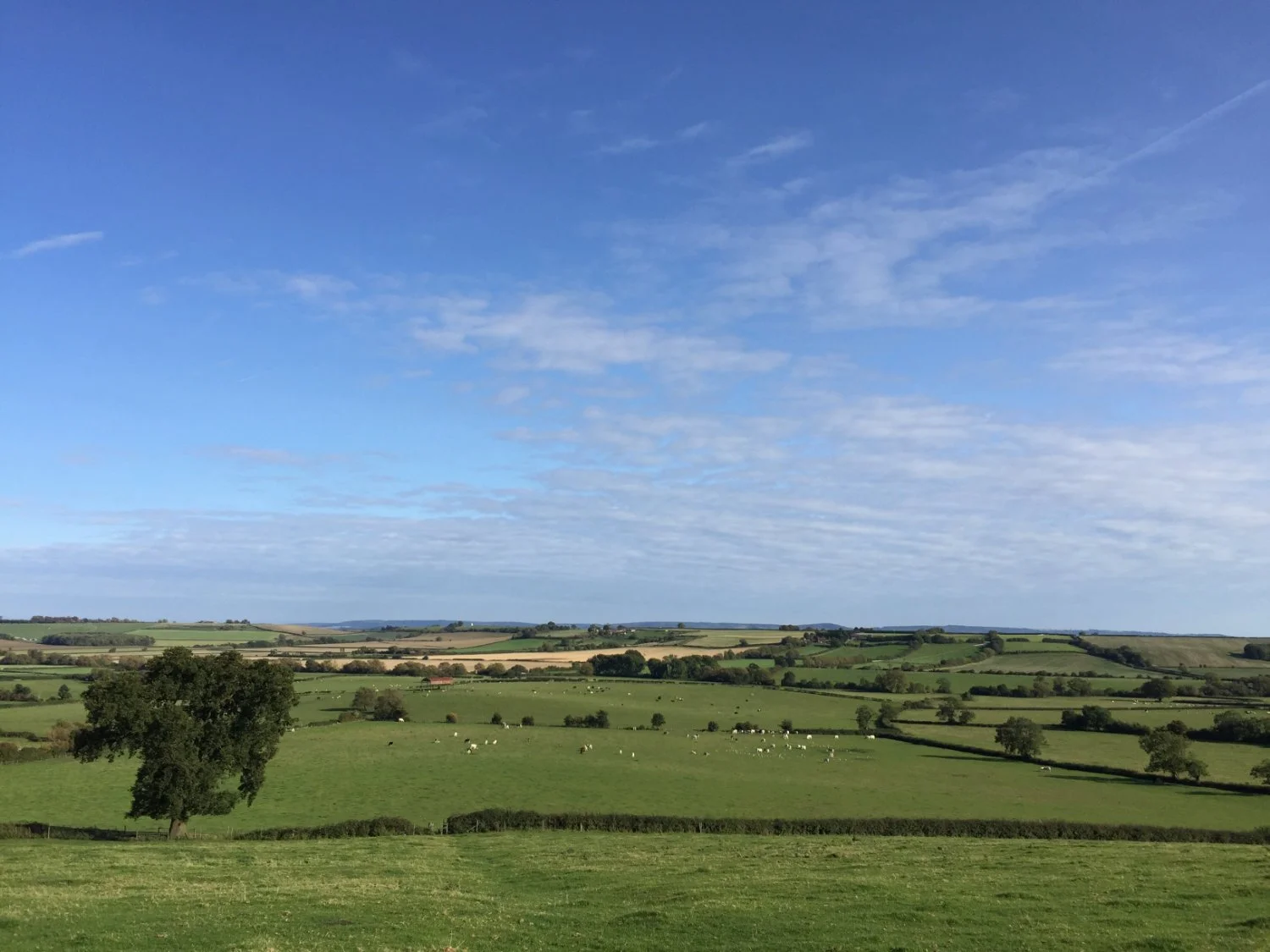
It is a wonderfully varied ride. Along the way, there are some amazing Tudor and Jacobean homes, the beautiful beech woods of the Chiltern’s National Landscape, and some great gravel climbs and descents. Other highlights include riding beside one of the oldest monuments in southern England, Grim’s Ditch and Kop Hill, famous for its motor racing hill climbs at the turn of the twentieth century, (you descend it, rather than labour up it, and its now a quiet country lane). The last quarter of the route is ridden on the wonderful traffic-free Phoenix Trail which crosses the Vale of Oxford.
There are some good pubs too, including the Nag’s Head in Great Missenden, and The Bear Inn in Oxford, which is the city’s oldest pub.
If Oxford is is too great a stretch for a day’s ride, Princes Risborough makes a good just-over-half-way stop with a fast train service back to London.
The route has been revised and re-ridden September 2026. I have greatly increased the amount of off-road riding.




Ride Practicalities
START/FINISH: Marble Arch, London/Oxford DISTANCE: 116km TOTAL ASCENT: 868m TERRAIN AND SURFACES: approxamiately half the route is on traffic-free gravel paths, and cycle paths. The rest of the route uses suburban roads. After heavy rain, some sections may be muddy. The route is best suited to 28mm+tyres RECOMMENDED CAFÈS/PUBS; Greenford, Northala Fields Cafe, Chesham; Roots, Great Missenden; The Nag’s Head Oxford; The Bear Inn, Arbequinia MAINLINE RAIL SERVICES; Chesham, Princes Risborough, Oxford, LINKS TO OTHER RIDES: Between the Great West Roads,, stage 2 Oxford to Stratford-upon-Avon, NCN 5, The Colne Valley
Ride Notes
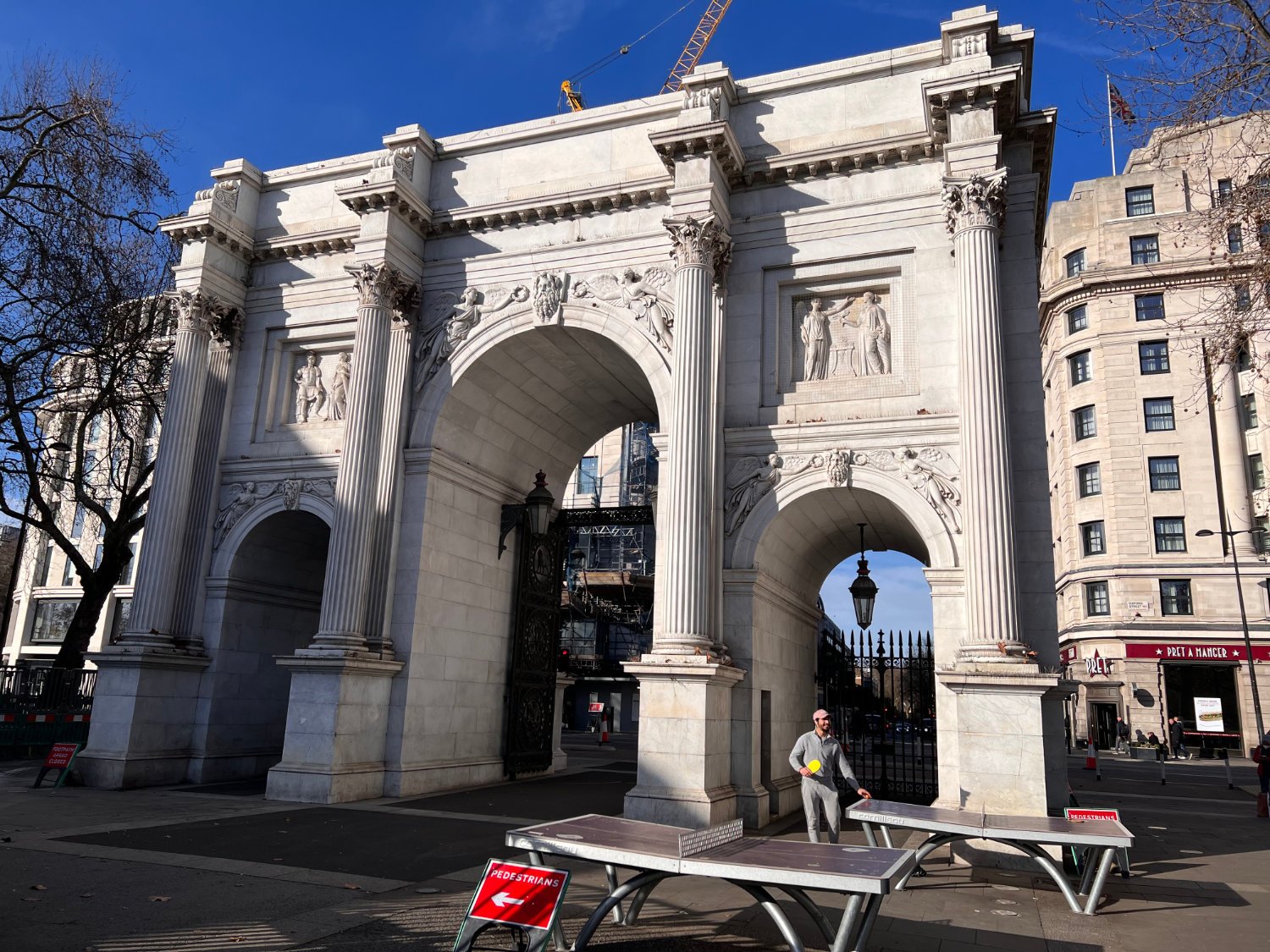
The purist may take issue with the starting point of this ride, for prior to the age of velocipedes, automobiles and trains, the road to Oxford began at the Bull and Mouth Inn, St. Mary-le-Grand, in the City of London. From early Stuart times until the beginning of the railways, the four storey Inn behind St. Paul’s Cathedral had been the ‘Victoria Coach Station’ of its age. From here coaches left for all parts of the Kingdom and by all accounts, it was a chaotic and noisy place. Today, the ride along the old road through London is not a pleasant experience (Holborn Junction is a cyclist’s death zone and Oxford Street is the most polluted in Europe), so our journey begins at Marble Arch.
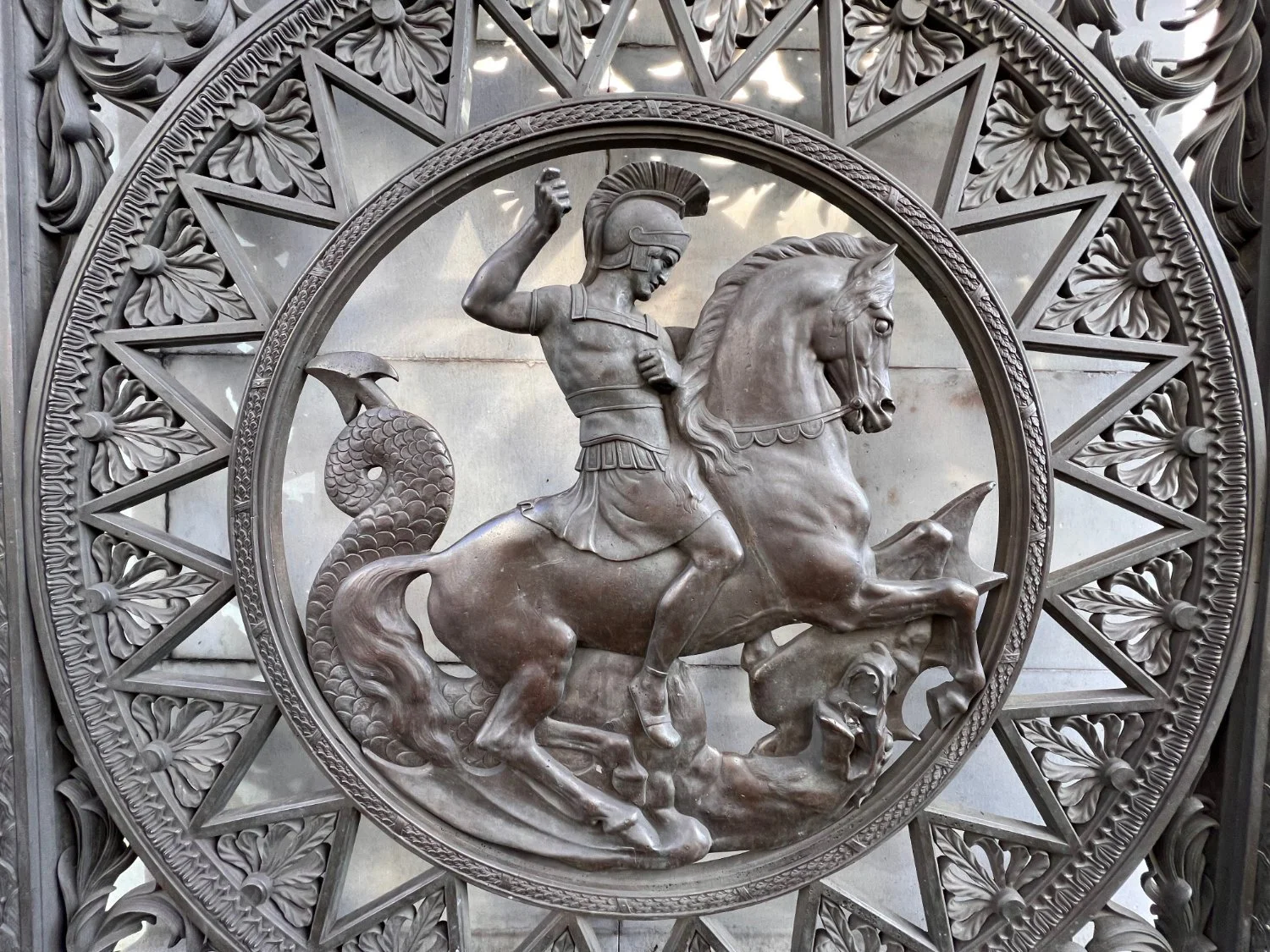
Marble Arch was created as a ceremonial archway by John Nash as the state entrance to Buckingham Palace. It was moved by Nash’s protegé Decimus Burton, wen he was commissioned to expand the Palace. From the Arch, after a brief skirt around Hyde Par, the route follows one of London’s excellent cycle network routes (C27) through the splendours of Bayswater, and Notting Hill two prosperous areas of London, and thence up onto the traffic-free Grand Union Canal, Paddington Branch. It’s easy and pleasant riding on a good surface which takes you into Northala Park, whose conical mounds were built using the rubble of the old Wembley stadium. From the top there are spectacular views over the whole of the London basin. Also in the park is a good community cafe and toilets.

Northala Park
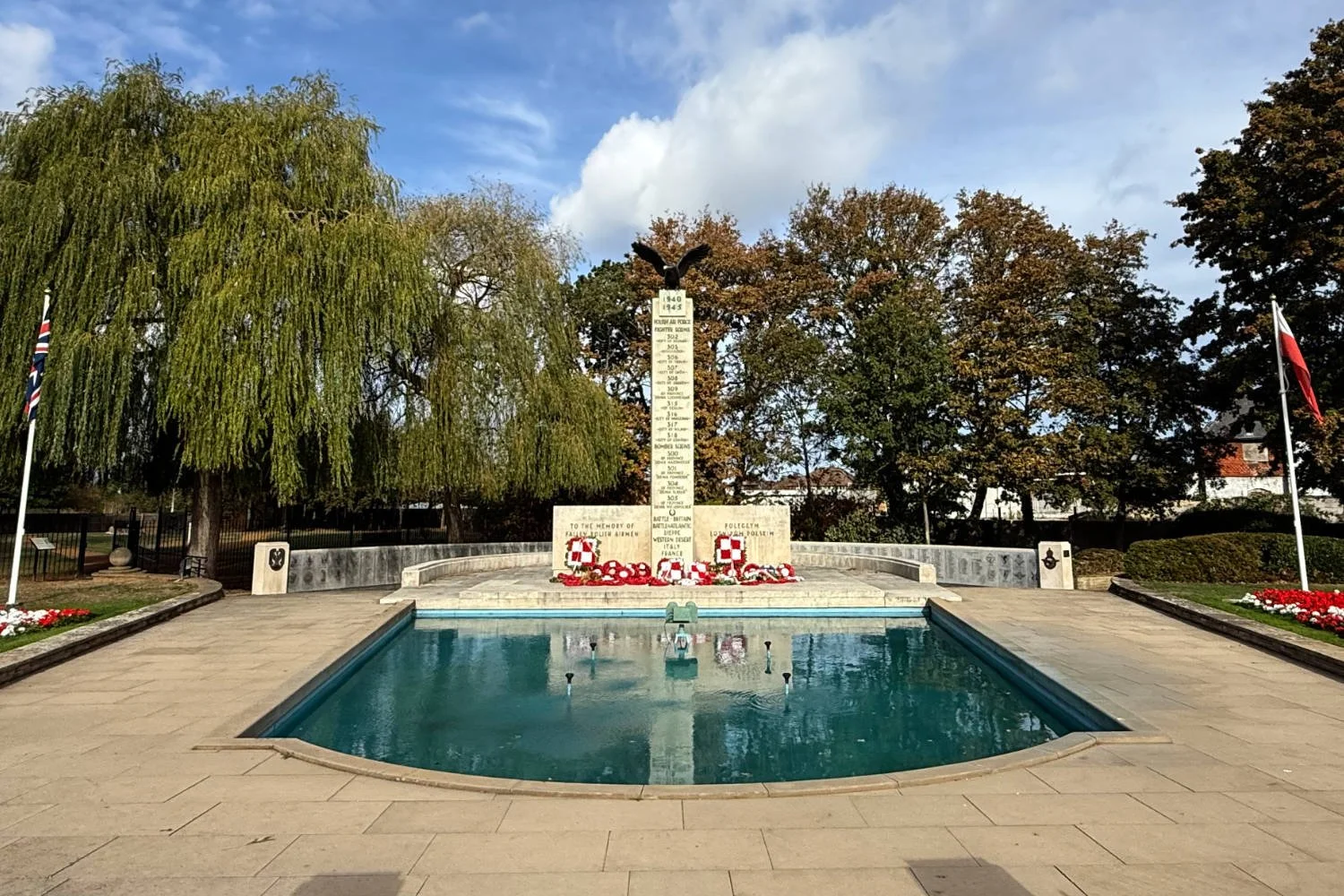
From Northala, you head towards the noisy, modern road to Oxford, the A40, built in 1923. Take a moment whilst on the A40 cycle lane (safe and well distanced from the road), to stop at the impressive Polish Airmen War Memorial at Northolt. The, put your head down, pedal hard and after 5km, you arrive in Swakeley Park.
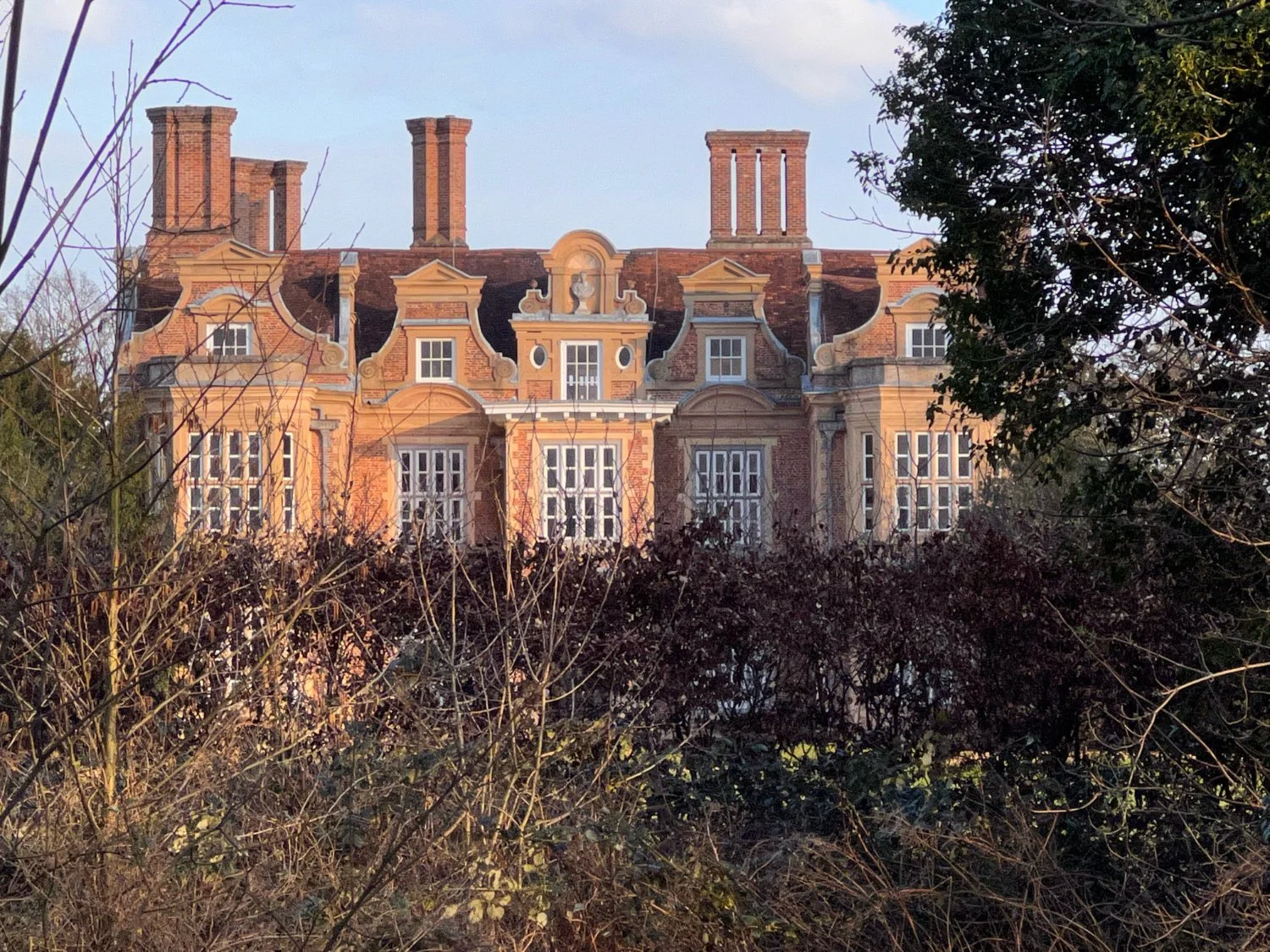
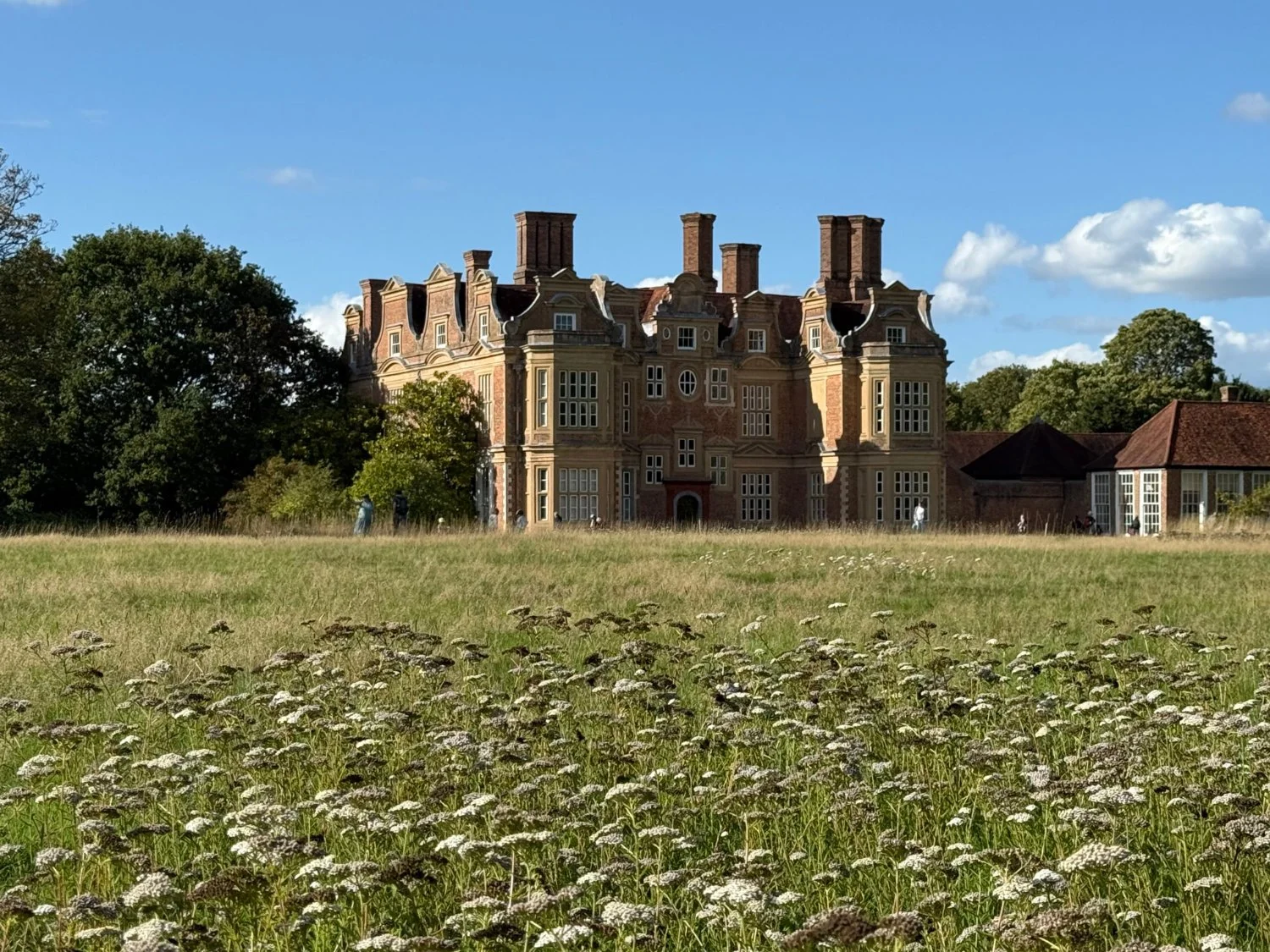
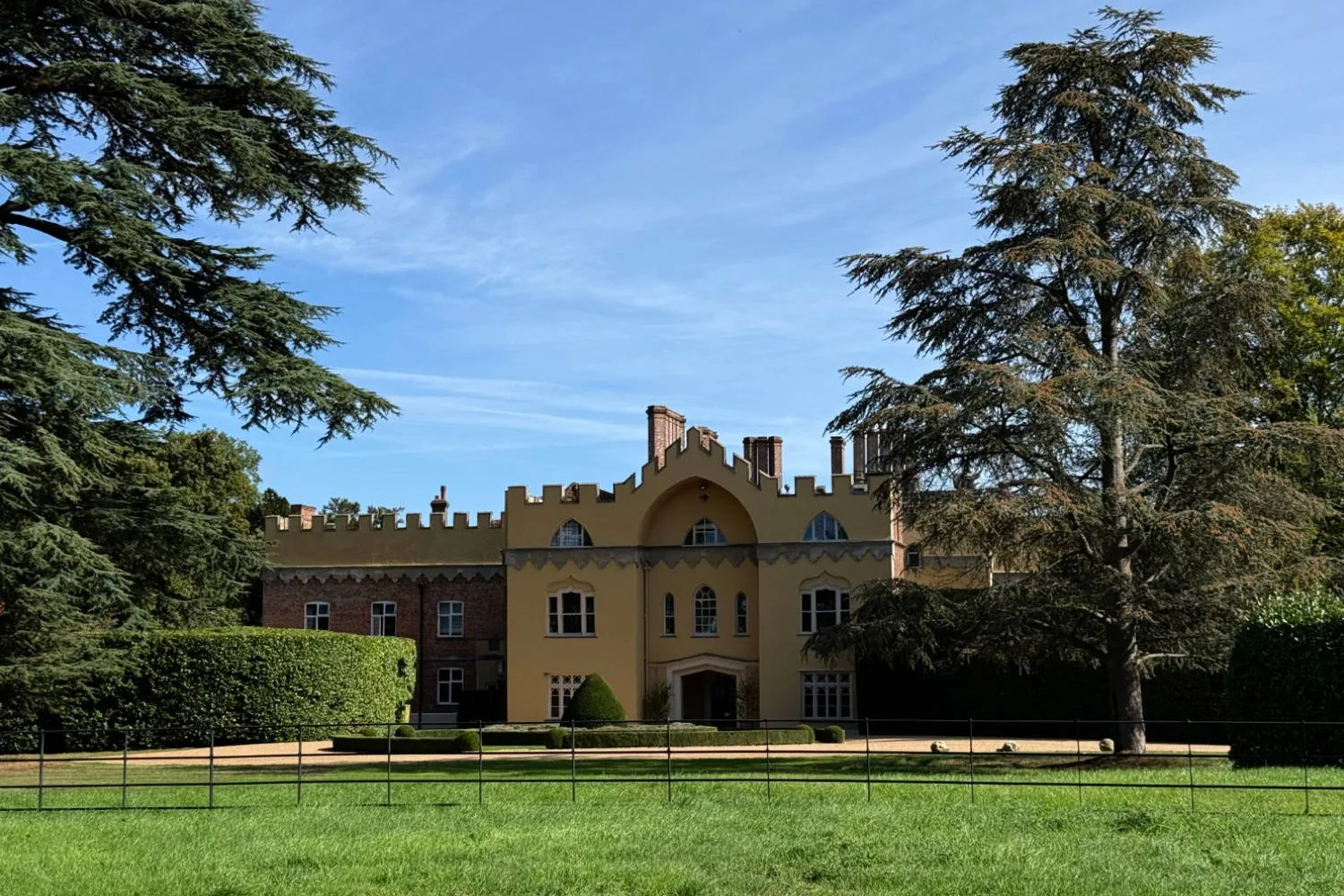
Swakeley’s House
Look across the river Pymme through trees and you’ll see the turrets and towers of London’s greatest Jacobean House,. Owned by a hedgefund, it is neither lived in, nor regularly open to the public.
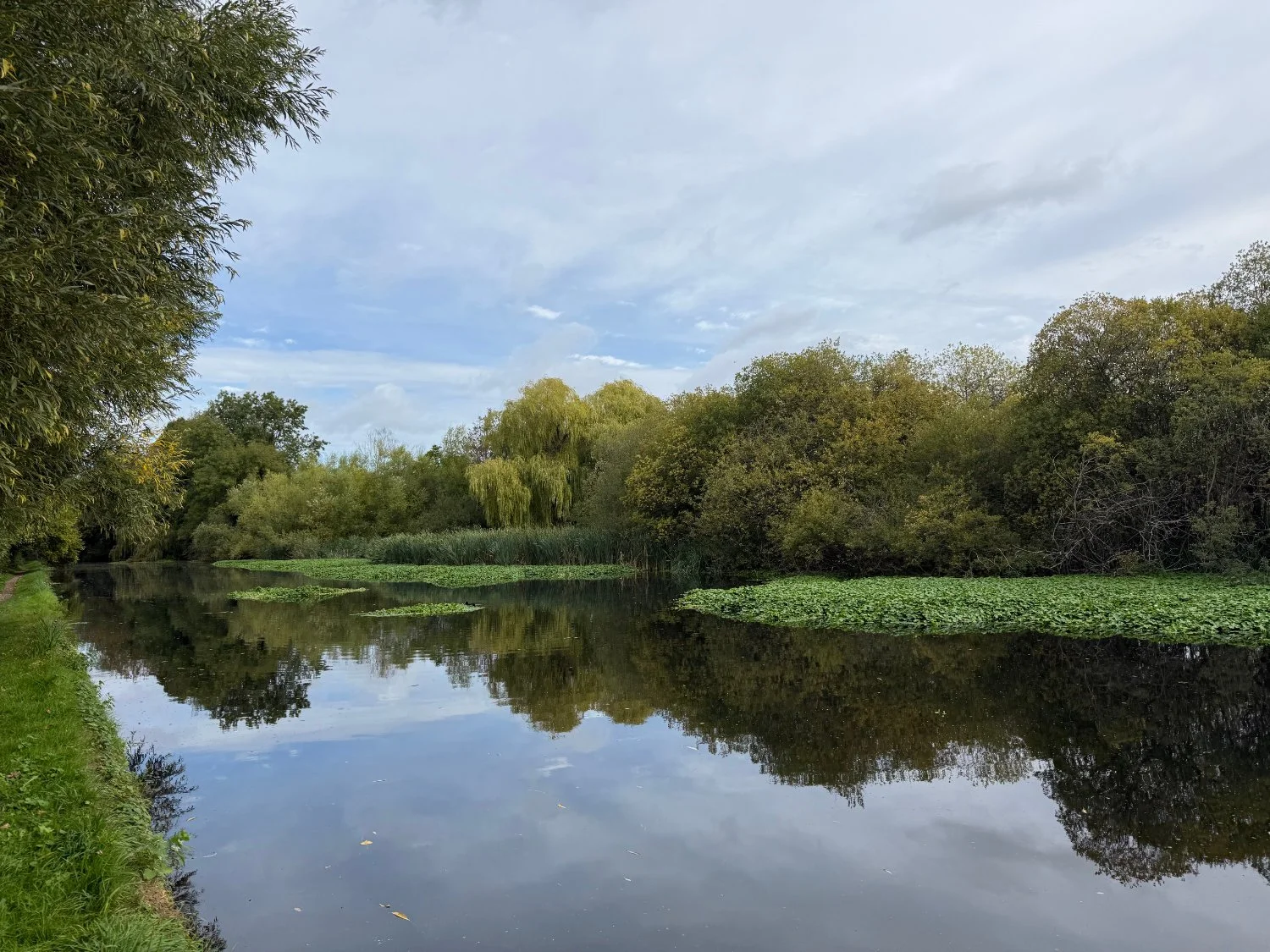
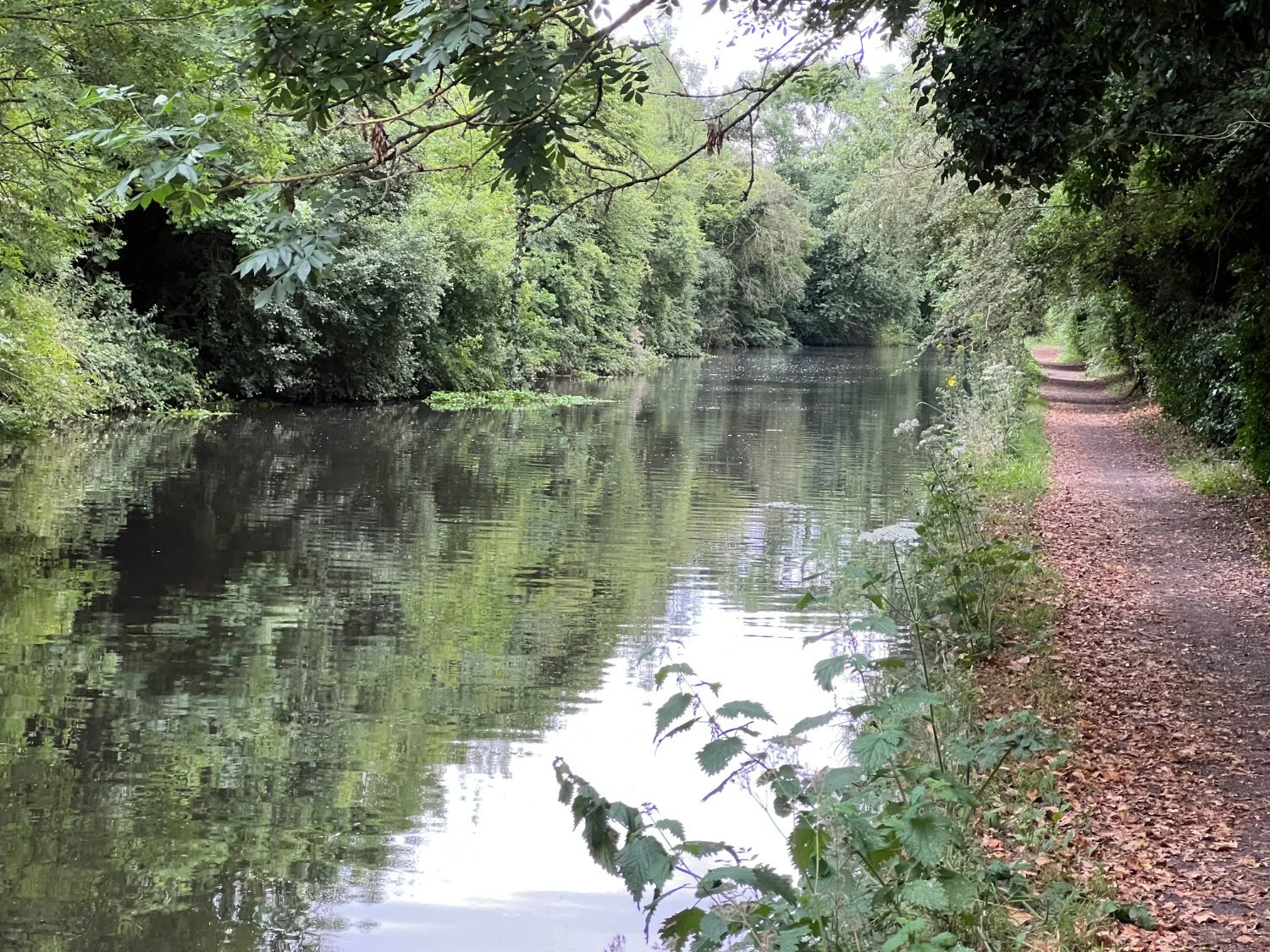
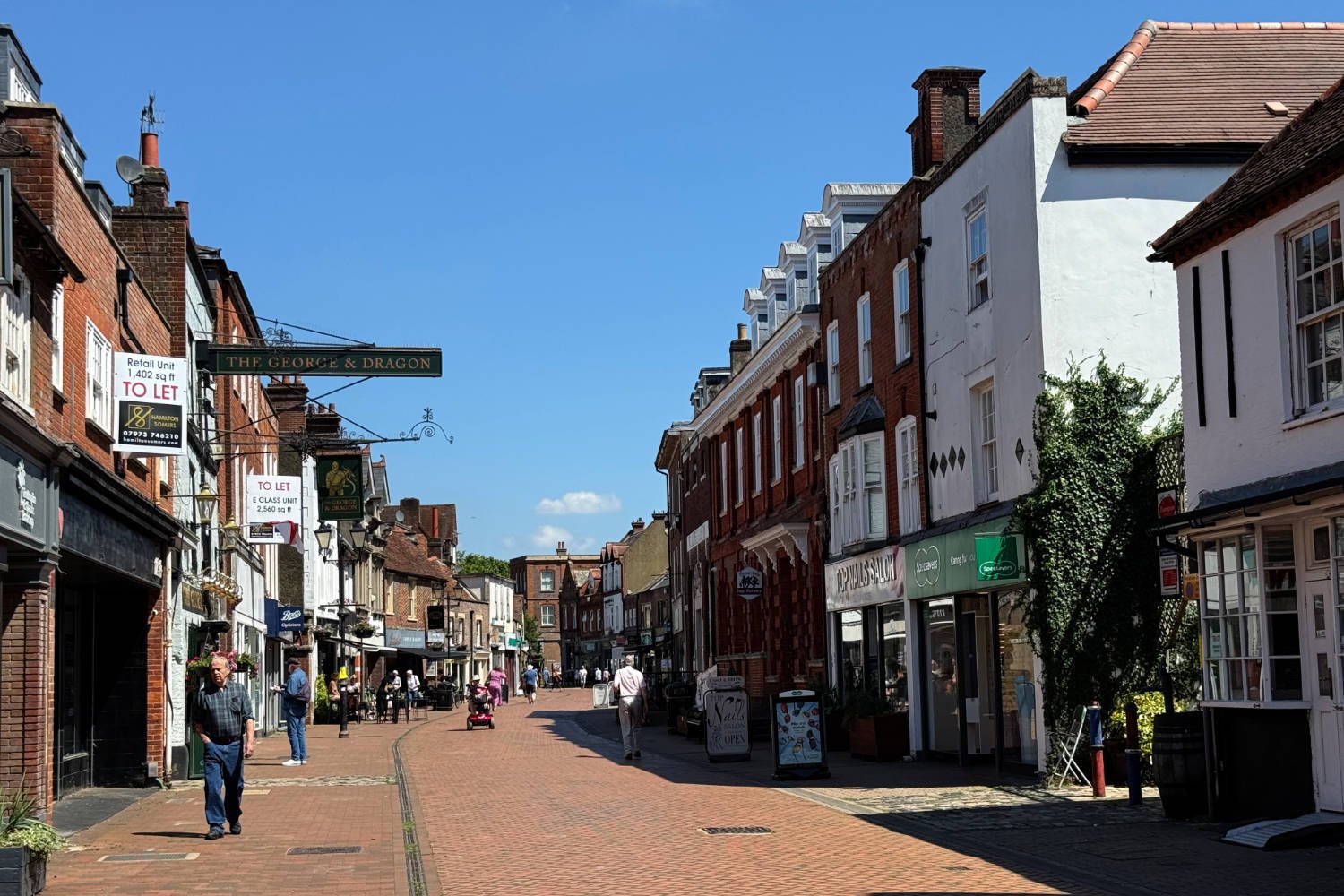
There are some suburban streets ahead, mainly quiet, before riding on a serene section of the Grand Union Canal. It’s leafy and quiet and makes for some lovely off-road riding. Across the Colne valley - and out of Greater London, Long Lane takes you up hill on a gravel track to cross the M40, before another superb gravel track that takes you to the village of Chenies. You ride past the spectacular Tudor manor house, oft visited by Henry VIII. More gravel/earth paths lead through woods on top of a ridge, before quiet lanes take you down into Chesham. Roots, in the High Street makes for a good coffee stop.
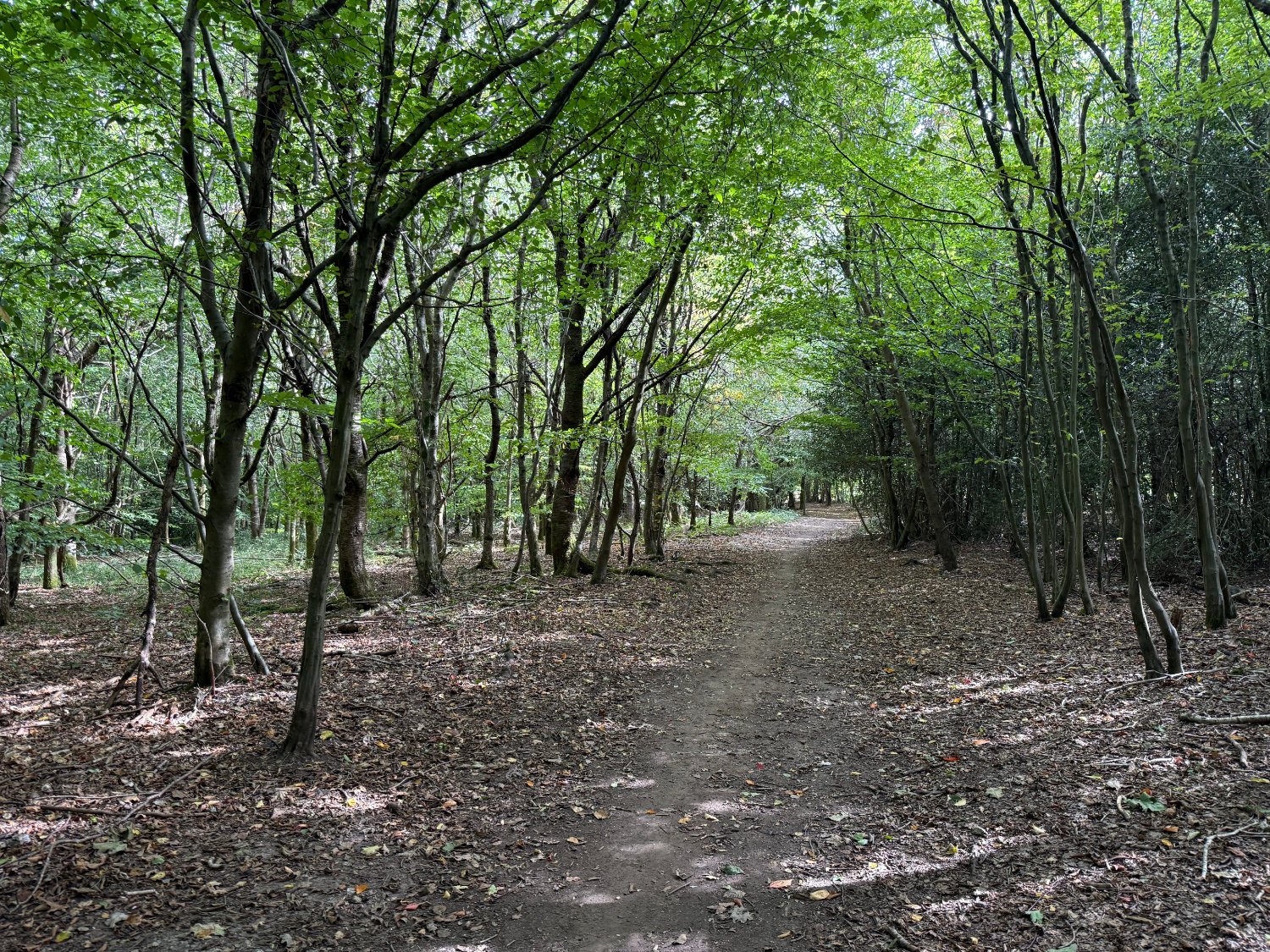
There follows a bit of a climb back onto the Chiltern Hills before turning off onto another splendid track, called Herbert’s Hole. When the track reaches the road, follow NCN 57 signs to Great Missenden, a pretty, if busy village. Another climb on a good track takes you into Spring Wood, which Roald Dahl used as the setting for his book ‘Fantastic Mr Fox’. A path weaves through the trees, into Prestwood. (On reaching the village, turn first right down Moat Lane - which should be signed as NCN 57 but some clown has turned the sign around and the sign now points along the main road).
Ahead is another spectacular Tudor mansion, Hampden House, owned by the Hampden family (the Dukes of Buckingham) who lived here from pre-Norman times until 1938. (The bridleway goes through the estate gates - press the button on the left post and the gates open).
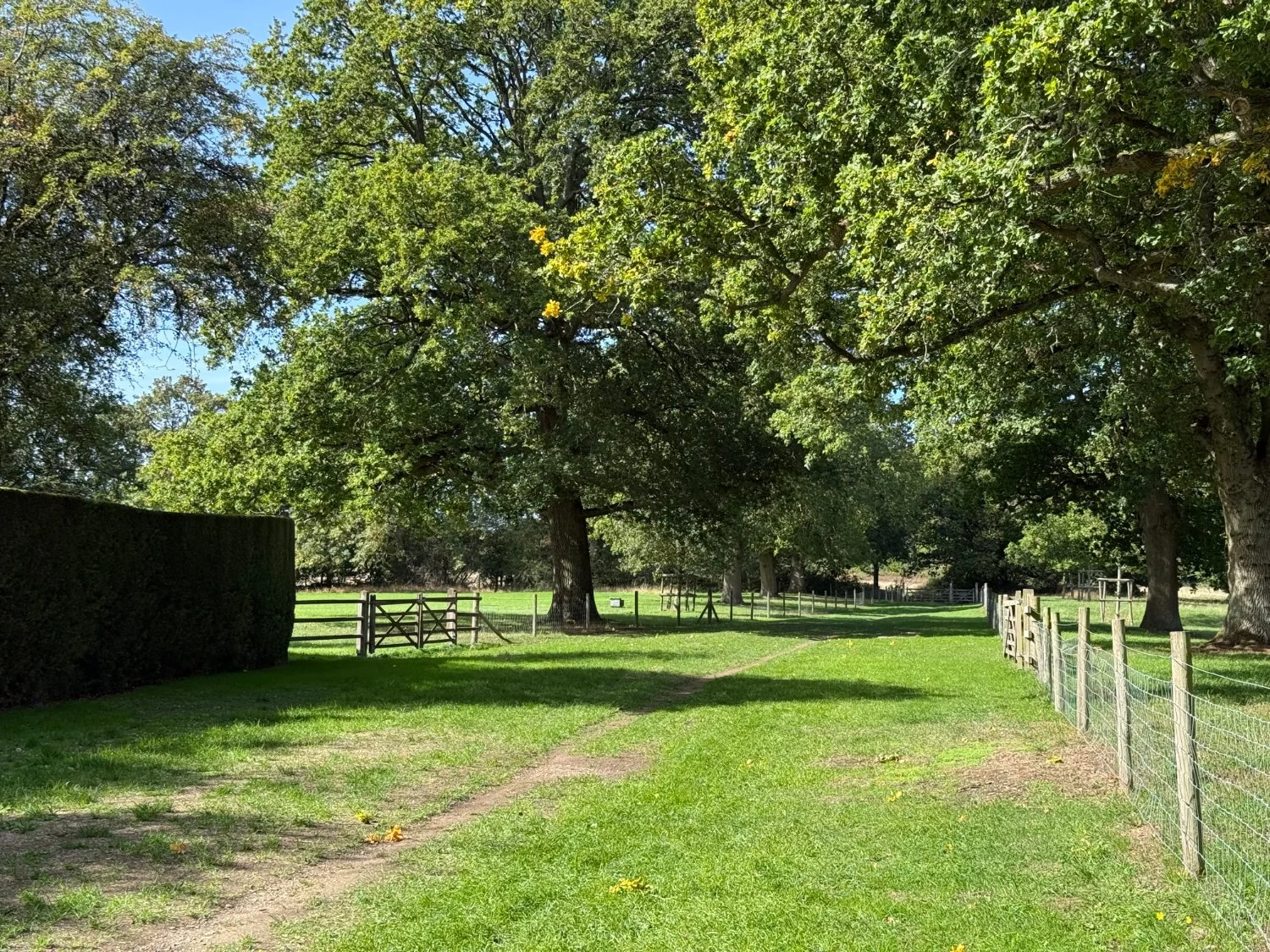
Grim’s Ditch, a fabulous gravel path, extends from the house into the beech woods, which is thought to have been built in the Iron Age (1200-550 BCE). The banks are too shallow for defence, so it is generally believed that it was some sort of boundary. It’s present name is said to be Anglo-Saxon who titled ‘old monuments’ as ‘Grim’ - an alternative name for Odin, the Norse God of War and Magic. No one can definitively explain why.
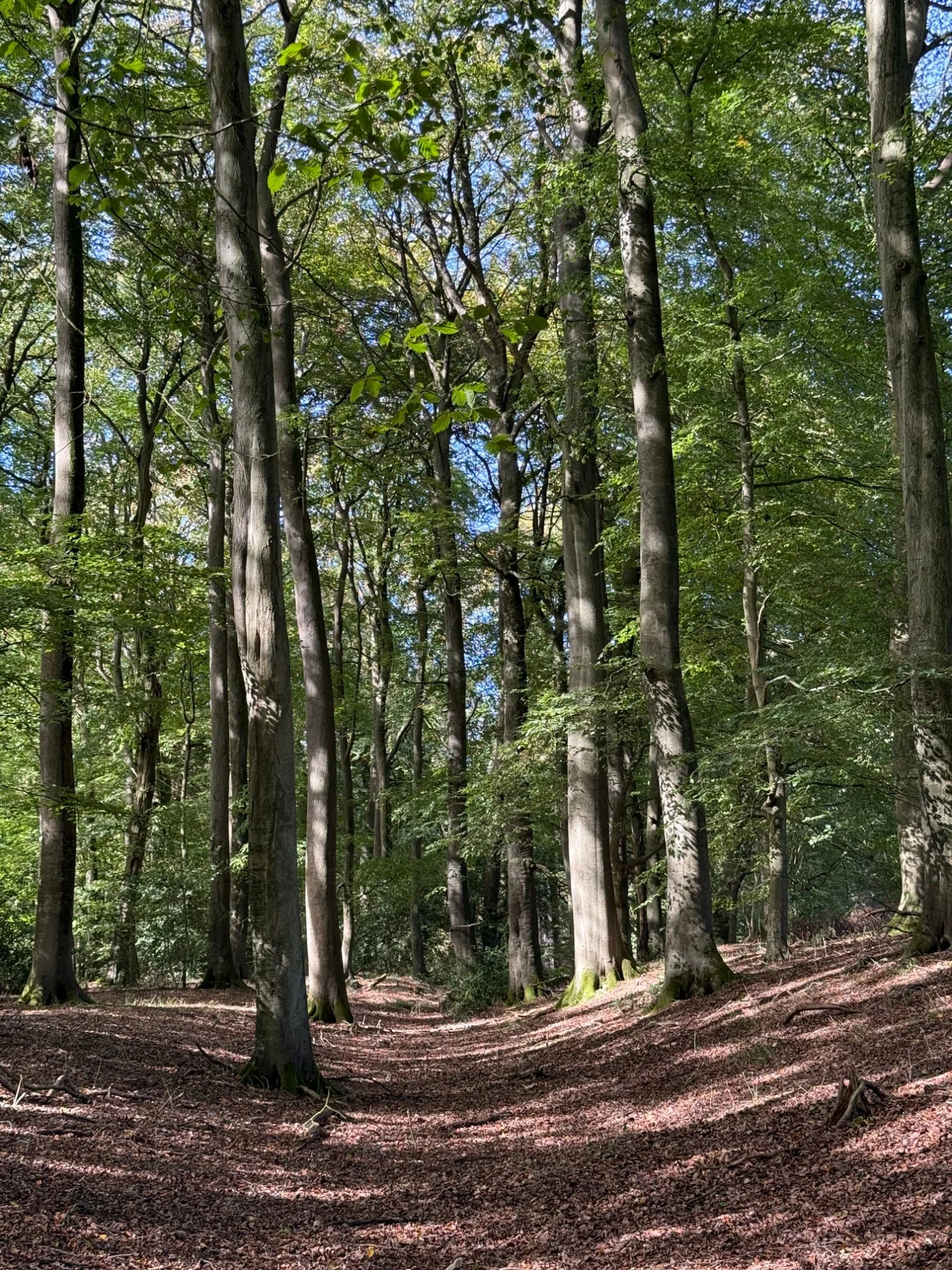
Grim’s Ditch
Kop Hill, made famous for its hill climbs in the early years of the twentieth century attracted thousands who lined the road to watch cars sand motorbikes speed up the sharp hill. (worry not, for you will be speeding down rather than up, and the motor races are restricted to once a year - usually a weekend in early September). Princes Risborough, at the foot of the hill, is a good just-over-half-way stop with regular trains back to London. If Oxford remains your end point, ride around the edge of the town, following the NCN 57 before joining the flat and hard-packed gravel surface of the Phoenix Way, an old railway, to Thame. The surface is perfect for an easy spin across the mainly flat Vale of Oxford.
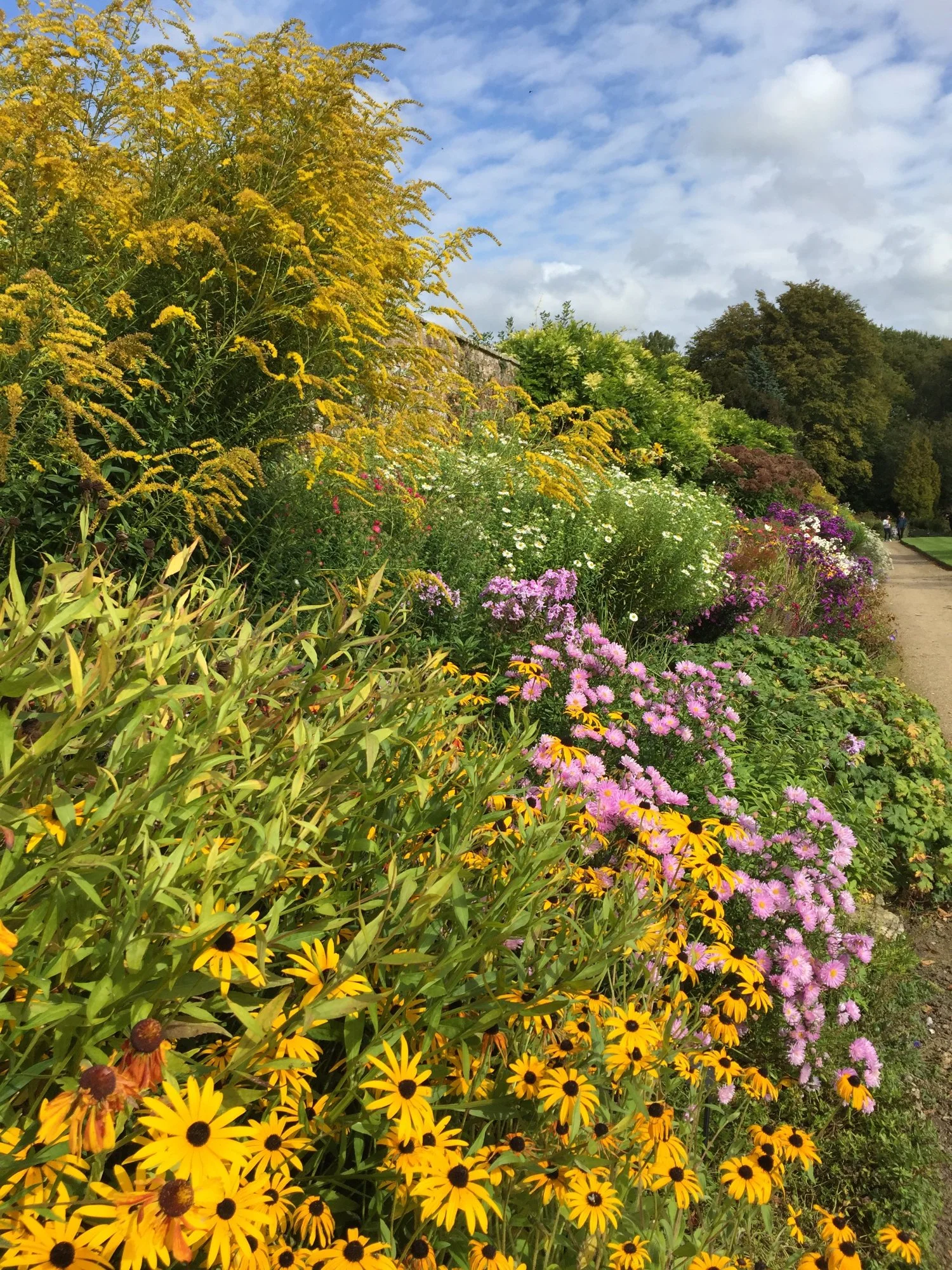
Waterperry Garden
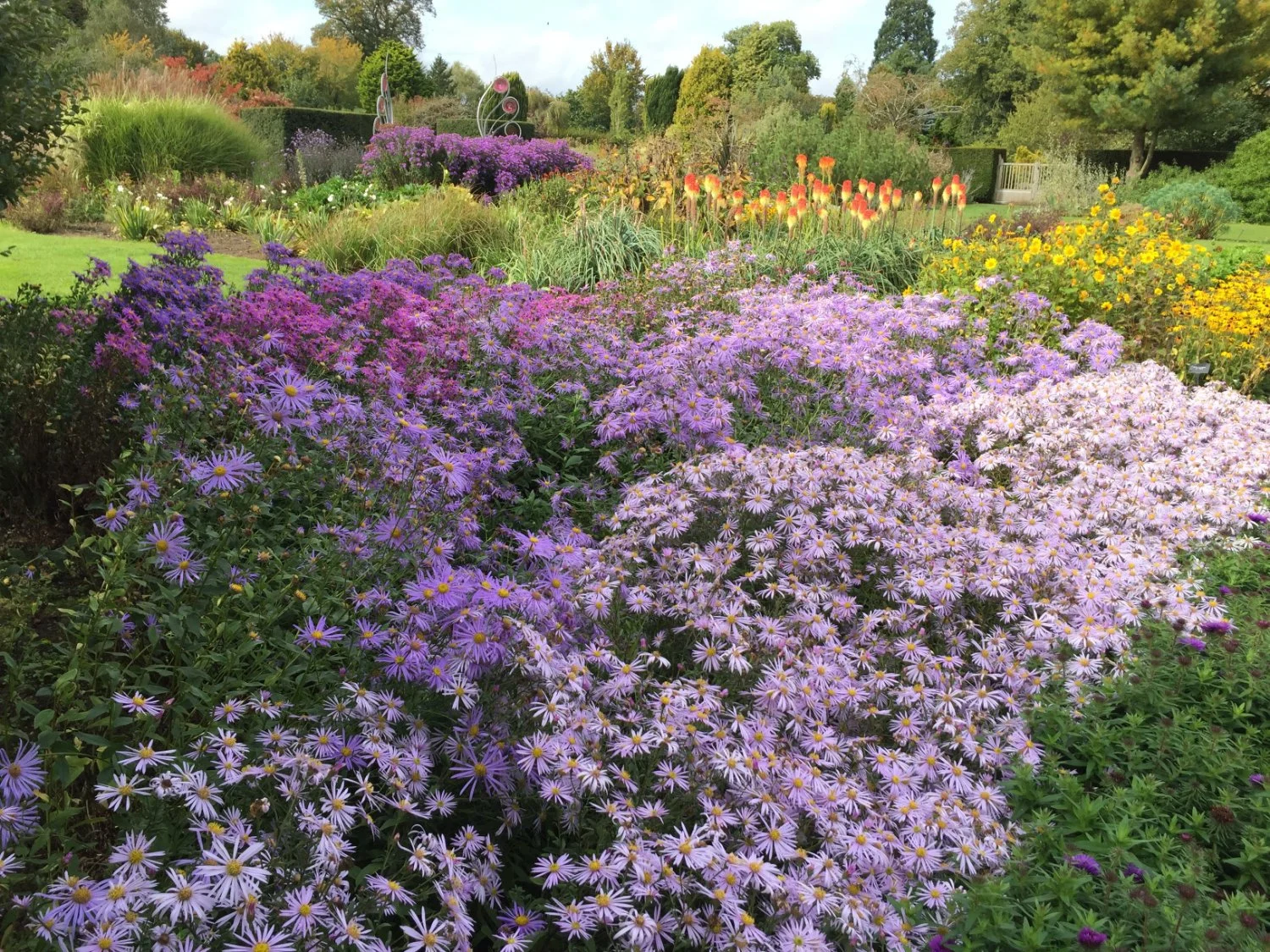
From Thame through to Oxford, the route is predominantly on quiet roads and cycle paths into Oxford. Leave the NCN 57 after Shabbington, and head on a narrow lane to the villages of Draycot and Waterstock before a track takes you past the entrance to Waterperry Gardens, which were created by the renowned horticulturist Beatrix Havergal and her partner Avice Sanders in the 1930s. Using the house and gardens, they established a horticultural school for women, a novel thing for the times. The gardens are open to the public and have the most exquisite autumn borders. Their café is also a recommended coffee/lunch stop.
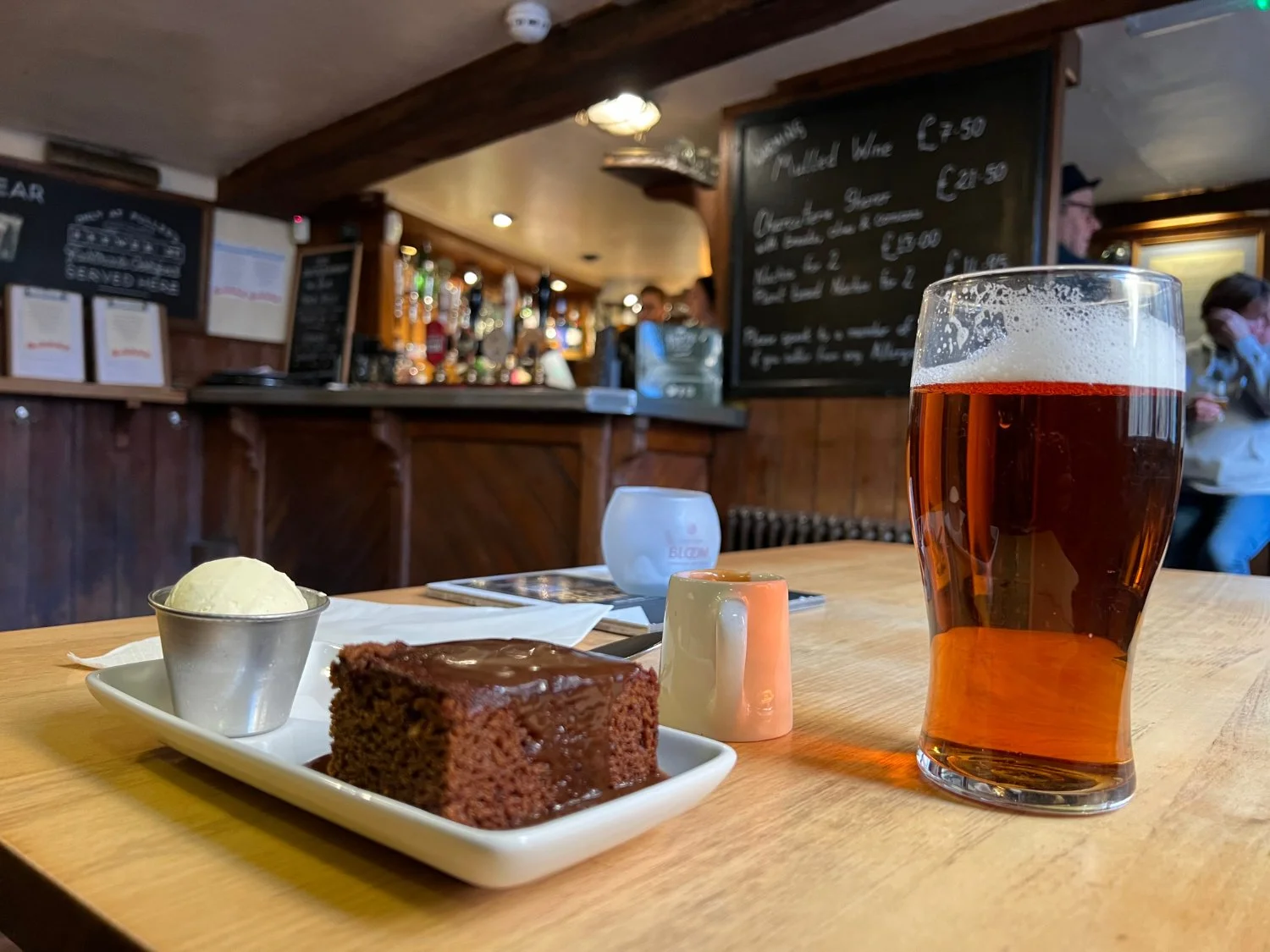
The Bear
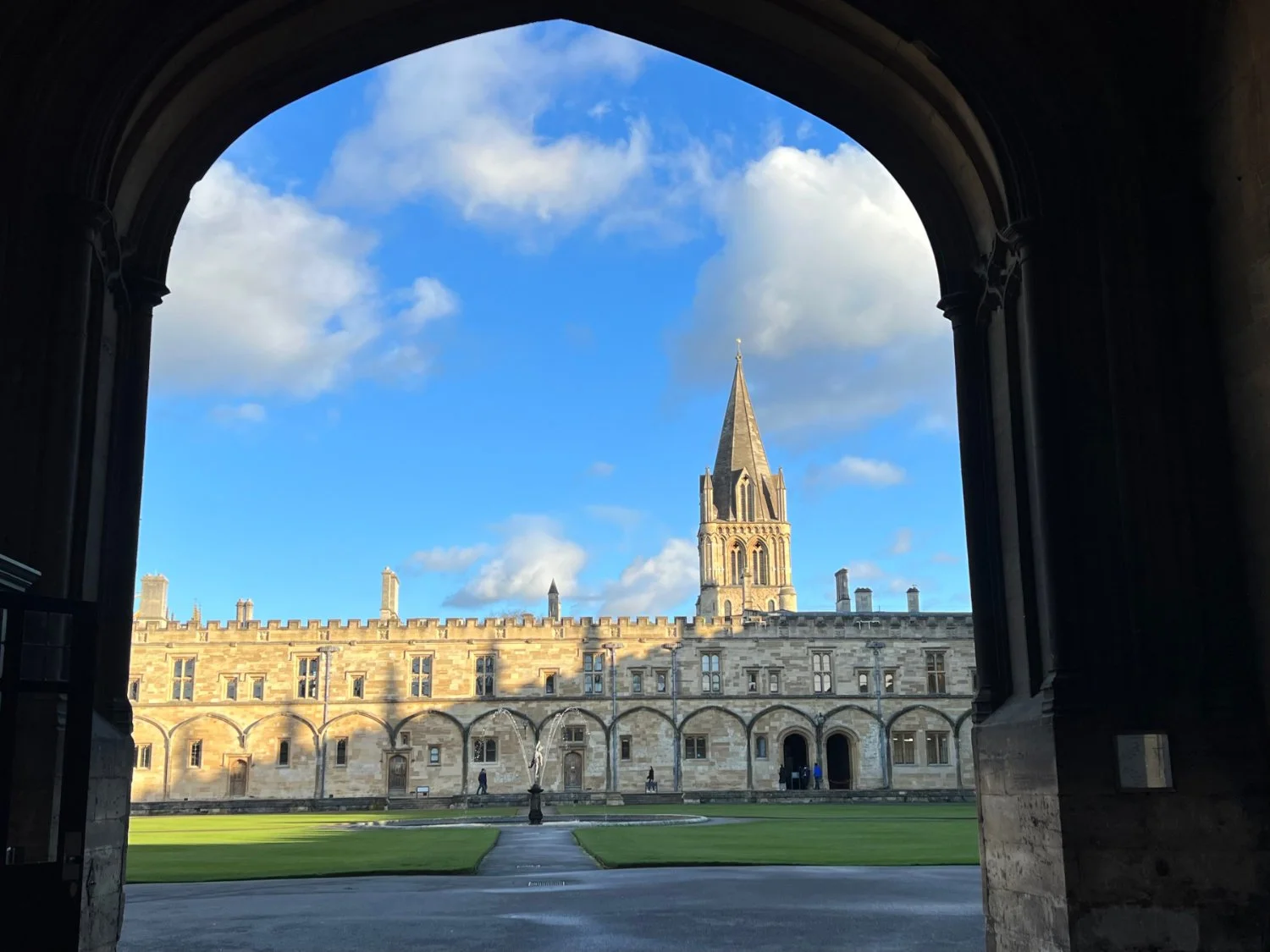
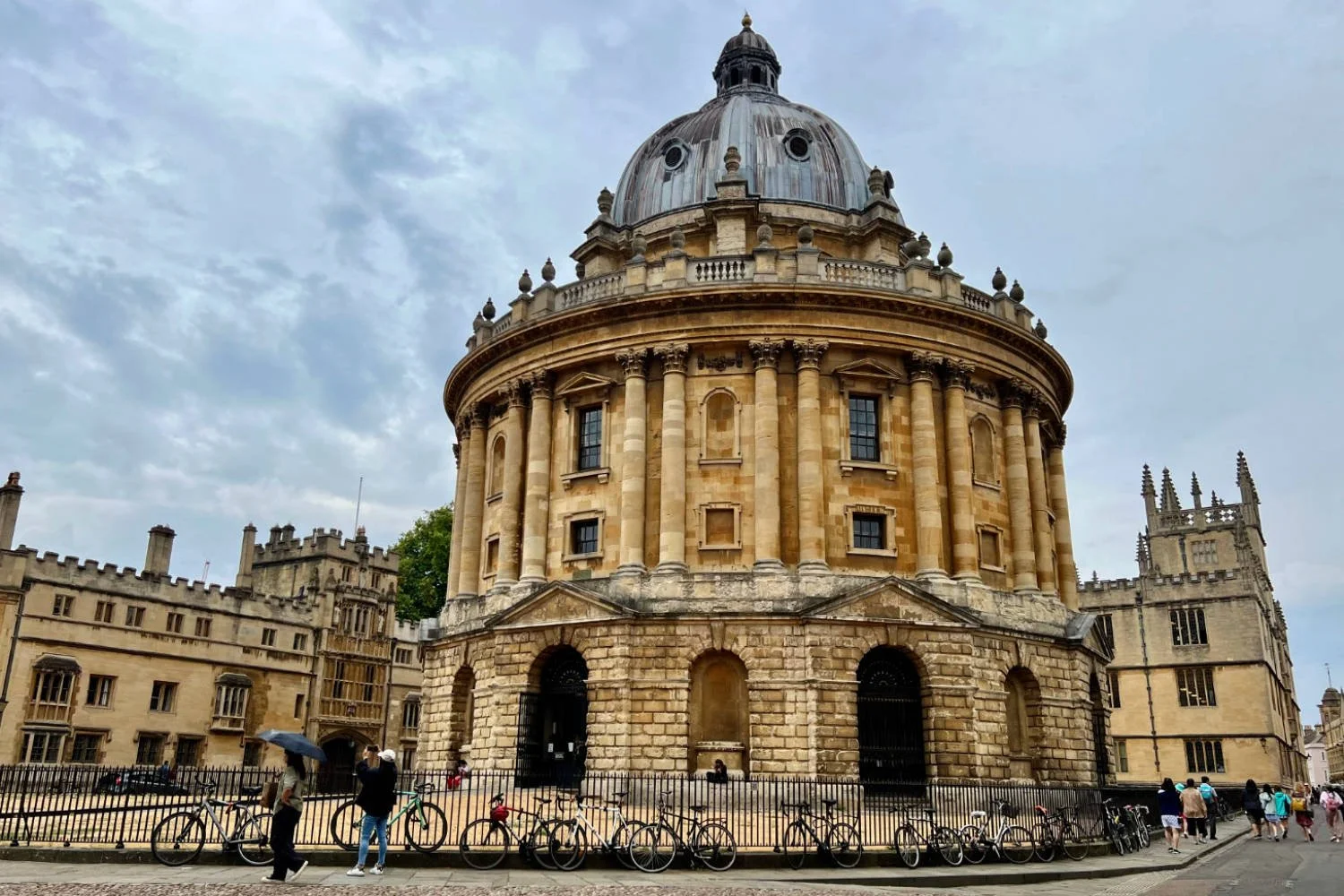
From Waterperry, you return to NCN 57 whose signs you follow all the way into Oxford. The outskirts are very dreary and its not till you reach Magdelene Bridge that the Golden City reveals itself in all its glory. It is impossible not to be awed by the courtyards, colleges and corbels of the world’s greatest university. There’s so much to see and enjoy and if you are not rushing for a train home, you may wish to pedal around the city - there are many cycle lanes.
Should you be in need of a pint, try the Bear Inn, Oxford’s oldest pub, or Arbenquina, which you pass on the Cowley road as you approach Magdelene Bridge. A Spanish themed tapas, place where the food is a welcome reward for all the riding you’ve done.
All the details given on this route are given in good faith. However, situations on the ground can change, so if you know of any access issues, closures, or have any thoughts and feedback on the route, please include them in the comments section below.