Durham Coast Route

Steetley Pier
Ride overview
This coastal ride runs from Stockton-on-Tees to Newcastle along the Durham Heritage Coast, on a mix of traffic-free paths and quiet coast roads. At times, its wild and solitary, at other times rich in people, towns and history. It's an ambitious day out, or split the route into two for a satisfying overnight escape. Along the way: tall ships in Hartlepool's historic quay, wild dunes at North Gare, cliffs and coves the length of the Durham Heritage Coast, and sea-glass hunting on Seaham beach. It's a ride through 700 years of history — from the world's first railway at Stockton-on-Tees to the shipyards, coalfields and chemical works that shaped this coast, most of it cleaned and now reclaimed by nature.

















Ride Practicalities
Summary:
START/FINISH: Stockton-on-Tees/Gateshead DISTANCE: 120km TOTAL ASCENT: 946m TERRAIN AND SURFACES: Traffic-free cycle lanes, some ‘B’ roads with short sections ( 1-2km) of quite busy roads , shared paths and some sections of wide and little used footpaths. Suitable for a gravel/touring/hybrid bike with more than 28mm tyres RECOMMENDED CAFÈS/PUBS: Stockton-on-Tees; ‘Remember Me Tea Rooms’, Hartlepool; Portofino, Seaham; North Beach Coffee Bar, Whitburn; North, Latimer, Newcastle: Dobson and Parnell, The Broad Chare SUGGESTED PLACES TO STAY: Hartlepool, Sunderland; Premier Inns, Seaburn; ‘The Seaburn Inn’, The Roker Hotel.Newcastle; Malmaison NEARBY MAINLINE TRAIN SERVICES: Stockton-on-Tees, Hartlepool, Sunderland, Newcastle PLACES TO VISIT; Hartlepool; Royal Naval Museum LINKS TO OTHER RIDES: Coast and Castles, National Cycle Network Route 1
Ride Notes
There's little sea to see at Stockton-on-Tees. It's been a port since 1283, and grew into the main outlet for the Durham coalfields once the river was straightened and dredged — at huge expense — to let bigger ships reach its quays. Then the entrepreneurs who'd built that trade found an even faster way to shift coal: the railway. The Stockton and Darlington, the world's first. Arrive by train now and the station still impresses.
If you were thinking that the ride will be a succession of grim and grey northern industrial towns, then Stockton will quickly dispel that notion. The high street is wonderfully broad, and lined with gracious Georgian buildings. Confidence and wealth blended with style. Fuel up at the Remember Me Tea Rooms, then follow the river out to the Barrage, built in the 1990s for flood control and, in the process, ending any pretence that Stockton is still a working port.
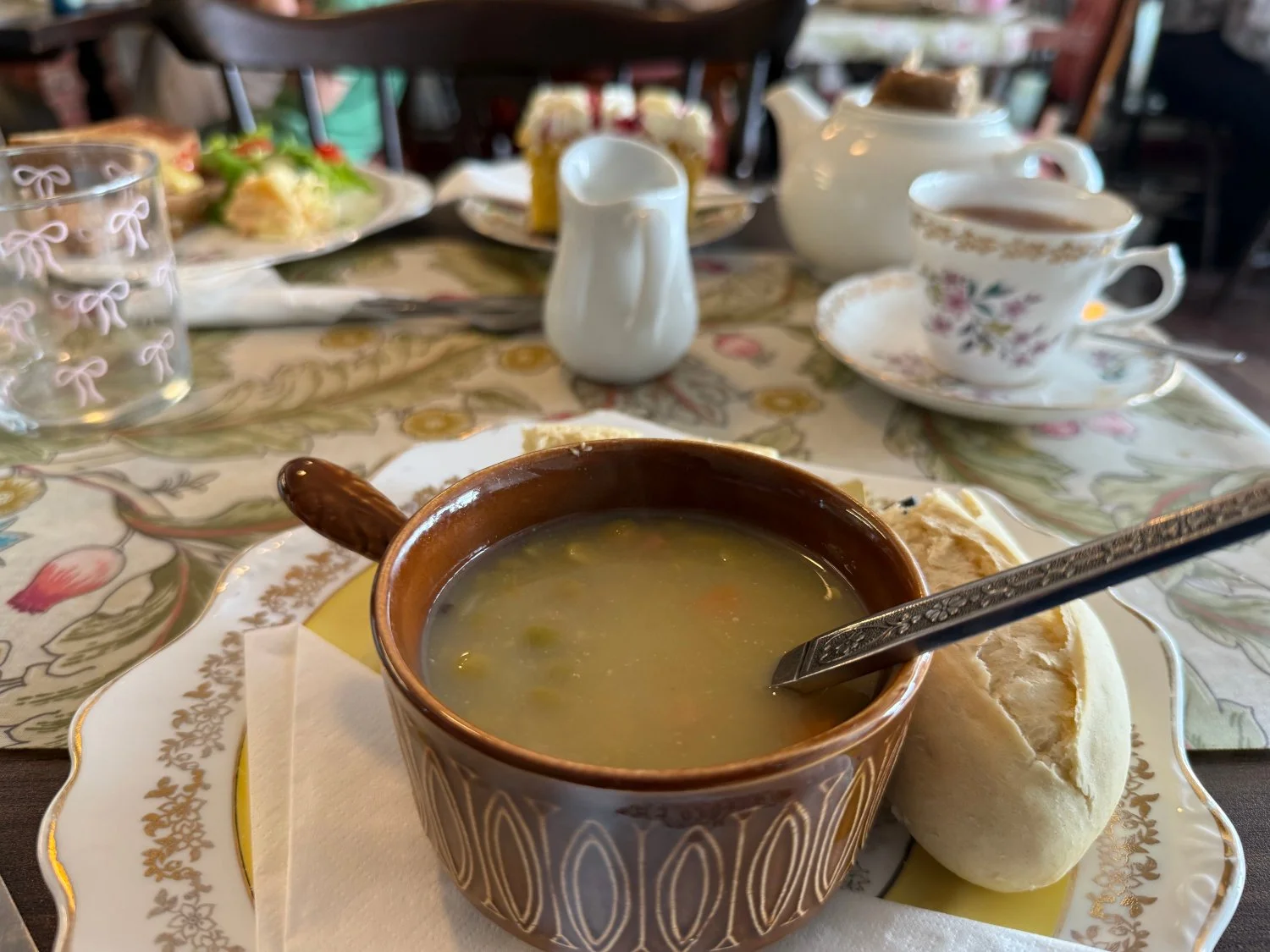
Remember Me Tea Shop, Stockton.
The National Cycle Network's Route 14 — NCN 14 from here on — picks up, patchily signed, through the old British Rail marshalling yards: a long concrete strip down the middle that's begging to be sprinted for the sheer temptation of a traffic-free, wide, straight, smooth path. Wasteground either side, a prison on the right.
Continue through woods on a gravel path into Billingham. It's raw, post-industrial riding, and there's a strange thrill to it — pebble-dashed streets backing onto the path, the chemical works' flare stacks flickering over the rooftops; an odd, faintly sci-fi backdrop to suburbia. The path winds into Cowpen Bewley Woodland Park — proper woodland after all that concrete — and then West Marsh: scrubby edgeland, nature's regeneration, rich in birds, plants and trees. How lovely it is to ride through an unpretentious, largely untouched and ignored place. Wild and free.

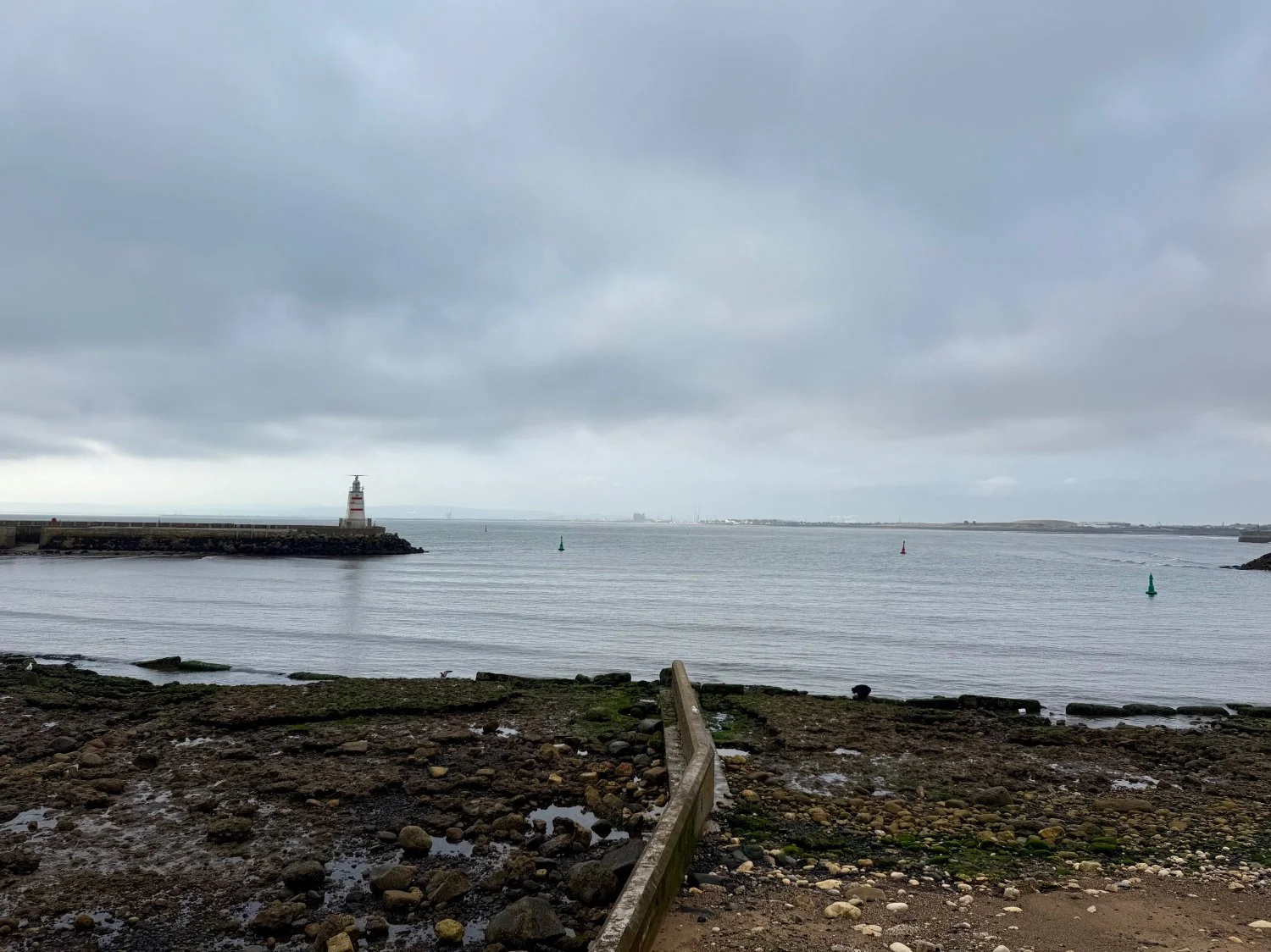
A bridlepath peels off here into the dunes at North Gare, and it's worth the detour: marram grass, skylarks, the sea flattening out silvery beyond the sand, and for a few hundred yards the industry disappears. Then you look back across the estuary and there it all is again — the ICI chemical works and the oil refinery, chimneys and flare stacks lined up on the far bank, steel against the dune grass. The juxtaposition of the two — dunes and steel chimneys — is eclectic and strangely beautiful.
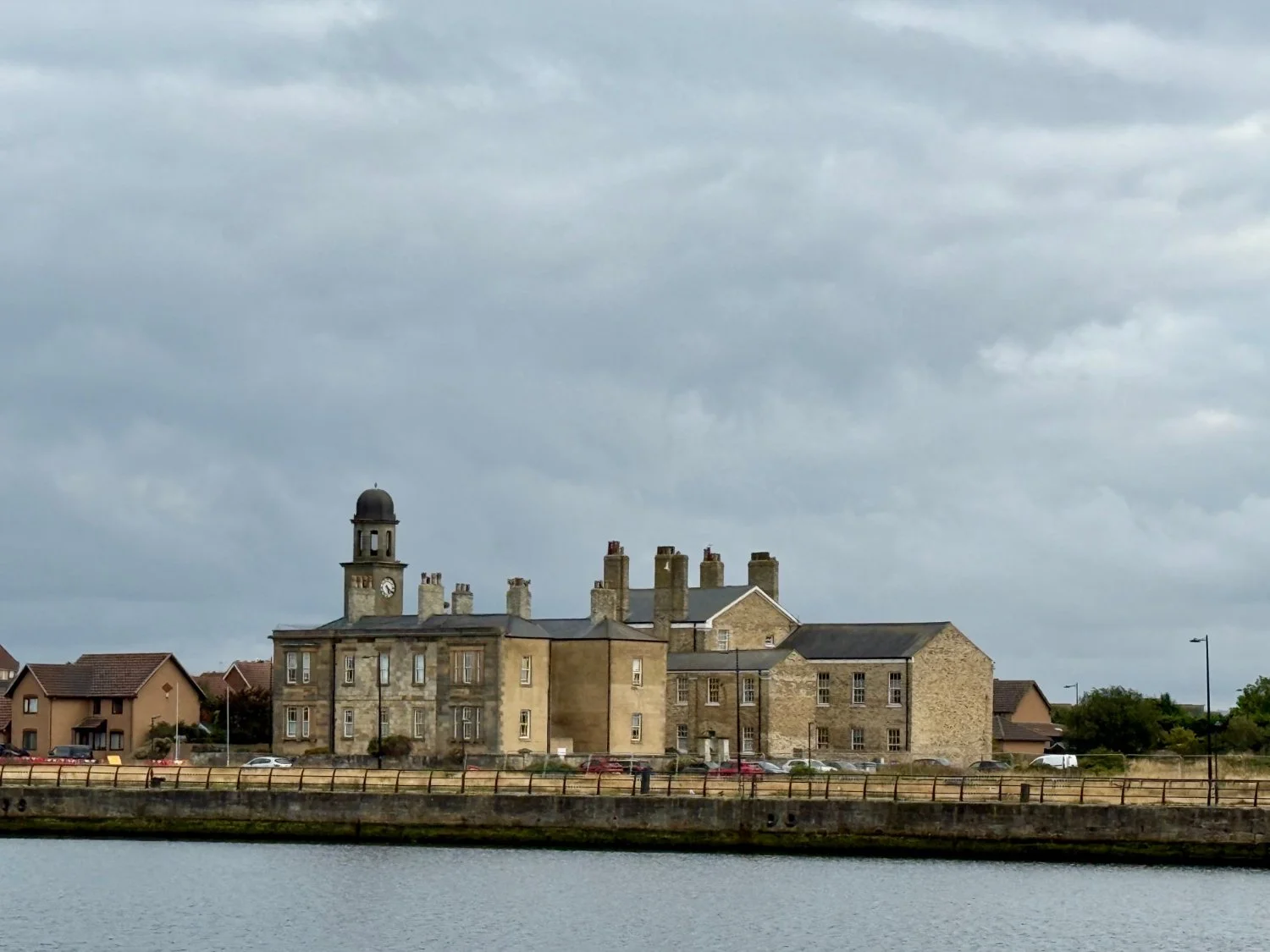
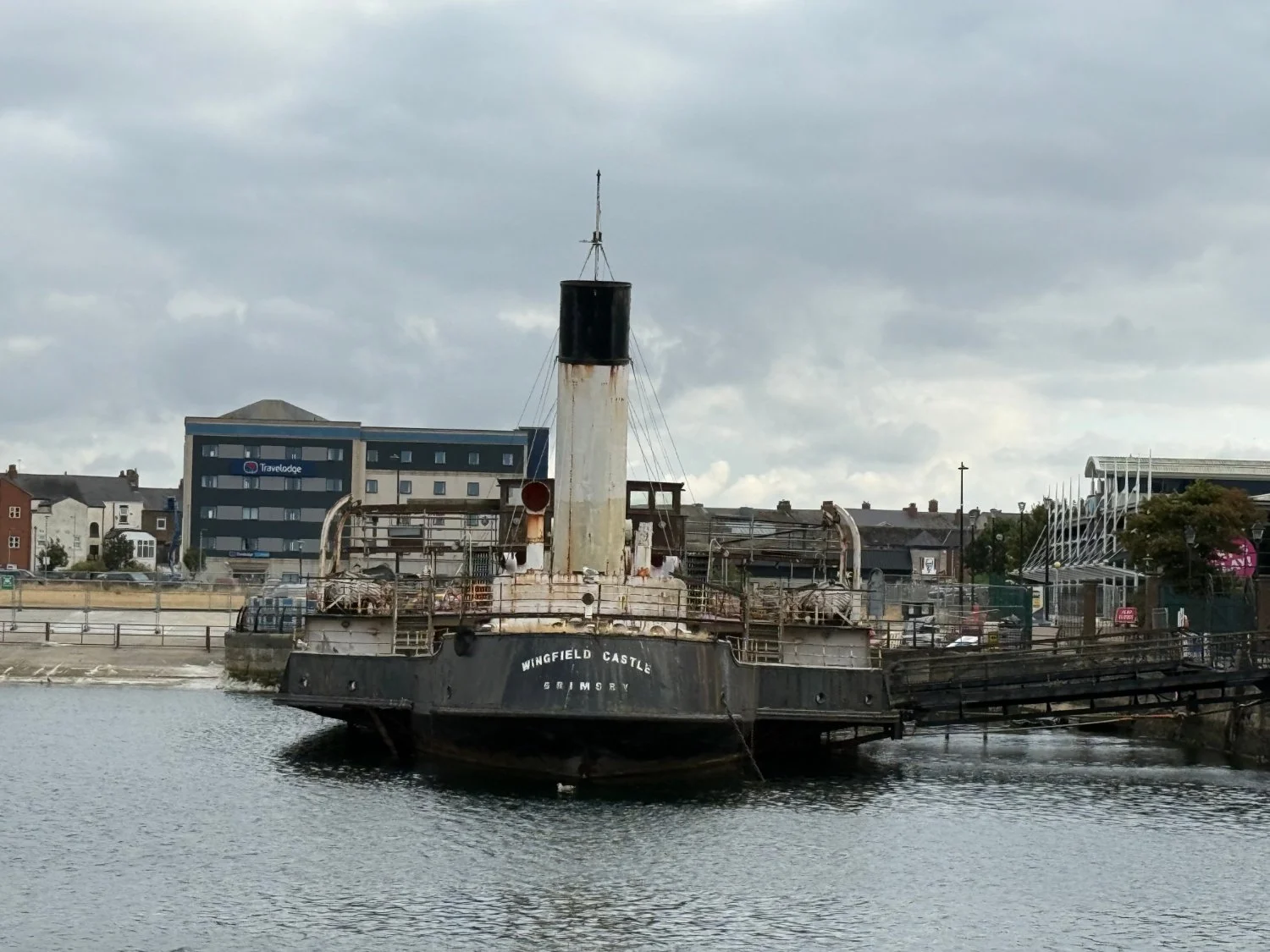
Ride through the somewhat faded seaside town of Seaton Carew, along a shared path beside the sea, and soon you arrive in Hartlepool's docks and marina, a place caught mid-transformation — some of the regeneration has taken, some hasn't, and there's a curious and oddly wonderful experience in looking at faux-nautical flats standing next to hoardings gone grubby in the weather. Then, right in the middle of it, the Historic Quay and National Museum of the Royal Navy, all restored cobbles and reconstructed shopfronts, the three-masted HMS Trincomalee peeping above the reconstructed buildings — an 1800s stage-set dropped into a still-unfinished twenty-first-century development.
It's worth locking the bike up for a wander. (I stayed the night at the Premier Inn just to really immerse myself in this weird wonderland — and to visit the museum when it opened in the morning.)

The docks were once home to William Gray & Co, which by 1879 was the largest shipbuilder in the world by tonnage, topped British output six times before 1900, and employed a third of the town — hard to picture now, watching the handful of small boats rock in the marina, but a reminder of just how much history there is on this stretch of coast.
A bike path leads round to the Headland, where Hartlepool began: cobbled lanes, brightly painted houses, medieval town walls, and above it all the twelfth-century St Hilda's Church. Down by the harbour there's a bronze statue of Andy Capp — wife-beater, work-shirker, alcoholic moaner, flat cap and bulbous nose — the twentieth century's cartoon of the north-east working man, and still counted a local hero.
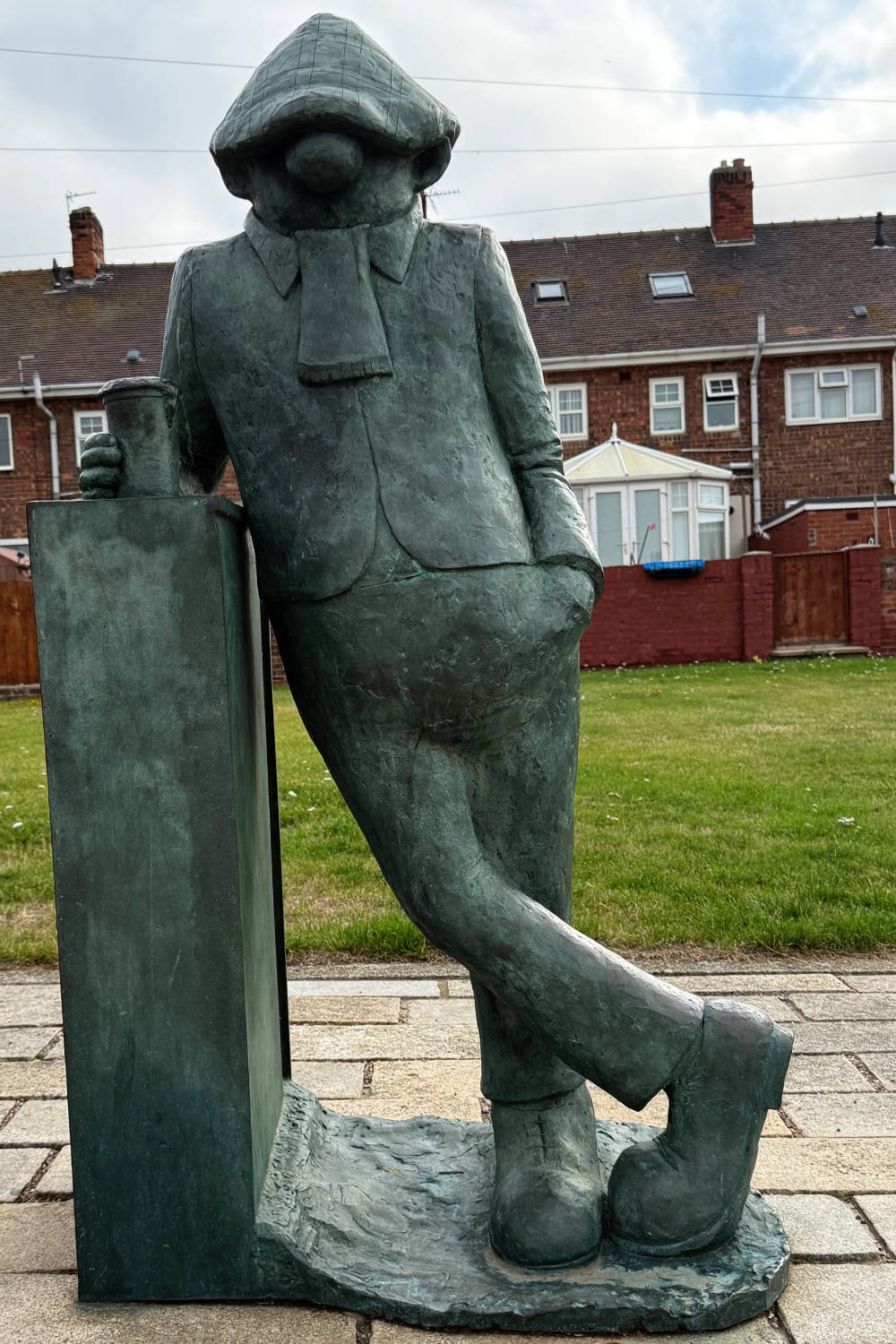
Andy Cap
North along the coast, NCN 14 heads inland, so to stay by the sea you ride the A1086 instead — good sightlines, a reasonably wide road. It's not ideal, but it's short and quick.
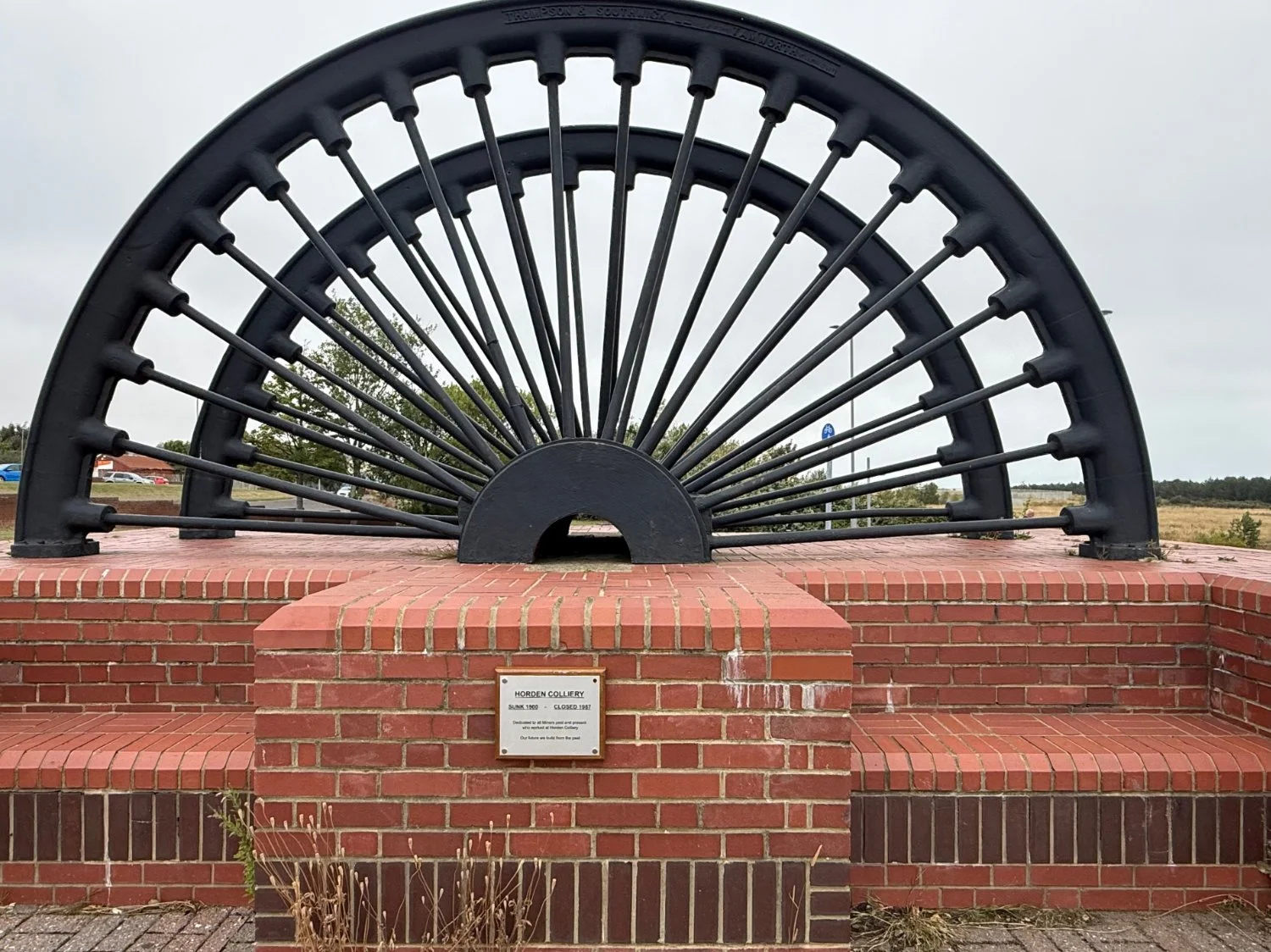
Then colliery country: Blackhall, Peterlee, Easington — names that still summon police lines against striking miners under Thatcher, or the black beaches and coal-waste buckets in Get Carter. None of that's visible now. A multi-million-pound clean-up capped the shafts and re-greened the land: smooth paths, old pit wheels set on plinths, a cage on a hillock as the only reminder.

Easington Colliery - a shared path through the old coal mine
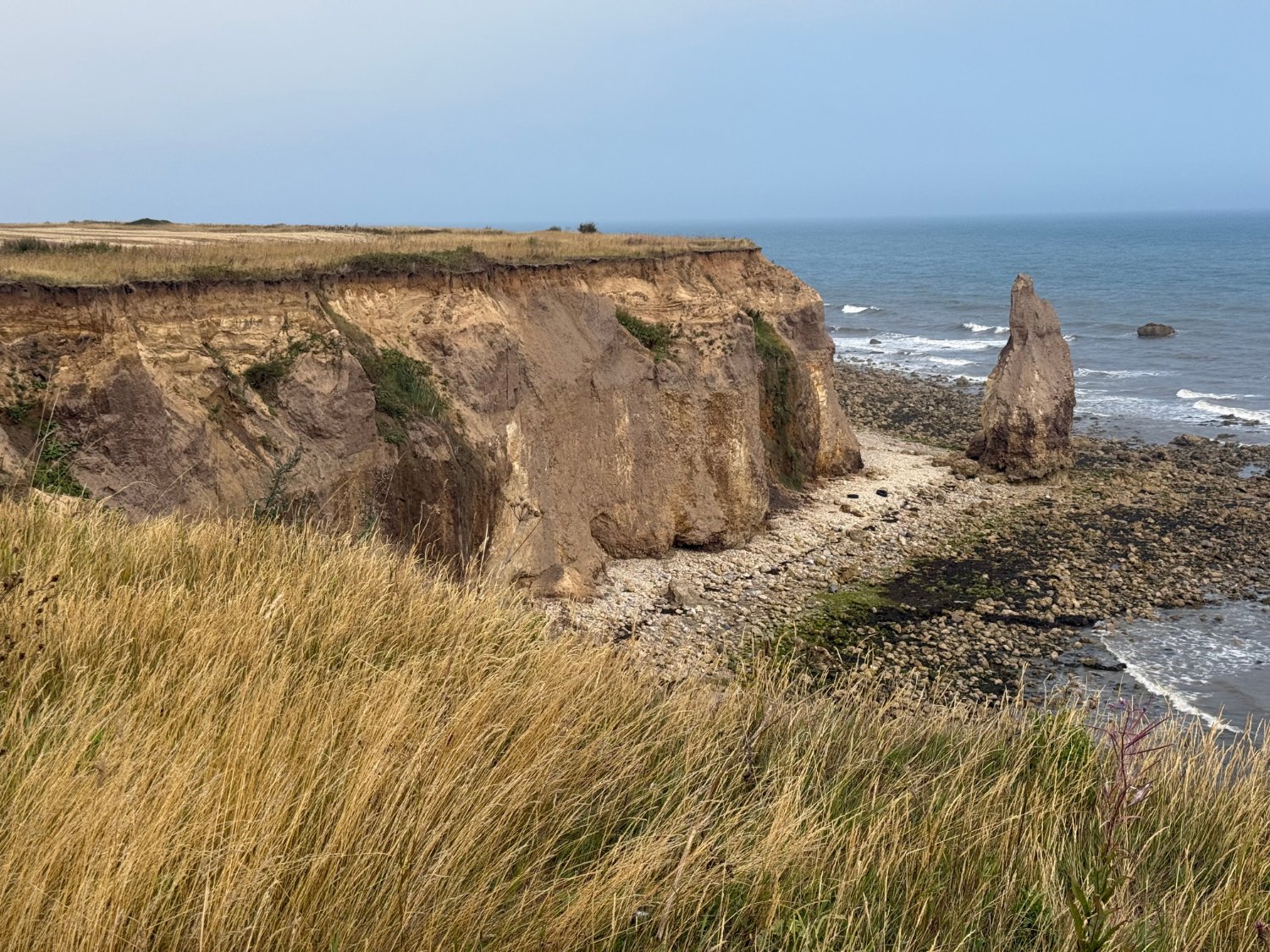
The coast — the Durham Heritage Coast — becomes classically beautiful now: cliffs, seabirds, sand, sea, a dene (a steep wooded valley) to skirt every mile or so. Seaham, built by Lord Londonderry to ship out his coal, is nothing like the grim northeastern town of imagination. The beach is busy, and sea-glass hunting is the local sport — courtesy of a Victorian bottle factory that dumped its broken glass here, and a century of sea softening it into something beautiful. The North Beach Café above the beach is worth the stop: good cakes, proper coffee.
Technically, cycling on a footpath is illegal in England. I avoid footpaths where there's a safe alternative, but where the path is a vehicle-wide track and cycling is clearly tolerated, I use it — and this stretch beats the alternatives: a busy main road, or a route that cuts miles inland. Sea views, smooth gravel alternating with rougher path, briny air, waves, birds, cliffs, legs working, lungs full of ozone and salty air. Glorious.

The ‘footpath’ at Ryhope
Into Sunderland, past the quays where a thousand ships were built a century ago, over the iron bridge, and the bike path turns into a dream — smooth and wide, and where walking locals keep out of the lane. A rare treat indeed!
Then the sandy sweep of Whitburn, and by now it's lunchtime: North, an unpretentious restaurant in the Good Food Guide's Top 100 Local Restaurants, or Latimer's Seafood — built around a fresh fish counter and deli, its café running as the Hatch Takeaway: kipper in a bun, seafood picnic boxes, crab or prawn sandwiches, and reportedly good dolphin-spotting while you eat.
More sand, wide skies, over the Bents — the north-east term for the grass swards separating road and houses from sea — ships queuing on the horizon, lighthouses, a segregated bike path beside the road: safe, but here designed so badly that cyclists are expected to give way at every crossing. Luckily most of those crossings are closed to cars anyway.

‘North’ a highly recommended lunch stop on the Durham Coast
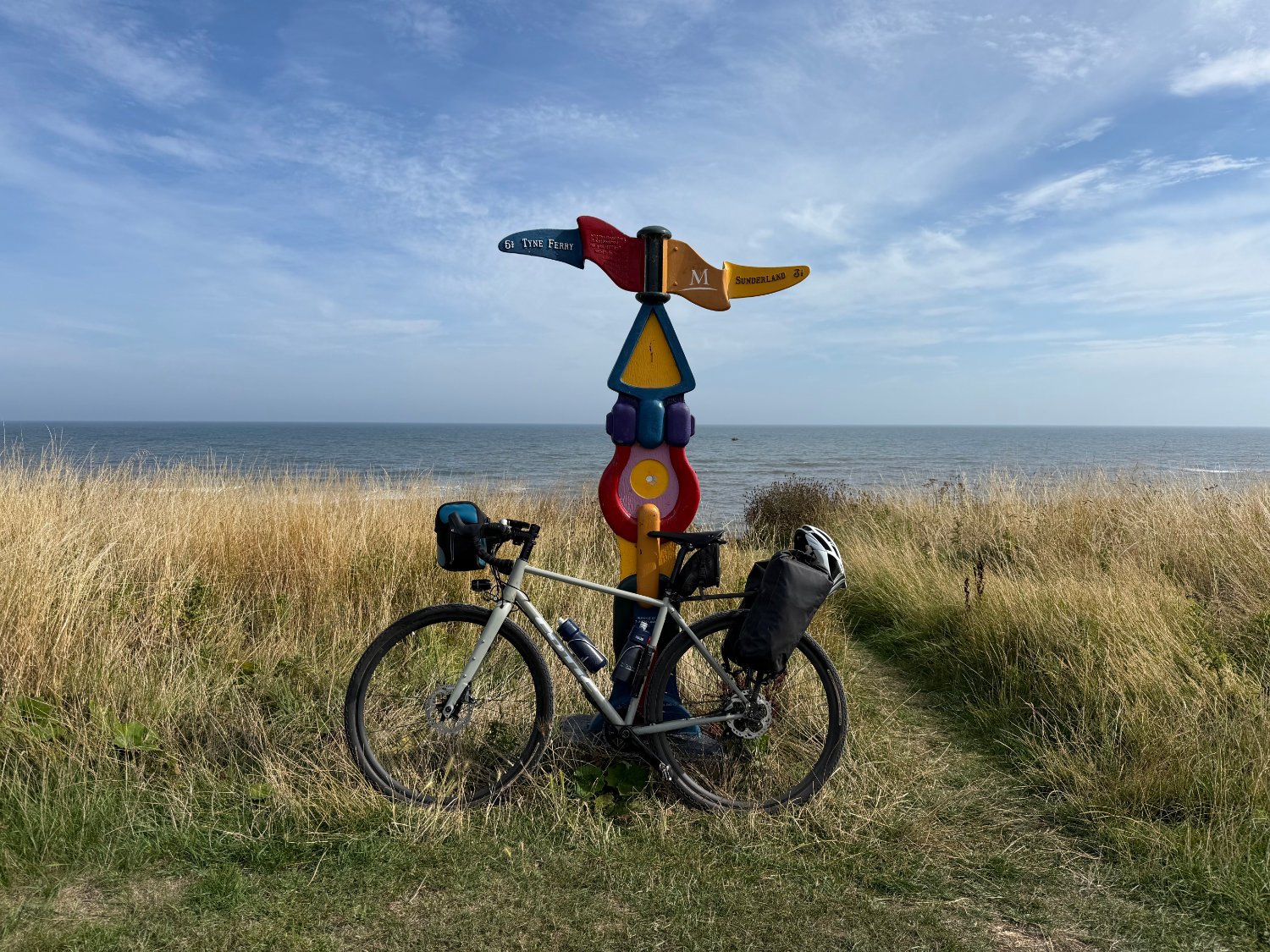
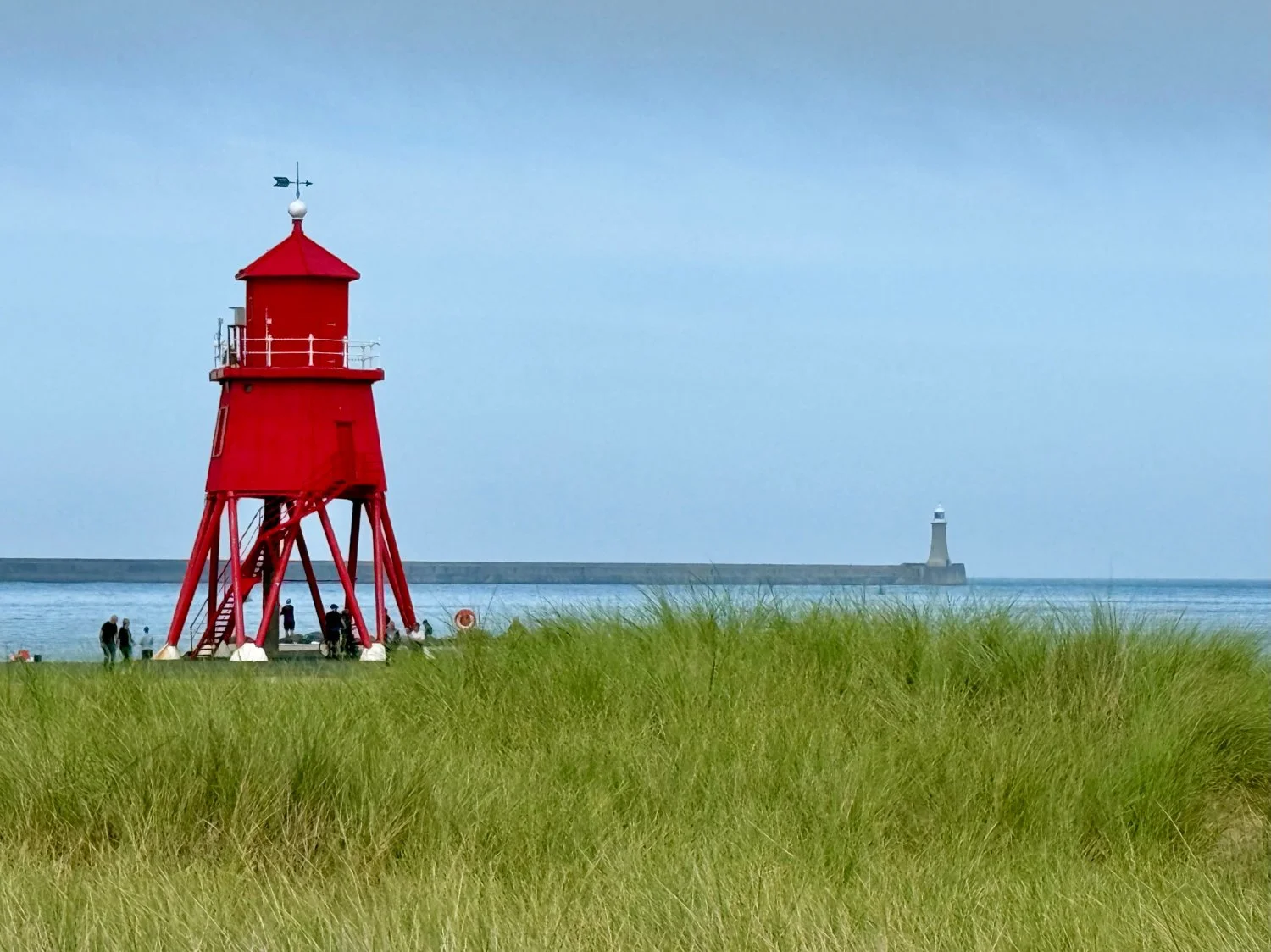
South Shields is proper old-school seaside: chip fat in the air, a fun fair, shops selling buckets and spades. From here you can take the ferry to North Shields or follow NCN 14 onward, tracing a still-industrial Tyne into the final stretch — traffic-free and green most of the way, past Jarrow Abbey, where Bede did his writing and praying. In its day it was one of the great intellectual centres of Europe; the ruins are worth a wander.
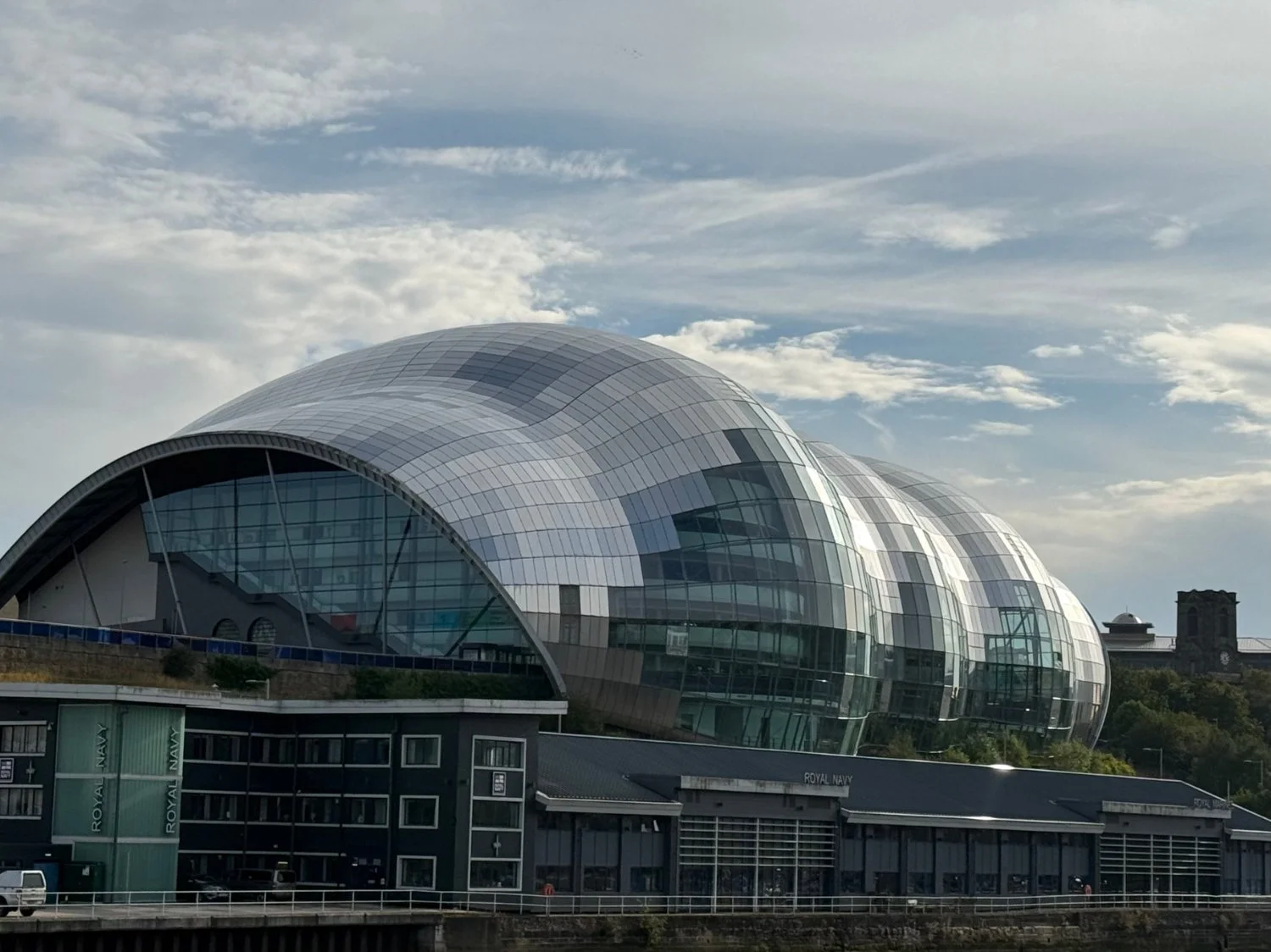
The last few kilometres wind round the Tyne's bends into Gateshead, and then Newcastle across the water — blackened industrial wreck turned gleaming waterfront, walkways. Art galleries, International Music centres, great and grand buildings. Bridges bunched together in a symphony of steel and architectural drama.

A ‘Conversation Piece’ , South Shields
With the ride complete, you could take the train home, or stay the night in this vibrant and exciting city. A great choice of restaurants and pubs, too. Full details in Ride Practicalities above.
Every route on this website has been carefully researched as well as ridden. However situations on the ground can change quickly. If you know of changes to this route, or cafes, pubs and the like which you think other cyclists need to know about, feel free to share your thoughts below.
If you enjoyed this guide, why not subscribe to the website so as not to miss other inspirational routes?
wheremywheelsgo.uk is a Feedspot UK Cycling top website