78km North London's Gravel Trails

Overview
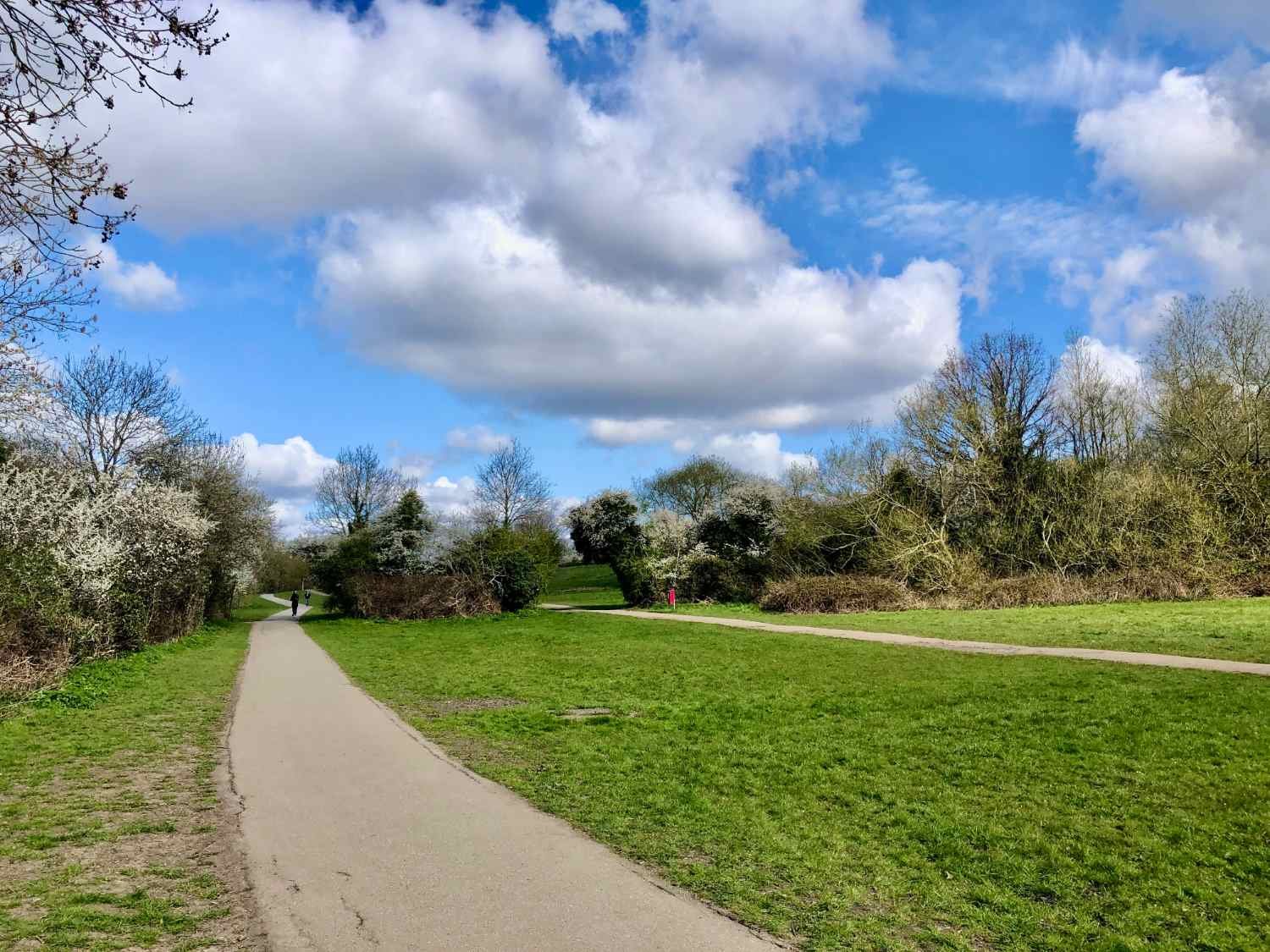
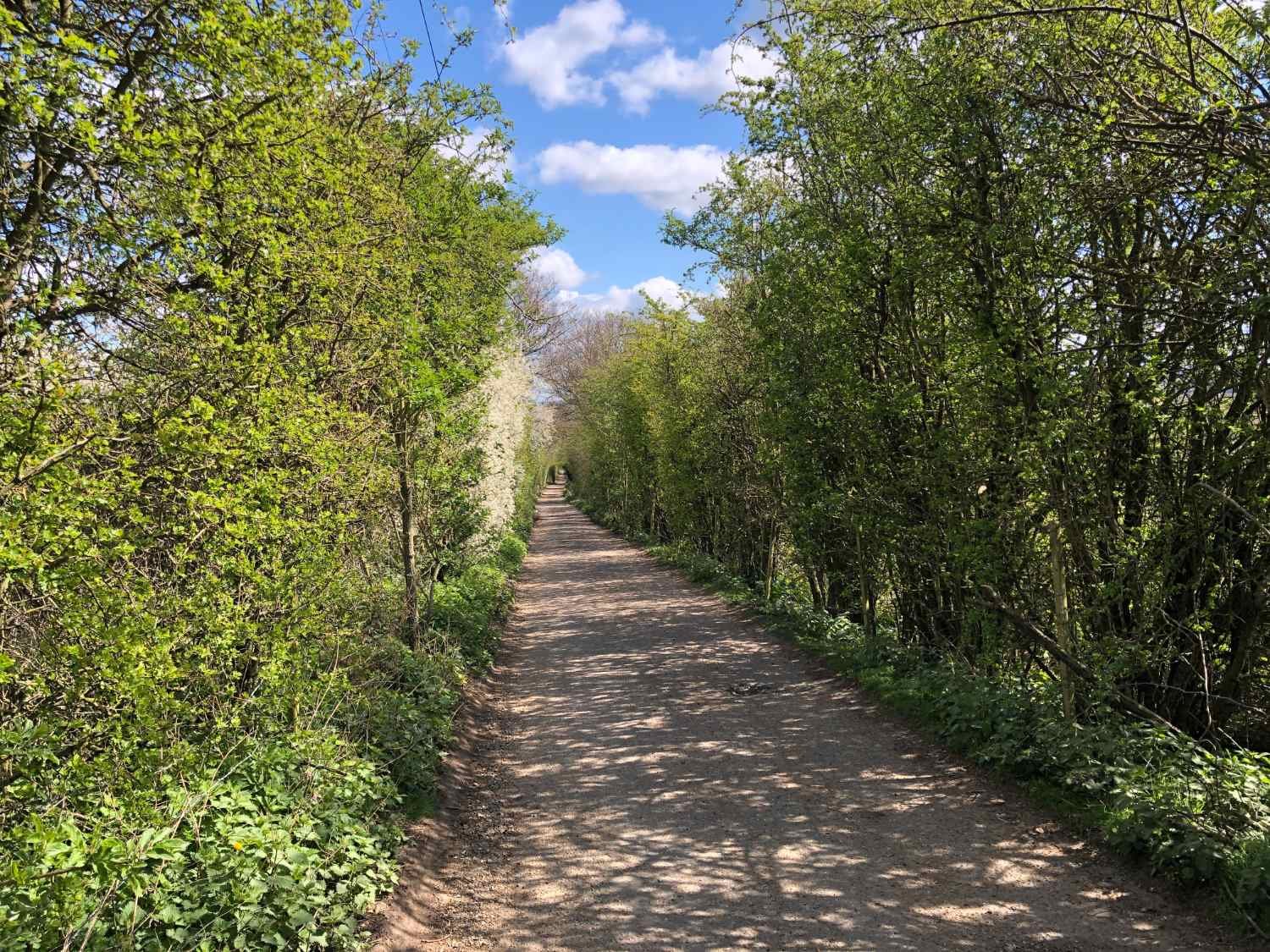
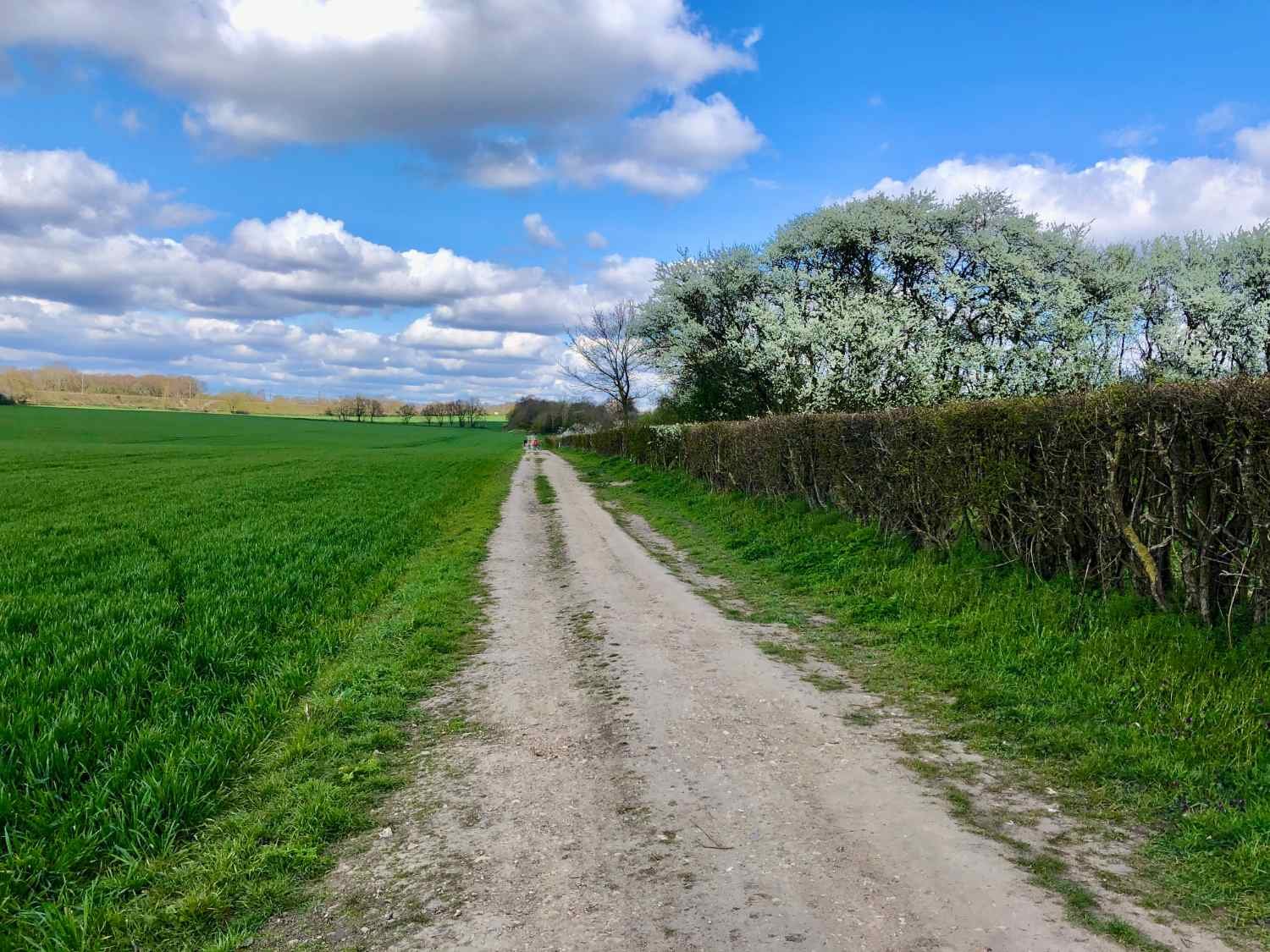
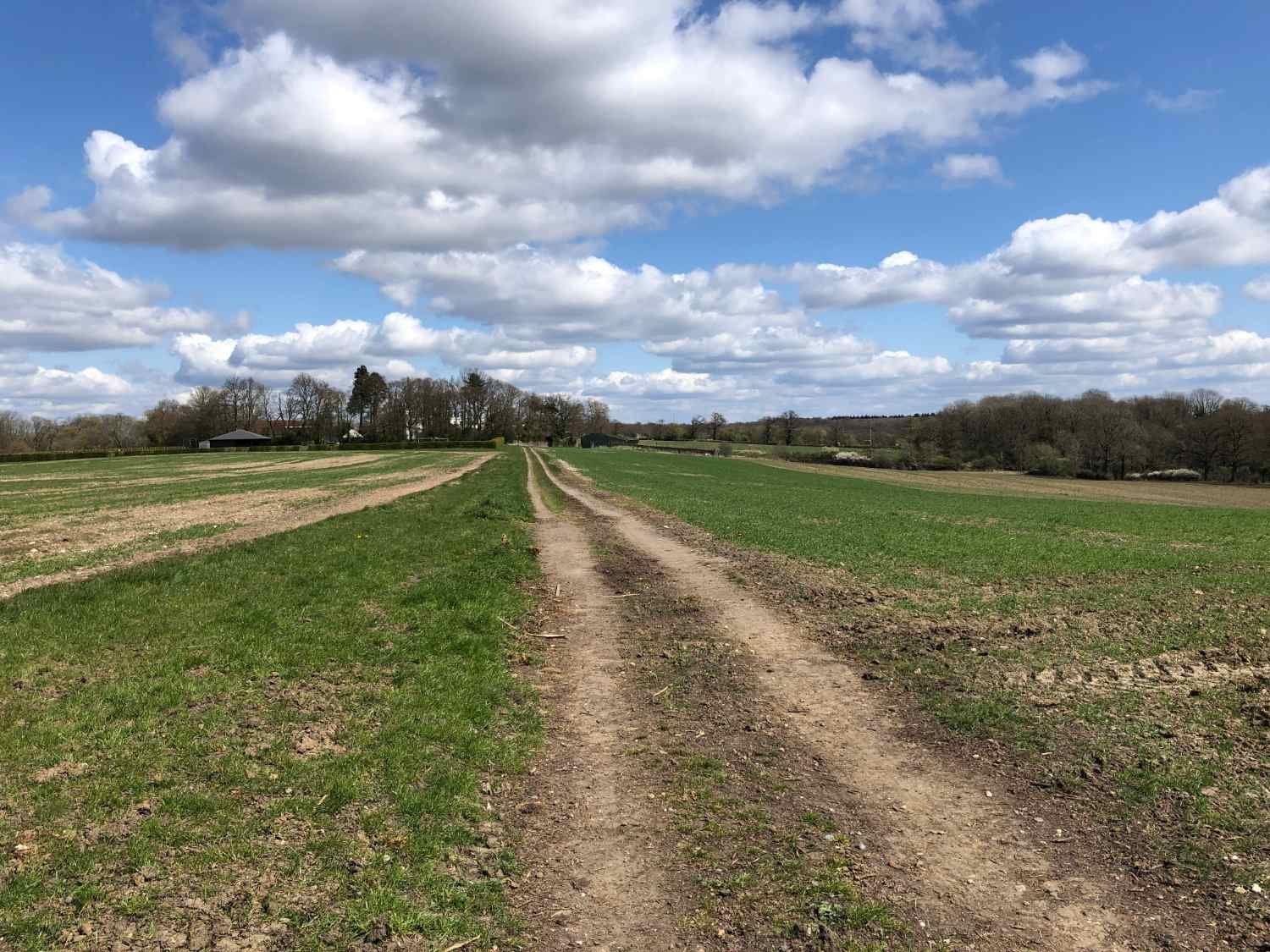
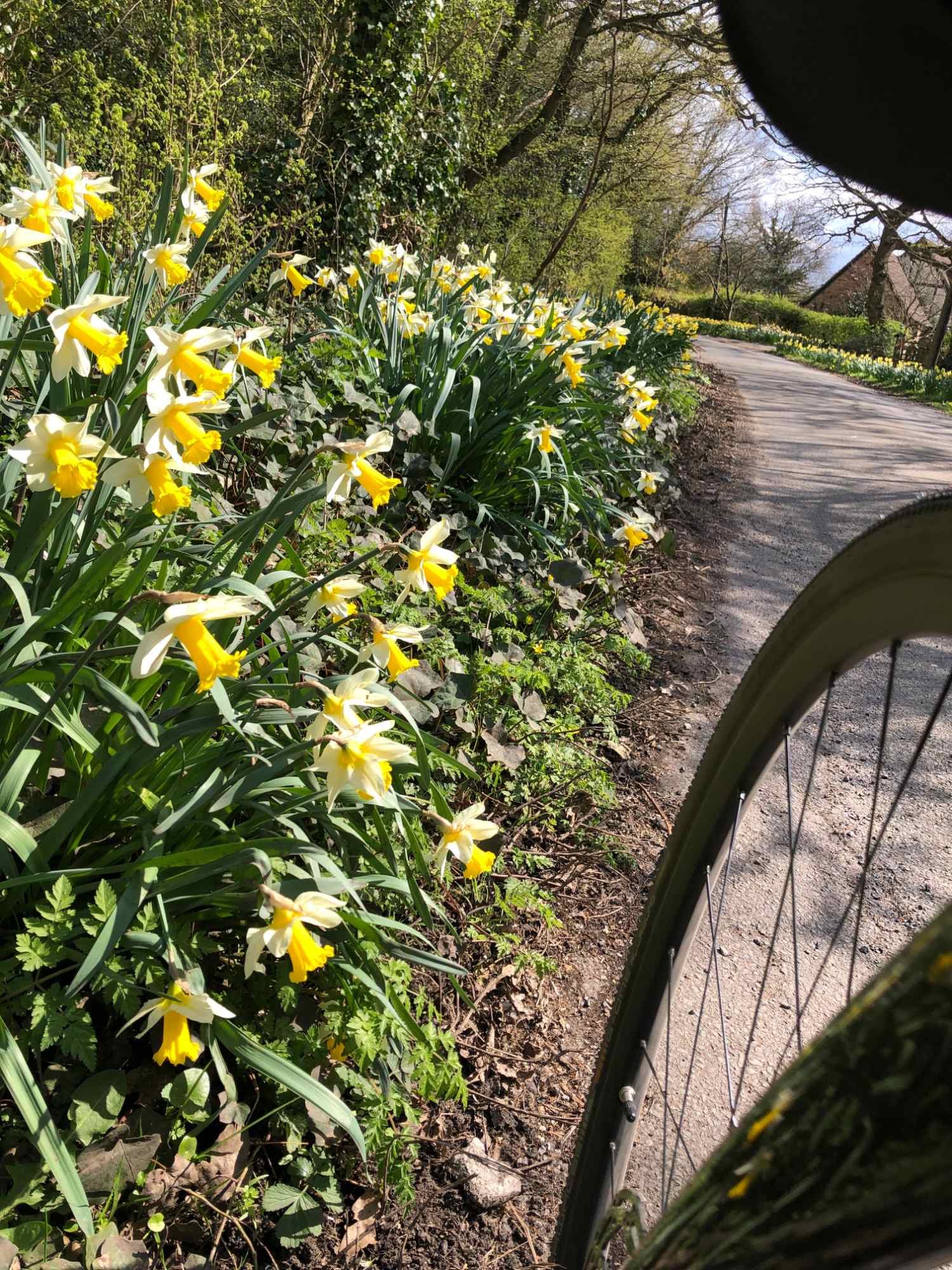
Anyone who thinks North London is dreary and best avoided should come and ride the trails of the city's wild north. Within the weave of motorways lies a network of superb gravel paths — muddy and atmospheric in winter, fast and thrilling from spring to late autumn. Farm tracks, gravel lanes and bridleways cross fields and woods that in mid-spring are carpeted with bluebells. For the curious, there's the de Havilland Aircraft Museum, where both the Mosquito aircraft and Mallard — the world's fastest steam train — were developed, along with a scattering of country churches and grand historic houses. The one unmissable stop is Tealicious in Brookmans Park — a proper café worth every mile. For an easily accessible London adventure, this route has it all.
Where My Wheels Go wish to credit Rapha for the original inspiration of this ride.
Ride practicalities
START/FINISH: Watford Junction station DISTANCE: 78km. TOTAL ASCENT: 714m TERRAIN AND SURFACES: Mainly quiet back roads and earthen tracks, which may be muddy after heavy rain, one or two short sections on busy roads MAINLINE TRAIN SERVICES: Watford Junction - mainline and London Overground RECOMMENDED FOOD AND DRINK STOPS: Brookman’s Park; Tealicious, LINKS TO OTHER RIDES: Hills of the North, Rejoice!
Ride Notes
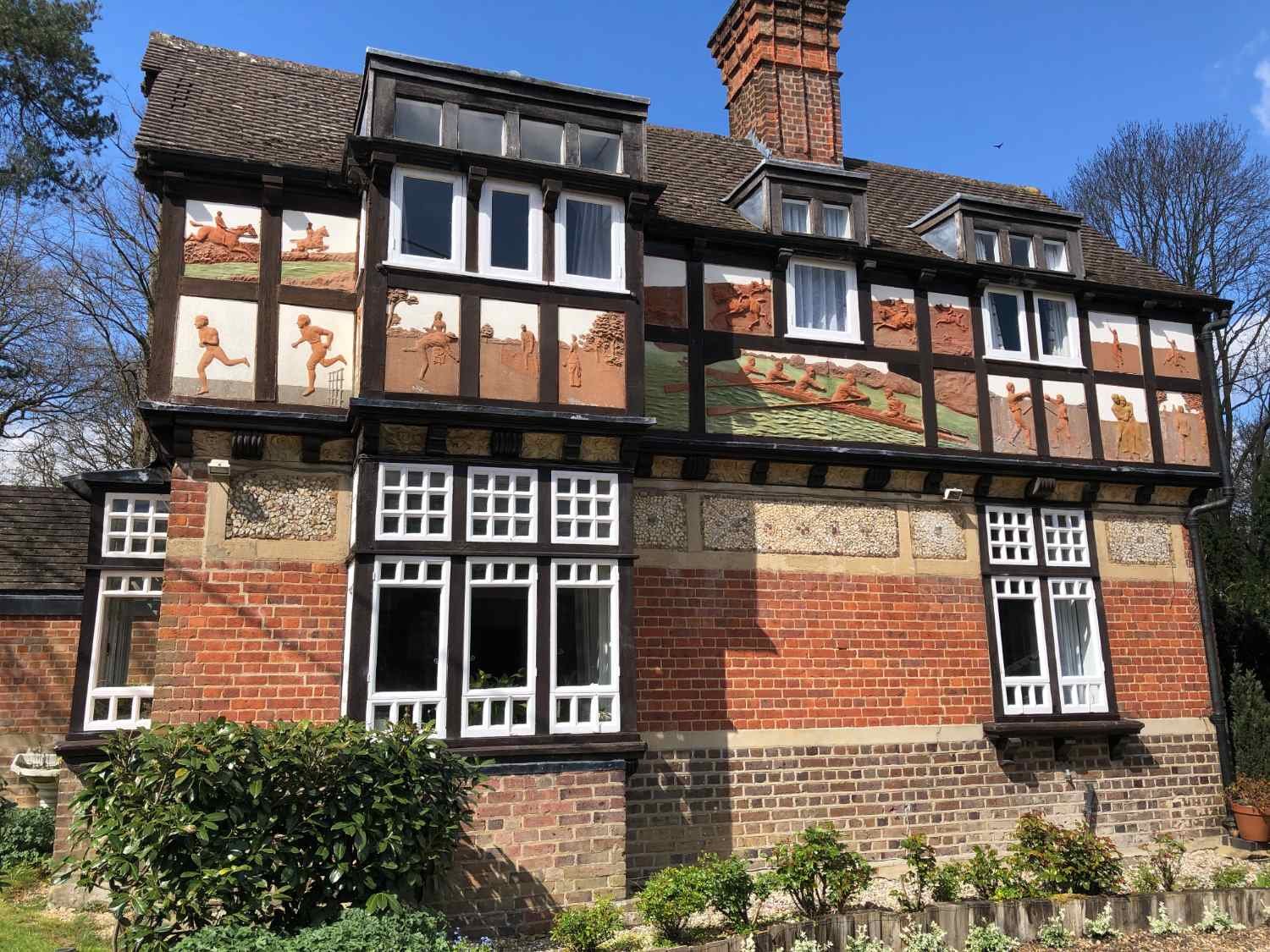
Quickly leaving Watford, you enter Bricket Wood, locally renowned for its bluebells. A small lane takes you through the woods. Look out for The Picture House, built by the architect and philanthropist Frederick Wallen, who encouraged poor boys from East London to come and stay, engaging in country pursuits to escape the dirt and dolor of city life. The house is covered in terracotta tiles depicting 19th-century sporting activities: boxing, wrestling, rowing, horse riding, cricket, skating, and leapfrog.
Continue to Smug Oak (how can an oak be smug?). Ride along Drop Lane, barely wide enough for a cyclist, let alone a vehicle. The lanes and bridleways here feel far from London, despite being minutes from the M25. You might be enjoying the riding on the tracks and trails to notice, but the route passes close to a remarkable concentration of great houses, built on the edge of London over three centuries: Hanstead House, built in 1925 by Sir David Yule, whom the Times called "one of the wealthiest men, if not the wealthiest man, in the country"; Napsbury Park, a vast mental health institution until 1998; North Mymms Park, a grand Elizabethan mansion now used for weddings; and Wrotham Park, built for Admiral Byng — the same Byng who was later shot for failing to "do his utmost" to relieve the British garrison at Minorca during the Seven Years' War.
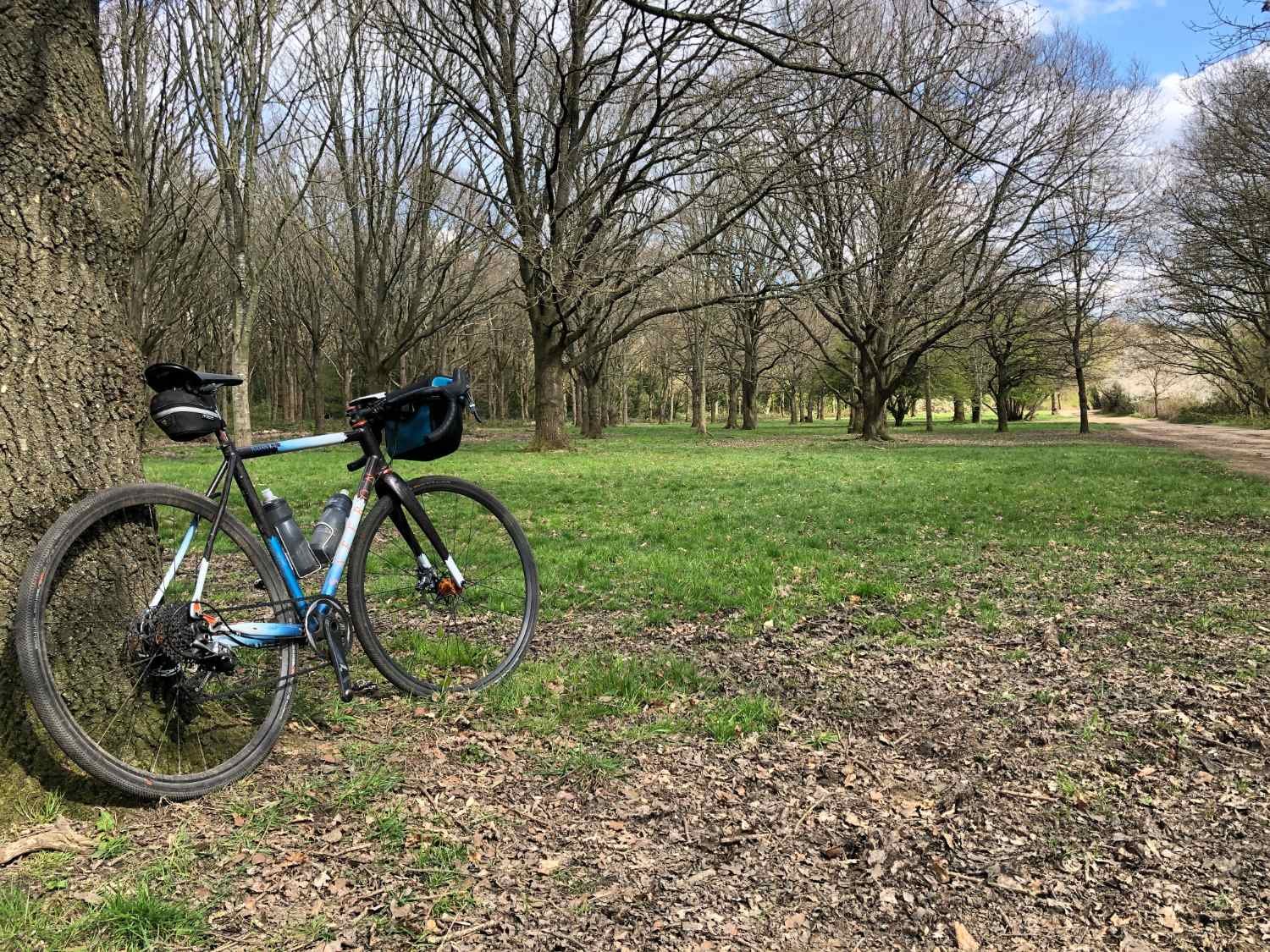
The woodland tracks here are among the best of the ride — gravelly, rooty and atmospheric in equal measure. They take you alongside the Rivers Ver and Colne, through woods and past fields, across the M25, and onto Watford and Arsenal football clubs' training grounds. Although best tackled after a dry spell, they are rideable year-round with the right tyres. You are unlikely to see the first teams — high hedges deter the prying eyes of scouts looking to learn the tactics for next Saturday's game. You ride past Salisbury Hall and the de Havilland Aircraft Museum, where both the Mosquito aircraft and Mallard — the world's fastest steam train — were developed.
Further great tracks through woods and open fields carry you over the A1(M) and into North Mymms Woods, before roads lead into Brookmans Park. You'll arrive at Tealicious eager for an excellent coffee and homemade cake - or soup and sandwiches if that’s your preferred fuel.
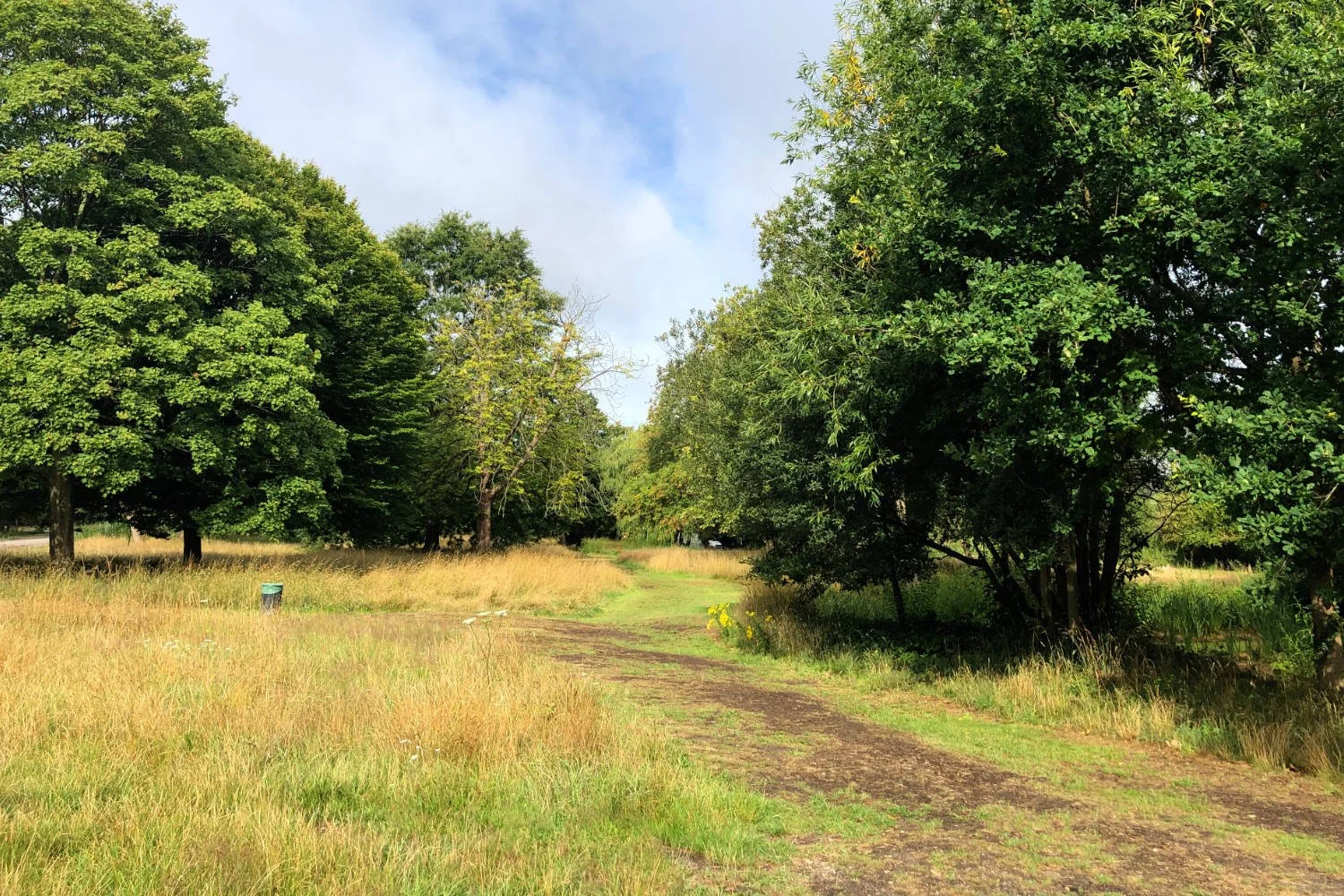
Monken Hadley in its summer guise
Another good gravel track leads to Wash Lane before quieter roads carry you through a mix of narrow lanes and bridleways, threading through the Green Belt and into Monken Hadley Common. Here, in thick fog on Easter Day 1471, a bloody battle raged. On one side stood Edward IV and the future Richard III with nearly 13,000 men; on the other, the defending king Henry VI with around 12,000. With no long-range artillery, the fighting was hand-to-hand — a vicious affair. In the confusion, many of Edward IV's men attacked their own side. Between 1,500 and 4,000 men died, and the throne passed from the defeated Henry VI to Edward IV. Today it is a peaceful place, with a memorial to the fallen; the only squabbling is between mallards and coots on the two duck ponds.
A fast descent by road leads onto tracks through Hadley Wood — a delight to ride at any time of year. After circling Barnet and Dollis Wood, you're back on the tracks and lanes through the gentle landscape of farms, fields, and ancient hedgerows. Having crossed Watling Street, there’s more gravel - some with added rubble of broken bricks and concrete which gives this section a real ‘Roubaix’ feel. Having ridden through the pretty village of Aldenham, you rejoin the cycle path back to Watford Junction station.
Riding through ancient landscape along the bumpy tracks and trails of North London reminds you exactly why you chose gravel over tarmac.
Every route on this website has been carefully researched as well as ridden. However situations on the ground can change quickly. If you know of changes to this route, or cafes, pubs and the like which you think other cyclists need to know about, feel free to share your thoughts below.
If you enjoyed this guide, why not subscribe to the website so as not to miss other inspirational routes?
wheremywheelsgo.uk is a Feedspot UK Cycling top website