Coal, Iron and Sea - Riding the Durham Coast
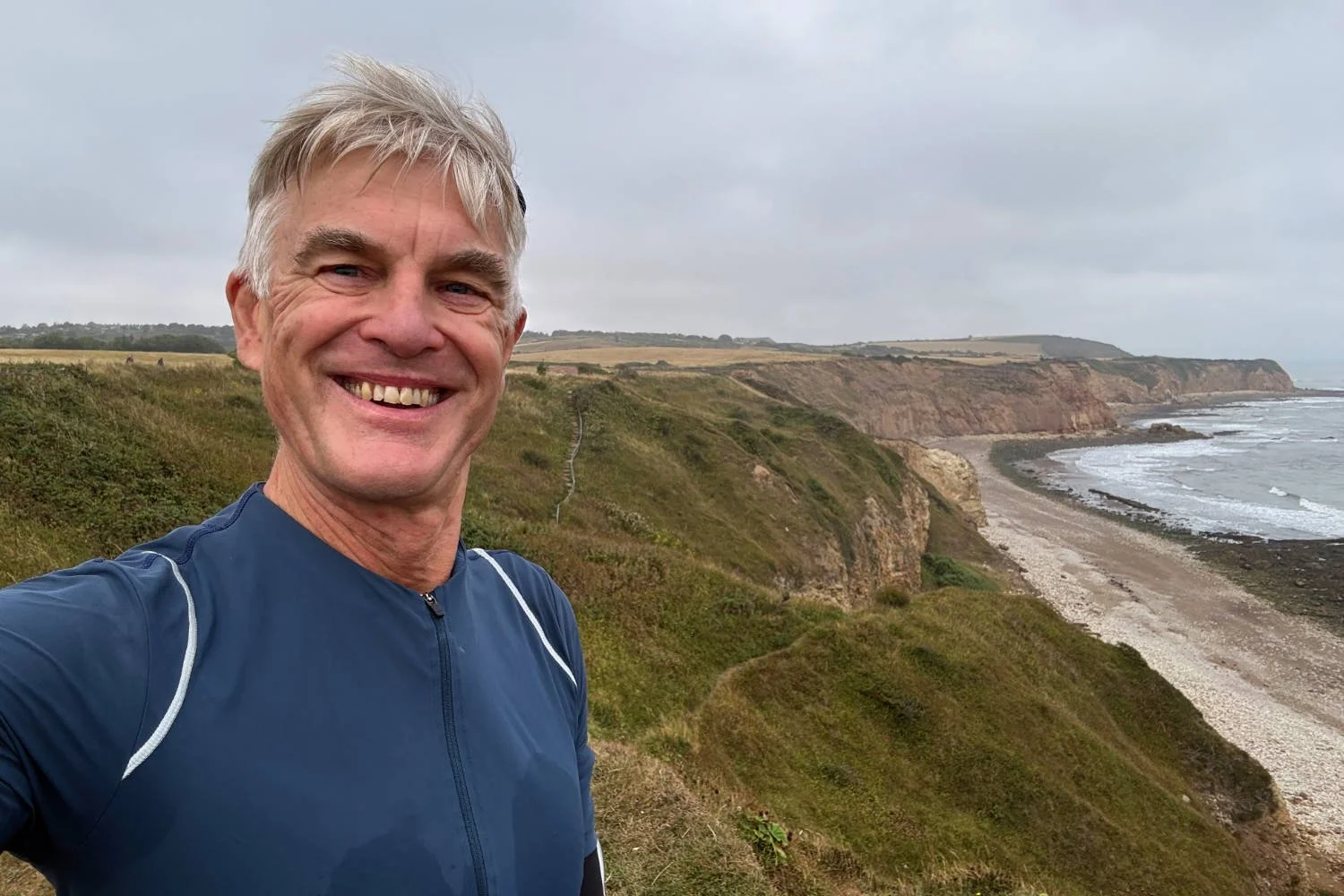
The visions of the North East coast for those of us brought up in the South — coal-waste tipped straight onto black beaches, black smoke gushing from chimneys, a harsh grey-black sea, are hard to shift. Blackhall. Peterlee. Easington; names that still summon images of police lines set against striking miners. I was braced for a visual challenge, believing that the 120km of Durham's coast would be one long industrial trawl, a necessary journey linking the splendours of Yorkshire's coastline with the wonders of Northumberland's.
Ha!
What it is to be surprised! To be enlightened! To have the clichés and journalistic hubris blown away like the sea mist. Decades ago - unbeknown to us down south - there’d been a multi-million-pound clean-up, the land re-greened, the old shafts capped. Now there are old pit wheels set on plinths like museum pieces, a colliery cage on a hillock, the only reminders that anything industrial happened here at all.
In Stockton-on-Tees, where I began the ride, there was not a sea to see. Nor a dock, nor a picturesque old quay. The town, once a major port which exported Durham's coal to the markets down south, seemed to have turned its back on the ocean. Instead, there was the wide high street lined with gracious Georgian buildings, and an excellent café (Remember Me Tea Rooms) to fuel up in — pea and ham soup, tea served in china cups, an excellent ham and cheese toastie.
My route was loosely based on the coastal sections of National Cycle Route 14. Out of Stockton, it runs through the old British Rail marshalling yards — a long concrete strip, dead straight, practically built for sprinting, wasteground either side and a prison on the right. Patchily signed, the route then threads through woods on good gravel paths, through Billingham, with its pebble-dashed streets, chemical flare stacks flickering over the rooftops, before a scrubby, overgrown stretch at West Marsh that nobody has bothered to tidy up. I love these untended lands, where kestrels hover, birds chatter in the berry-rich hedges, where spears of buddleia spray the air with their sweet, heavy scent.
A bridlepath peels off into the dunes at North Gare — marram grass, skylarks, a silver-grey sea, sand dunes, distant cliffs, a lighthouse. A perfectly familiar British seascape, until I look back: the ICI works and the oil refinery, chimneys flaring. The juxtaposition of a National Nature Reserve and an oil refinery as a backdrop could not be more idiosyncratic — and cheerfully wonderful. Nature and Industry cheek-by-jowl.
Up to Hartlepool's docks — half-finished regeneration, faux-nautical flats next to weathered hoardings, and the film-set staging of the Historic Quay and National Museum of the Royal Navy, HMS Trincomalee's masts visible over the eighteenth century rooftops. It was long past closing time for the museum, so I stopped for the night at the Premier Inn beside the harbour, so that I could explore the museum in the morning, and eat Parmo that evening.
If you've never eaten Parmo, it's a calorific, protein-rich Teesside speciality. Not to be missed. A wonder, indeed, that it's never made it onto a plate anywhere else: a massive chicken breadcrumbed-escalope, covered in béchamel sauce and melted cheese, served, yes, you've guessed it, with a huge plate of chips.
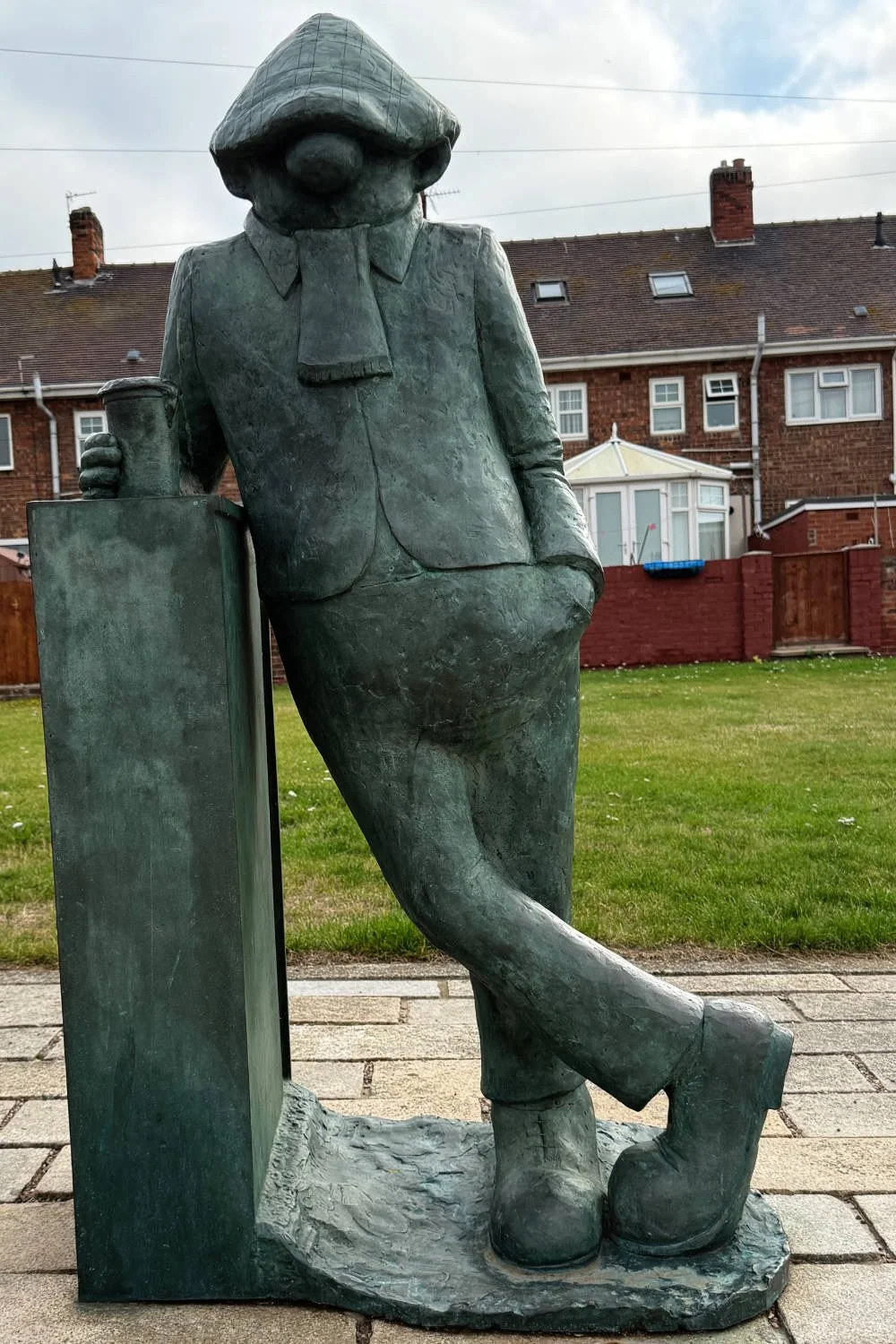
Andy Cap
The National Museum of the Royal Navy, is OK — rather more geared to children than to a hungry-for-information ex-history teacher — so after a brief visit, I rode around the Headland, where Hartlepool began, till its medieval port silted up. Medieval walls, painted houses and a twelfth-century church share the seafront with a bronze statue of Andy Capp — flat cap, bulbous nose, celebrated as a local hero despite representing everything I wouldn't want in a neighbour.
Seaham, Lord Londonderry's old coal port, another northeastern town with a historically grim reputation. But rather than furnaces, coal and industrial horrors, there was a seaside town with plenty of independent shops and a busy beach, where families combed the sand for sea-glass, frosted and rounded by a century of tide working on a dead Victorian bottle factory's rubbish. Above the seawall, the North Beach Café does proper coffee and superb cakes (and lunches, if it's time for that).
Further up the coast, as the sea mist dissolved into sunshine, I rode excellent cycle paths past the reclaimed pits with their pit-head-wheel monuments, cleaned-up beaches, and nature reserves. The cliff views were superb, full of stacks and caves, the coastline as photogenic as any that appears on a "best of Britain's coast" Instagram feed. The coast path from Ryhope into Sunderland is marked as a footpath, which technically makes cycling on it illegal. I did anyway, for it was twin-tracked and wide, patterns of many bike tyres pressed into the dust. Nobody appeared to mind; I was greeted, people stopped me to chat, curious to know why a Londoner should be riding along their beautiful coast.
There's stopping to do in Sunderland — its bridge across the Wear, the town square filled with the names of the thousand ships built along the banks of the river, some grandly confident Victorian buildings — but I forewent all this, for the sun was out and the sea was in fine spirits. Besides, I'd booked a good lunch five miles further up the coast at North, a beachside restaurant at Whitburn, listed in the Good Food Guide as one of Britain's best local restaurants. Smoked kippers from Northumberland, foraged greens and homegrown leeks, a glass of chilled white wine: the perfect plate. Golden sands, a Madonna-blue sky and a frisky sea, in which I could not resist a cold, post-lunch dip.
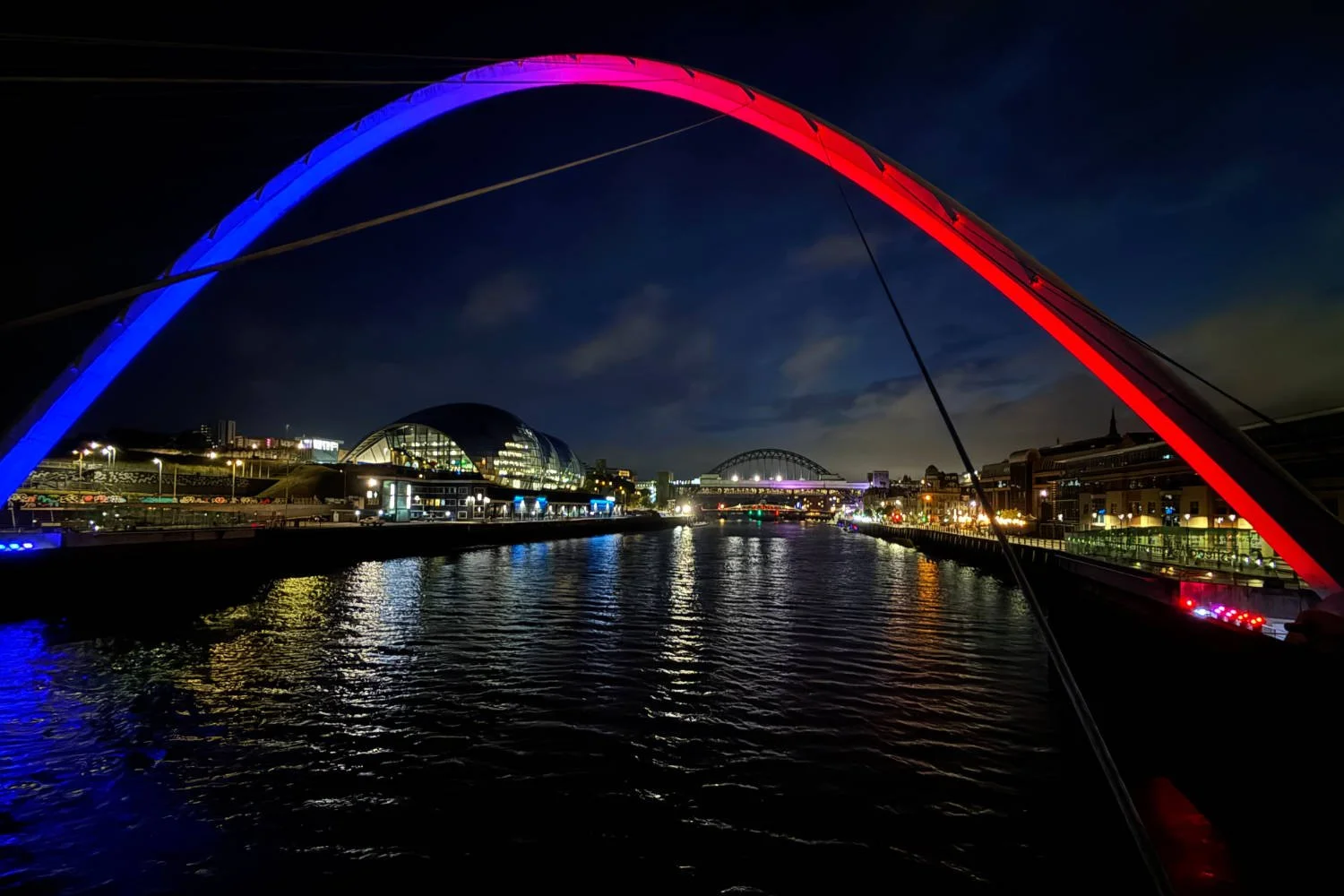
The Millennium Bridge over the Tyne
Back on the good cycle path, I rode past sand dunes and lighthouse after lighthouse in various shapes and colours, before South Shields appeared, a proper old-school seaside town with a fun fair in full swing and chip fat thick in the air. People sat on the beach, protected by windbreaks and with many well-dressed for the weather. Children played in the surf.
The last few kilometres follow the Tyne into Gateshead — the same blackened skyline that gave Get Carter its bleak backdrop. Look at it now: a gleaming curve of glass and steel, bridges lit up over the water, people out in force enjoying the pubs and clubs and the many fine restaurants. Somewhere back near Stockton I'd been bracing for 120km of industrial trawl. Instead there were skylarks and kestrels, sea-glass and Parmo, a swim off Whitburn and a coastline as good as any I could have wished for.
I found a pub with a view of the bridges, ordered the best pint on the board, and thought: right then, Northumberland — top that.